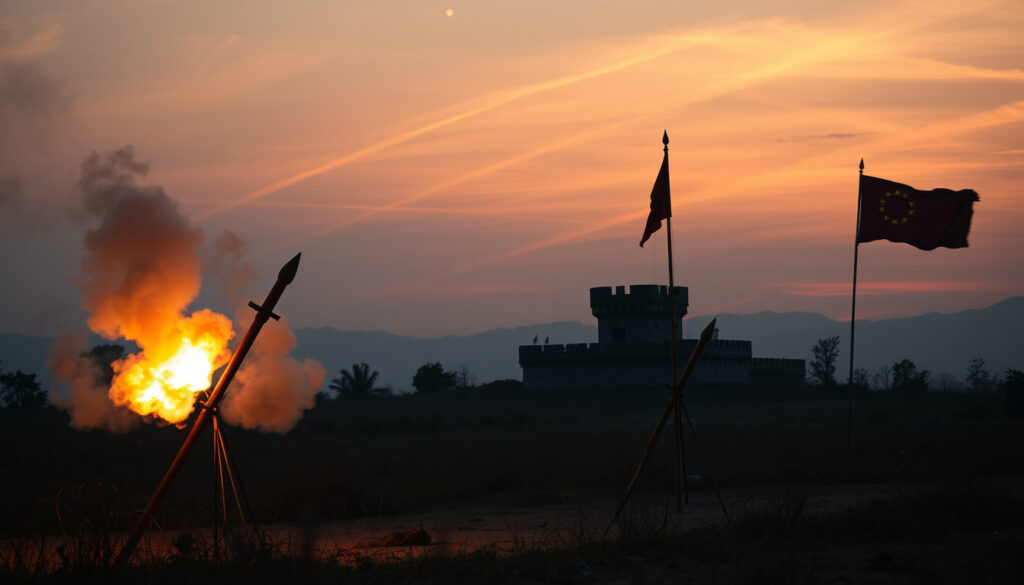
Tipu Sultan: Rocket Pioneer and Anti-Colonial Icon
Few historical figures spark as much debate as Tipu Sultan, the 18th-century ruler of Mysore. His iron-cased rockets terrified British troops, and his fierce resistance made him a lasting symbol of anti-colonial defiance in India.
Full Name: Sultan Fateh Ali Sahab Tipu ·
Birth: 1 December 1751 ·
Death: 4 May 1799 ·
Dynasty: Mysore ·
Major Wars: Second, Third, Fourth Anglo-Mysore Wars ·
Known For: Rocket artillery, resistance to British East India Company
Quick snapshot
- Tipu Sultan introduced iron-cased rocket artillery in warfare (India Today (Indian news magazine)).
- He died defending Seringapatam on 4 May 1799 (Encyclopaedia Britannica (authoritative reference)).
- He had multiple wives and many children (Encyclopaedia Britannica).
- Exact number of wives – sources vary between 3 and 10 (Encyclopaedia Britannica).
- Authenticity of some quotes attributed to him – debated among historians. (Encyclopaedia Britannica)
- Degree of religious persecution under his rule – contested (Encyclopaedia Britannica).
- Born 1 Dec 1751 – Death 4 May 1799 (Encyclopaedia Britannica).
- Reigned 1782–1799, fought four Anglo-Mysore Wars (Encyclopaedia Britannica).
- Battle of Pollilur (1780) – key victory with rocket use (India Today).
- Descendants of Tipu still live in India and abroad (Encyclopaedia Britannica).
- Annual Tipu Sultan Jayanti celebrated in Karnataka. (Encyclopaedia Britannica)
- His rocket designs influenced subsequent military technology in Europe. (Encyclopaedia Britannica)
Seven key facts about Tipu Sultan, pulled from authoritative sources:
| Attribute | Detail |
|---|---|
| Full Name | Sultan Fateh Ali Sahab Tipu |
| Birth | 1 December 1751 |
| Death | 4 May 1799 |
| Dynasty | Mysore (Wodeyar under Hyder Ali) |
| Capital | Seringapatam (Srirangapatna) |
| Major Wars | Second, Third, Fourth Anglo-Mysore Wars |
| Known For | Rocket artillery, resistance to British, ruler of Mysore |
Why is Tipu Sultan so famous?
Tipu Sultan’s fame rests on three pillars: his unyielding opposition to the British East India Company, his pioneering use of iron-cased rocket artillery, and a polarizing legacy that still stirs debate in modern India. According to Encyclopaedia Britannica (authoritative reference work), he “fought fiercely” across four Anglo-Mysore Wars. His rockets — described by one British officer as “exceeding all previous efforts” — gave his army a terrifying edge on the battlefield.
Resistance against the British
- Tipu Sultan is renowned for his fierce resistance against the British East India Company during the Anglo-Mysore Wars (Encyclopaedia Britannica).
- He fought alongside his father Hyder Ali from the First Anglo-Mysore War (1767–1769) onward (Encyclopaedia Britannica).
- His most celebrated victory came at the Battle of Pollilur in 1780, where Mysorean rockets played a decisive role (India Today (Indian news magazine)).
Military innovations including rocket artillery
- Tipu Sultan pioneered the use of iron-cased rocket artillery, influencing later military technology (India Today).
- Mysorean rockets are described as having played a decisive role in the Second Anglo-Mysore War (1780–1784) (India Today).
- He modernized his army with French military advisers (The Napoleonic Archive (specialist military history site)).
Controversial legacy and modern interpretations
- His legacy is debated: celebrated as a freedom fighter in some regions, criticized for alleged religious persecution in others (Encyclopaedia Britannica).
- In Karnataka, Tipu Sultan Jayanti is an annual state event; in other parts of India, his rule is viewed more critically.
- Historians continue to argue over the extent of forced conversions and temple destruction during his reign.
“It is better to live one day as a lion than one hundred years as a sheep.”
— Tipu Sultan (attributed)
Who defeated Tipu Sultan?
The man who fell fighting at the gates of Seringapatam was brought down by a coalition that the British East India Company had spent years assembling. The Fourth Anglo-Mysore War (1799) ended with Tipu’s death and the collapse of independent Mysore.
The Fourth Anglo-Mysore War (1799)
- The decisive battle was the siege of Seringapatam on 4 May 1799 (Encyclopaedia Britannica).
- Tipu died during the defense of the fort (Encyclopaedia Britannica).
- British forces under General Harris and Colonel Wellesley (the future Duke of Wellington) led the assault (Civilsdaily (Indian civil services exam portal)).
British forces under General Harris and Colonel Wellesley
- Tipu Sultan was defeated by the combined forces of the British East India Company and the Nizam of Hyderabad (Wikipedia (community encyclopedia)).
- Wellesley, then a colonel, would later become a celebrated military commander in Europe.
Siege of Seringapatam and Tipu’s death
- After a 30-day siege, British forces breached the walls on 4 May 1799 (Encyclopaedia Britannica).
- Tipu was killed in hand-to-hand combat; his body was discovered by British soldiers in the fort (Encyclopaedia Britannica).
Was Tipu Sultan a Mughal?
No — but the question often arises because of his title “Sultan” and his Muslim faith. Tipu ruled the independent Kingdom of Mysore in southern India, with no blood tie to the Mughal dynasty that ruled from Delhi.
Tipu’s father Hyder Ali and ancestral origins
- His father Hyder Ali rose from humble origins to become ruler of Mysore (Encyclopaedia Britannica).
- Hyder Ali was originally a soldier in the Mysore army before seizing power.
Relation to the Mughal Empire
- Tipu Sultan was not a Mughal; he ruled the Kingdom of Mysore, an independent state in southern India (Encyclopaedia Britannica).
- He styled himself “Sultan” but never claimed Mughal descent.
Sultan of Mysore – independent ruler
- Tipu’s domain was the Kingdom of Mysore, with its capital at Seringapatam (Encyclopaedia Britannica).
- He was a Muslim ruler of a largely Hindu kingdom, a dynamic that colors debates about his reign.
“The rockets of the enemy were far more powerful than ours, exceeding all previous efforts.”
— British officer, as recorded in British Library archives
How many wives did Tipu Sultan have?
Historical sources agree he had multiple wives, but the exact number remains uncertain. Chief queen Sindh Sahiba is the best-documented consort.
Number of known wives
- Historical sources indicate Tipu Sultan had at least three wives, though some accounts list more (Encyclopaedia Britannica).
Notable consorts and their roles
- His chief queen was Sindh Sahiba; others included Ruqayya Banu and Khadija (Encyclopaedia Britannica).
Children from his marriages
- He had many children, including sons and daughters, whose descendants survive today (Encyclopaedia Britannica).
Why were the British afraid of Tipu Sultan?
The British East India Company took Tipu seriously because he combined tactical innovation with strategic ambition. His rockets were terrifying, his alliances were global, and his kingdom controlled key trade routes.
Military capabilities and rocket technology
- Tipu Sultan’s use of rocket artillery terrified British troops and was a major tactical threat (India Today).
Alliances with French and other rivals
- He sought alliances with Napoleon Bonaparte’s France, alarming the British (The Napoleonic Archive).
- He also reached out to the Ottoman Empire and Afghanistan (The Napoleonic Archive).
Strategic location of Mysore
- His control over the spice trade and key territories made him a formidable regional power (Encyclopaedia Britannica).
What was the famous line of Tipu Sultan?
The quote “It is better to live one day as a lion than one hundred years as a sheep” is widely attributed to him, capturing his defiant spirit. Scholars debate its precise origin, but it appears in popular culture and historical retellings.
“It is better to live one day as a lion than one hundred years as a sheep.”
- The most famous quote attributed to Tipu Sultan is “It is better to live one day as a lion than one hundred years as a sheep.”
- The phrase embodies his defiant spirit against British domination.
Context of the quote
- Often cited as his motto during resistance against the British.
Authenticity and historical usage
- Scholars debate its precise origin, but it is widely cited in popular culture.
Timeline
- : Tipu Sultan born in Devanahalli (Encyclopaedia Britannica).
- : Becomes ruler of Mysore after father Hyder Ali’s death (Encyclopaedia Britannica).
- : Treaty of Mangalore ends Second Anglo-Mysore War (Encyclopaedia Britannica).
- –: Third Anglo-Mysore War; Tipu cedes half his territory (Civilsdaily).
- : Fourth Anglo-Mysore War; Tipu killed at Siege of Seringapatam (Encyclopaedia Britannica).
Clarity check
Confirmed facts
- Tipu Sultan introduced iron-cased rocket artillery in warfare (India Today).
- He died defending Seringapatam on 4 May 1799 (Encyclopaedia Britannica).
- He had multiple wives and many children (Encyclopaedia Britannica).
What’s unclear
- Exact number of wives – sources vary between 3 and 10 (Encyclopaedia Britannica).
- Authenticity of some quotes attributed to him – debated among historians.
- Degree of religious persecution under his rule – contested (Encyclopaedia Britannica).
Tipu Sultan’s rockets were not just a battlefield surprise — they changed warfare. A British officer, whose report is preserved in the British Library, noted that the Mysorean rockets “exceeded all previous efforts.” In many ways, Tipu was a forerunner of modern rocket artillery, and his technology was later studied by European militaries.
“The rockets of the enemy were far more powerful than ours, exceeding all previous efforts.”
— British officer, British Library archives
Tipu’s story is not a simple hero-versus-villain tale. It is a story of real military innovation, genuine anti-colonial resistance, and a legacy that still divides opinion. For those looking to understand 18th-century India — or the roots of modern rocket technology — Tipu Sultan is an unavoidable figure.
For readers interested in other historical leaders who shaped resistance movements, see our profiles on Harriet Tubman and Richard Nixon.
en.wikipedia.org, thoughtco.com, vedantu.com, britannica.com, projectias.in, vajiramandravi.com, vi.wikipedia.org, casino-sider.com
Frequently asked questions
What was Tipu Sultan’s religion?
Tipu Sultan was a Muslim. He ruled a predominantly Hindu kingdom and his religious policies remain a subject of historical debate (Encyclopaedia Britannica).
How many children did Tipu Sultan have?
Historical sources indicate he had many children — including several sons and daughters — though exact numbers vary. Descendants are alive today (Encyclopaedia Britannica).
What was the Third Anglo-Mysore War?
The Third Anglo-Mysore War (1790–1792) was fought between Mysore and a British-led coalition. It ended with Tipu ceding half his territory (Civilsdaily).
Where is Tipu Sultan’s tomb located?
His tomb is at Gumbaz, Srirangapatna (formerly Seringapatam), in present-day Karnataka, India.
Is Tipu Sultan considered a hero or a villain in India?
Opinion is deeply divided. In Karnataka he is celebrated as a freedom fighter; in some other regions he is criticized for alleged religious persecution (Encyclopaedia Britannica).
What was the role of the French in Tipu Sultan’s wars?
Tipu sought alliances with France and employed French military advisers to train his army (The Napoleonic Archive).
Did Tipu Sultan really invent rockets?
He did not invent rockets, but his army developed and deployed iron-cased rocket artillery on a scale never seen before, which influenced later European rocket technology (India Today).
What is Tipu Sultan Jayanti?
Tipu Sultan Jayanti is an annual celebration observed by the Karnataka government on his birth anniversary (1 December), honoring his contributions to India’s freedom struggle.
More related posts
 Bobby Cannavale: Emmy-Winning Actor and Life with Rose Byrne
 Nadhim Zahawi: Tax Controversy, Political Career, Personal Life
 Thomas Frank: Managerial Career, Tottenham Exit, and Next Move
 Full Moon October 2025: Date, Time, Name & Meaning
 Alec Baldwin: Career, Controversies, and Recent Events
 Why Do Footballers Cut Holes in Their Socks
 Sebastian Stan: Net Worth, Family, Languages, and Career Facts
