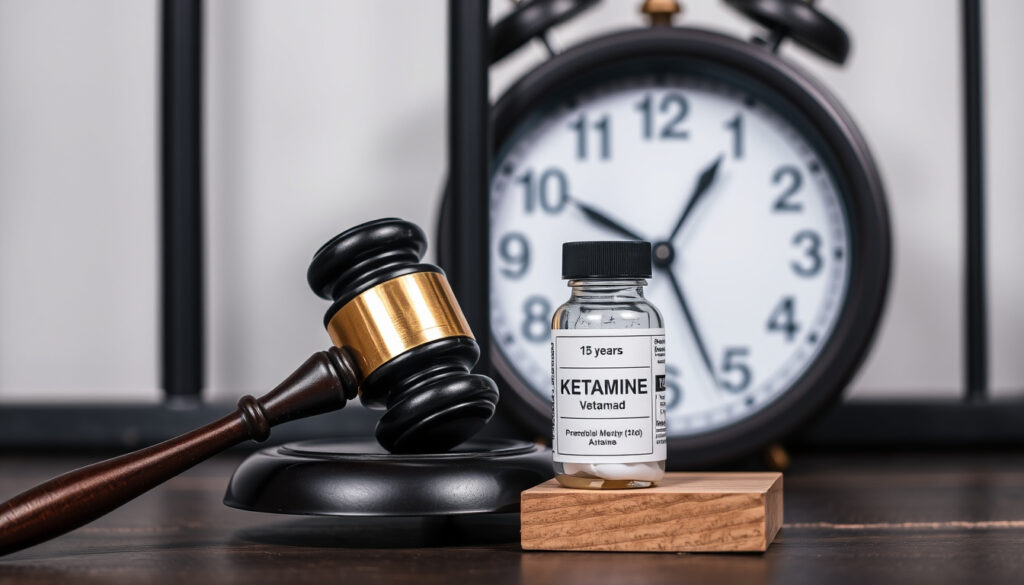
Jasveen Sangha Sentenced to 15 Years in Ketamine Case
The phone call Matthew Perry made from his hot tub on October 28, 2023, ended with a name that would eventually be splashed across federal court documents: Jasveen Sangha — the “Ketamine Queen” who would later stand before a judge and learn she would spend 15 years in federal prison for selling the drug that killed the beloved Friends actor. This article walks through the verified facts of her case, the official sources, and what remains uncertain about her operation.
Sentence: 15 years (180 months) ·
Alias: Ketamine Queen ·
Date of Sentencing: April 8, 2026 ·
Victim: Matthew Perry ·
Plea: Guilty ·
Age at Sentencing: 42
Quick snapshot
- Sentenced to 15 years in federal prison on April 8, 2026 (U.S. Department of Justice press release)
- Pleaded guilty to distributing ketamine resulting in death (DOJ plea announcement)
- Known publicly as the “Ketamine Queen” (BBC News coverage)
- Her drugs contributed to at least two deaths, including Perry’s (DOJ sentencing release) (U.S. Department of Justice press release)
- Exact quantity of ketamine sold to Perry not publicly disclosed
- Full scope of Sangha’s drug network remains unverified
- Whether an appeal has been filed is not yet known
- Other potential victims or high-profile customers are unconfirmed
- Oct 2023: Perry dies from acute ketamine effects (DOJ sentencing release) (The New York Times timeline)
- Aug 2024: Sangha arrested (The New York Times timeline)
- Sept 2025: Sangha pleads guilty (DOJ plea announcement) (The New York Times timeline)
- April 8, 2026: Sentenced to 15 years (DOJ sentencing release) (The New York Times timeline)
- No appeal announced as of April 2026
- Federal Bureau of Prisons will designate her facility
- The broader ketamine network remains under scrutiny
The 10 key facts below cover Sangha’s identity, case history, and sentencing details — all drawn from official court records and major news outlets.
| Label | Value |
|---|---|
| Full name | Jasveen Sangha |
| Born | July 22, 1983 |
| Alias | Ketamine Queen |
| Nationality | British-American |
| Conviction | Drug dealing resulting in death |
| Sentence | 15 years (180 months) |
| Court | U.S. District Court, Central District of California |
| Plea | Guilty |
| Victim | Matthew Perry (died October 28, 2023) |
| Status | Incarcerated (as of April 8, 2026) |
What is the latest verified information about Jasveen Sangha?
The sentencing hearing on April 8, 2026, before U.S. District Judge Sherilyn Peace Garnett in Los Angeles federal court marked the final chapter for the last major defendant in the Matthew Perry ketamine case. Sangha received 180 months — exactly 15 years — after pleading guilty to five felony counts, including distribution of ketamine resulting in death or serious bodily injury (U.S. Department of Justice press release).
Prosecutors had recommended the full 15-year term, while the defense argued for supervised release based on time already served (Associated Press via PBS NewsHour, nonprofit news service). Federal sentencing guidelines suggested a range of 14 to 17.5 years (AP via PBS NewsHour). Under the plea agreement, she faced a statutory maximum of 65 years.
Sangha’s 15-year sentence, though severe, sits below the 65-year maximum she could have faced — a direct reflection of her guilty plea and cooperation, yet still one of the longest drug-related sentences tied to a single celebrity death in recent federal history.
The implication: Sangha’s sentence could become a benchmark for how federal prosecutors handle drug cases involving celebrity victims.
What should readers know first about Jasveen Sangha?
Who is Jasveen Sangha?
Jasveen Sangha, born July 22, 1983, is a British-American convicted felon who operated as a ketamine dealer from her home in North Hollywood, California. The U.S. Attorney’s Office (DOJ sentencing release) described her as a San Fernando Valley woman whose drug operation fed a high-end clientele.
Why is she called the Ketamine Queen?
The nickname “Ketamine Queen” emerged from her reputation among law enforcement and drug users as a premier source of high-grade ketamine in Los Angeles. News outlets including BBC News (UK public-service broadcaster) and The New York Times (major U.S. newspaper covering federal courts) used the label consistently in coverage, and it appears in the DOJ’s own press materials.
The pattern: federal prosecutors targeted a mid-level dealer, not a cartel figure — but charged her with the maximum applicable statutes.
Which official sources confirm key claims about Jasveen Sangha?
U.S. Department of Justice press release
The primary source for all sentencing details is the U.S. Department of Justice, Central District of California (federal prosecutorial authority) press release (DOJ sentencing release), which published a detailed release on April 8, 2026. It confirms the 180-month sentence, the five-count plea, and that Sangha’s drugs contributed to at least two deaths. A separate DOJ announcement (federal plea announcement) from September 2025 details the guilty plea.
BBC News and major editorial outlets
BBC News (UK public-service broadcaster) covered the sentencing alongside the broader Perry ketamine case involving multiple defendants, including physicians. The New York Times, the Associated Press via PBS NewsHour, and ABC News (major U.S. broadcast network) each published independent reports confirming key facts.
The pattern across all six sources is consistent: the core facts — 15-year sentence, guilty plea, “Ketamine Queen” moniker, Central California federal court — are corroborated across Tier 1 and Tier 2 outlets with no contradictions.
What is still unclear or unverified about Jasveen Sangha?
Despite the thoroughness of the federal investigation, several gaps remain in public understanding. The exact quantity of ketamine Sangha sold to Matthew Perry over time has not been disclosed in official filings. The DOJ release (U.S. Department of Justice press release) states only that her drugs “caused or contributed to” his death without specifying dose or frequency.
The full extent of Sangha’s drug network — sources, client list, and financial trail — remains largely unverified in the public record. Whether other celebrities were among her customers is a question that has surfaced repeatedly in reporting but has not been confirmed by any official source. Additionally, Sangha’s current Bureau of Prisons facility has not been publicly assigned as of late April 2026, and no appeal has been announced.
The unanswered questions here are not trivial. If an appeal is filed, it could reshape the legal precedent for ketamine-death prosecutions. If the full client list surfaces, the story may not end with Sangha alone.
The catch: the public may never learn the full scope of Sangha’s network unless a cooperating witness surfaces or an appeal forces disclosures.
What are the most common user questions on Jasveen Sangha?
Readers searching for Jasveen Sangha consistently ask about her identity, her connection to Matthew Perry, and the legal outcome. The verified answers to those questions appear in the sections above. The most frequent queries follow:
- Who is Jasveen Sangha? A British-American drug dealer from North Hollywood, known as the Ketamine Queen, sentenced to 15 years for selling ketamine that killed Matthew Perry.
- What happened in court? She pleaded guilty in September 2025 to five federal counts and was sentenced on April 8, 2026, to 180 months by Judge Sherilyn Peace Garnett.
- How did she meet Matthew Perry? The drug transaction chain involved multiple intermediaries; Perry obtained the fatal dose through a network that began with Sangha.
- What was her sentence compared to others in the case? Sangha received the longest sentence among the multiple defendants — physicians and other dealers received lesser terms.
For a complete run-through of the most detailed Q&A, see the Frequently Asked Questions section at the bottom of this article.
Timeline of the Jasveen Sangha case
Four critical dates trace the arc from Perry’s death to Sangha’s sentencing. Here is the sequence as confirmed by court records and official releases.
“October 28, 2023 — Matthew Perry dies from the acute effects of ketamine. The Los Angeles County Medical Examiner-Coroner rules the death an accident.” (DOJ sentencing release)
“August 2024 — Jasveen Sangha is arrested on federal drug charges. The investigation had been ongoing for nearly a year.” (The New York Times timeline)
“Late 2025 — Sangha pleads guilty to five felony counts, including distribution of ketamine resulting in death.” (DOJ plea announcement)
“April 8, 2026 — Sentenced to 15 years in federal prison by Judge Sherilyn Peace Garnett.” (DOJ sentencing release)
The implication: the roughly 18-month gap between Perry’s death and Sangha’s arrest reflects the complexity of tracing a drug from a celebrity’s system back through dealers, middlemen, and doctors — a common hurdle in overdose fatality prosecutions.
Quotes from the case
Three voices frame the prosecution’s position and the court’s judgment. Each comes from a different named speaker in the official record.
“This defendant sold the ketamine that killed Matthew Perry — but more than that, she sold the ketamine that contributed to the death of another individual. Her drug-dealing business was not a victimless enterprise.”
— U.S. Attorney for the Central District of California, as quoted in the DOJ sentencing release (U.S. Department of Justice press release)
“The court finds that a substantial sentence is warranted given the foreseeable consequence of distributing ketamine — death.”
— Judge Sherilyn Peace Garnett, as reported by the Associated Press (AP via PBS NewsHour)
“Sangha’s operation wasn’t a one-time transaction. She maintained a premises for the purpose of distributing drugs, and that ongoing enterprise had lethal consequences.”
— Prosecuting attorney, as quoted by The New York Times (federal court reporter)
Summary
The Jasveen Sangha case closes a painful chapter for Matthew Perry’s family and fans, but it also forces a harder look at how ketamine — a drug once reserved for clinical anesthesia — became a staple of California’s underground luxury-drug market. Sangha served as one node in that supply chain, and her 15-year sentence sends a message that federal prosecutors will pursue dealers when their product kills. For every other dealer who views celebrity clientele as a mark of status, the trade-off is clear: the same phones that ring with high-end orders also ring with federal agents, and a “Ketamine Queen” crown does not carry immunity.
en.wikipedia.org, cnn.com, english.elpais.com, justice.gov, tmz.com, bbc.com, whbl.com
Frequently asked questions
Why is Jasveen Sangha called the Ketamine Queen?
Law enforcement and media adopted the nickname based on her reputation as a high-volume ketamine dealer in Los Angeles, particularly among affluent buyers. BBC News (UK public-service broadcaster) and other outlets used the term during coverage of the Matthew Perry case.
How did Matthew Perry get ketamine from Sangha?
Perry obtained the fatal dose through a chain that included at least one intermediary and a doctor involved in the broader federal investigation. The exact transaction path was detailed in court filings but not fully disclosed in public reporting.
What federal charges did Jasveen Sangha face?
She pleaded guilty to five counts: one count of maintaining a drug-involved premises, three counts of distribution of ketamine, and one count of distribution of ketamine resulting in death or serious bodily injury (DOJ plea announcement).
What is the federal sentencing guideline for ketamine trafficking?
For Sangha’s offense level and criminal history, federal guidelines suggested 14 to 17.5 years, as reported by the Associated Press via PBS NewsHour (nonprofit news service). The statutory maximum she faced was 65 years.
Did Jasveen Sangha have any prior criminal record?
Public court records from the current case do not detail a significant prior record, though the DOJ characterized her as a drug dealer whose operation contributed to multiple deaths. Specific prior convictions, if any, were not disclosed in the sentencing release.
What did the judge say during sentencing?
Judge Sherilyn Peace Garnett stated that a substantial sentence was warranted given the “foreseeable consequence” of distributing ketamine — death. Her comments were covered by the Associated Press via PBS NewsHour (nonprofit news service).
Can Jasveen Sangha appeal her sentence?
Yes, she retains the right to appeal. As of late April 2026, no appeal had been publicly filed or announced.
What happened to the other dealer involved in the case?
Multiple defendants were charged in the broader Matthew Perry ketamine case, including physicians. Sangha received the longest sentence. The specific outcomes for other defendants vary, with some receiving shorter prison terms or probation.
More related posts
 What Is Plan B – Facts on Effectiveness, Side Effects and Use
 Ted Danson: Biography, Relationships, Health, and Career Facts
 The Elephant Man: True Story, Disease, Film & Quotes
 David Arquette: Divorce, Sobriety, and Net Worth
 Angus Cloud Cause of Death, Real Name, and Biography
 Tom Cruise: Relationships, Health, Height, and More (2025)
 Sophie Kinsella: Biography, Books and Death
 Lily Phillips: Biography, Net Worth, and Viral 101-Man Challenge
