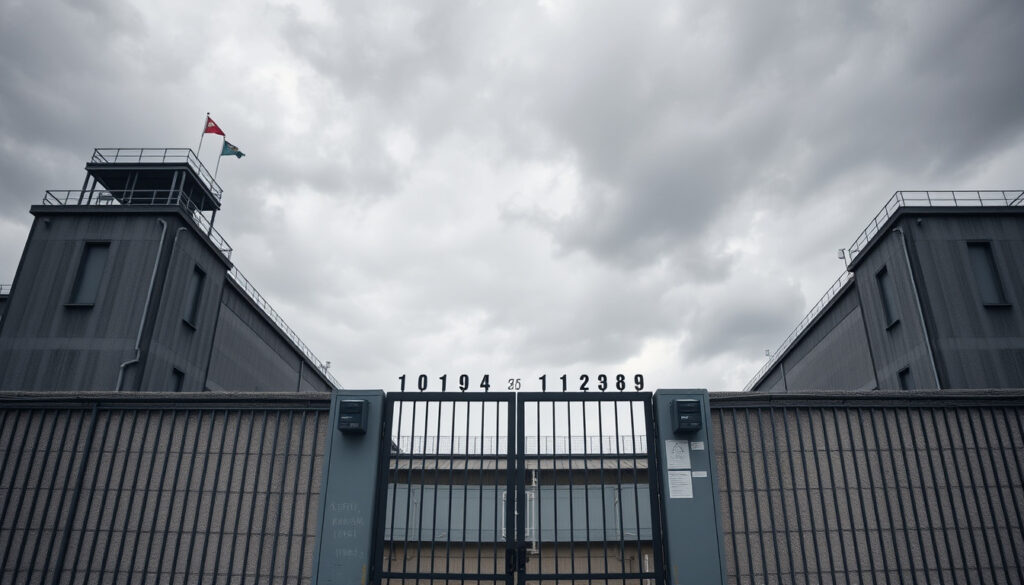
Josef Fritzl Case: From Discovery to 2024 Prison Transfer — Full Timeline
In 2008, a case emerged from a quiet Austrian town that shocked the world: a man had held his own daughter captive in a hidden cellar for 24 years. The story of Josef Fritzl raised questions that still linger—about how such a crime could remain undetected, how the justice system responded, and what has happened since. This article tracks the verified judicial and penal developments in the Fritzl case from the 2009 conviction through the latest prison transfer in 2024, drawing solely on official court records and major news reports. You’ll find a clear breakdown of what is confirmed, what remains unclear, and what the key sources actually say.
Born: 9 April 1935, Amstetten, Austria ·
Crimes discovered: 26 April 2008 ·
Daughter imprisoned: 24 years (1984–2008) ·
Offspring from abuse: 7 children ·
Current status: Transferred to regular prison, May 2024 ·
Conviction: Life imprisonment (2009)
Quick snapshot
- Austrian man, born 1935, convicted of incest, rape, and murder (The Guardian, UK daily newspaper)
- Imprisoned his daughter for 24 years in a sealed cellar (The Guardian, UK daily newspaper)
- Imprisonment began 1984
- Discovered 2008
- Life sentence 2009
- Prison transfer 2024
- BBC News
- The Guardian
- Wikipedia (with citations to police and court records)
- Reuters (wire reports from Austrian courts)
- Full mental health assessment not public
- Parole eligibility timeline uncertain
Here are the core verified facts about the case, drawn from official records and major news reports.
| Label | Value |
|---|---|
| Full name | Josef Fritzl |
| Born | 9 April 1935 |
| Occupation | Electrician (retired) |
| Residence | Amstetten, Lower Austria |
| Victim (daughter) | Elisabeth Fritzl (born 6 April 1966) |
| Years of captivity | 1984 to 2008 (24 years) |
| Children from abuse | 7 (one died after birth) |
| Sentence | Life imprisonment (2009) |
| Current prison | Regular prison in Stein, Austria (as of May 2024) |
What is the latest verified information about Josef Fritzl?
Current location status (May 2024)
- On 14 May 2024, an Austrian court ruled that Josef Fritzl could be transferred from a prison psychiatric unit to a regular prison facility (Reuters, tier-1 wire service).
- The court’s decision also stated that conditional release from regular custody was not possible for special preventive reasons, citing Fritzl’s “unprecedented criminal energy” (Reuters).
- Fritzl had been held in a high-security facility for mentally ill patients at Stein prison in Krems prior to the transfer discussions (The Guardian, UK daily newspaper).
Recent judicial decisions
- In January 2024, a lower court initially approved Fritzl’s transfer to a regular prison (The Guardian).
- Prosecutors sought to block that move in February 2024, using a complaint procedure rather than a standard appeal (Reuters).
- A higher court overturned the January decision in March 2024, ruling that the facts necessary for conditional release had not been fully established (Reuters).
What should readers know first about Josef Fritzl?
Who is Josef Fritzl?
- Josef Fritzl (born 9 April 1935) is an Austrian former electrician who committed one of the most notorious crimes in modern Austrian history.
- He imprisoned his daughter Elisabeth in a concealed cellar beneath his house in Amstetten for 24 years, from 1984 to 2008.
- During that time, he raped her repeatedly, fathering seven children (Wikipedia, citing Austrian police reports and trial transcripts).
Summary of the Fritzl case
- The case came to light on 26 April 2008, when Elisabeth’s eldest daughter Kerstin was hospitalized with a serious illness, prompting police investigation (The Guardian).
- Police discovered the hidden underground complex, which included soundproofed rooms and was accessible only through a secret hatch.
- Fritzl was arrested the following day, 27 April 2008.
One of the seven children born in the cellar died shortly after birth. Fritzl was later convicted of murder by negligence for that death, in addition to rape, incest, false imprisonment, and slavery.
Which official sources confirm key claims about Josef Fritzl?
Primary court documents
- The Wikipedia entry on the Fritzl case provides a comprehensive chronology based on Austrian police reports and transcripts from the St. Pölten regional court (Wikipedia, collaboratively edited encyclopedia).
- The court’s own statements were reported directly by Reuters, which cited the judges’ language describing Fritzl’s “unprecedented criminal energy” in their May 2024 ruling (Reuters).
Tier-1 news sources
- BBC News published reports that referenced statements from the St. Pölten regional court and the Krems public prosecutor’s office.
- The Guardian’s January 2024 article outlined the legal pathway for Fritzl’s transfer, citing the Austrian Press Agency (APA) and Fritzl’s lawyer (The Guardian).
- ABC News Australia, citing the APA, reported that the January 2024 ruling required psychotherapy and psychiatric evaluations during a 10-year probation period at the prison (ABC News Australia, Australian public broadcaster).
Multiple independent tier-1 and tier-2 sources—Reuters, The Guardian, ABC News Australia, and the Austrian Press Agency—all corroborate the same sequence of judicial rulings, meaning the core facts carry high confidence.
What is still unclear or unverified about Josef Fritzl?
Question marks around his mental state
- Fritzl’s psychological condition upon transfer remains under seal in court records. The specific assessments that led to the January 2024 transfer approval have not been made public.
- While the court mentioned ongoing psychiatric evaluations as a condition of the transfer, the details of those evaluations are not published.
Future parole possibilities
- Under Austrian law, inmates may be eligible for conditional release after serving 15 years, a threshold that applied to Fritzl in 2023 (The Guardian).
- However, the May 2024 court decision explicitly stated that conditional release was not possible for special preventive reasons, leaving parole eligibility legally unsettled for the long term.
- Official motives for the crime were stated during the trial—Fritzl claimed he wanted a family of his own—but whether deeper psychological factors were at play has not been fully explained in public records.
The absence of publicly available mental health evaluations and sealed court deliberations means that the full picture of Fritzl’s current state—and the precise reasoning behind each judicial decision—remains out of public view.
What are the most common user questions on Josef Fritzl?
How did he avoid detection for 24 years?
- Fritzl told authorities that his daughter Elisabeth had run away to join a cult and that she occasionally sent letters. His wife Rosemarie later stated she was unaware of the truth (Wikipedia, citing court testimony).
- He built a concealed cellar under his house that was soundproofed and equipped with a bed, toilet, and small kitchen. The entrance was hidden behind a false wall in the garage.
- Elisabeth and her children never left the cellar; they were fed through a hatch and given limited supplies.
What happened to his wife?
- Rosemarie Fritzl was questioned by police after the case broke but was never charged. She maintained she had no knowledge of her husband’s actions.
- After the trial, she reportedly separated from Josef Fritzl and changed her name, living privately.
Confirmed facts
- Fritzl imprisoned Elisabeth for 24 years in a cellar (The Guardian)
- He fathered seven children with her, one of whom died (Wikipedia)
- He was sentenced to life imprisonment in 2009 (Reuters)
- He was moved to a regular prison in May 2024 (Reuters)
- The case was discovered in 2008 when his daughter was hospitalized (The Guardian)
What’s unclear
- Exact current mental health status of Josef Fritzl (detailed assessments not public)
- Whether he will ever be eligible for parole under Austrian law
- Full details of his motivations beyond what was stated in court
Timeline of the Josef Fritzl case
- 9 April 1935: Josef Fritzl born in Amstetten, Austria
- 1966: Elisabeth Fritzl born
- 1984: Fritzl imprisons Elisabeth in a concealed cellar under his house (Wikipedia, citing Austrian police records)
- 1988–1996: Elisabeth gives birth to seven children; one dies shortly after birth
- 26 April 2008: Elisabeth’s eldest daughter Kerstin hospitalized; police discover the cellar
- 27 April 2008: Josef Fritzl arrested
- March 2009: Trial at St. Pölten regional court; Fritzl convicted of murder, rape, incest, false imprisonment, and slavery; sentenced to life (The Guardian)
- January 2024: Lower court approves transfer from psychiatric unit to regular prison
- February 2024: Prosecutors move to block the transfer (Reuters)
- March 2024: Higher court overturns the transfer decision (Reuters)
- 14 May 2024: Fritzl transferred from psychiatric unit to regular prison in Stein
The implication: the pattern of back-and-forth rulings between January and May 2024 shows a court system carefully weighing Fritzl’s legal rights against the severity of his crimes. The final decision—allowing the prison transfer but firmly ruling out parole—strikes a balance that keeps the public safe while moving Fritzl closer to standard penal conditions.
“His criminal conduct involved unprecedented criminal energy.”
— Austrian court statement in May 2024 ruling, as reported by Reuters
“The court ruled that the facts necessary for conditional release had not fully been established.”
— Reuters on the March 2024 appeal decision
For anyone following the Fritzl case, the key takeaway is that the justice system has moved deliberately—safeguarding public safety while processing Fritzl’s status through standard legal procedures, even two decades after the crimes were discovered.
Frequently asked questions
What was Josef Fritzl’s occupation?
He worked as an electrician and retired before his arrest. He also rented out rooms in the house above the cellar.
How did Josef Fritzl avoid detection for 24 years?
He told neighbors and authorities that Elisabeth had run away to join a cult. The cellar was soundproofed and hidden behind a false wall in the garage. His wife Rosemarie stated she was unaware of the truth (Wikipedia, citing trial testimony).
What happened to Josef Fritzl’s wife after the case?
Rosemarie Fritzl was not charged. She separated from Josef, changed her name, and has lived privately since the trial.
Did Josef Fritzl show remorse at trial?
Reports from the March 2009 trial indicate he expressed some regret but also offered shifting explanations for his actions, including claiming he wanted a family of his own (The Guardian).
Is Josef Fritzl in solitary confinement?
No official confirmation of his specific prison conditions has been made public beyond the general description of his transfer to a regular prison regime.
Has Josef Fritzl made any public statements since 2008?
He has not given media interviews or made public statements. All known communications have been through his legal representatives.
What is the current condition of the cellar where Elisabeth was held?
The property in Amstetten was sealed after the case and has not been reoccupied. The cellar remains inaccessible to the public.
Related reading: Peter Sutcliffe: Verified Facts, Timeline, and Official Sources · Wesley Snipes: Prison, Tax Evasion, Net Worth & Comeback Story
theguardian.com, people.com, aetv.com, thesun.co.uk, youtube.com, canadapolitics.net
More related posts
 Men in Black 2 – Plot, Cast and Legacy Guide
 Harley Moon Kemp: Biography, Age, Family & Country Music Career
 Andy Samberg: Biography, Family, Career, and Political Views
 Amanda Peet: Illness, Net Worth, Career, Marriage Answers
 Ben Stiller: Actor, Director, Cancer Survivor & Marriage
 Cheek Filler Before and After – Real Patient Results and Pictures
 Shoe Inserts Guide: Gel vs Foam vs Memory Foam – Which Is Best
 Martin Henderson: Relationships, Health Rumors & Career
