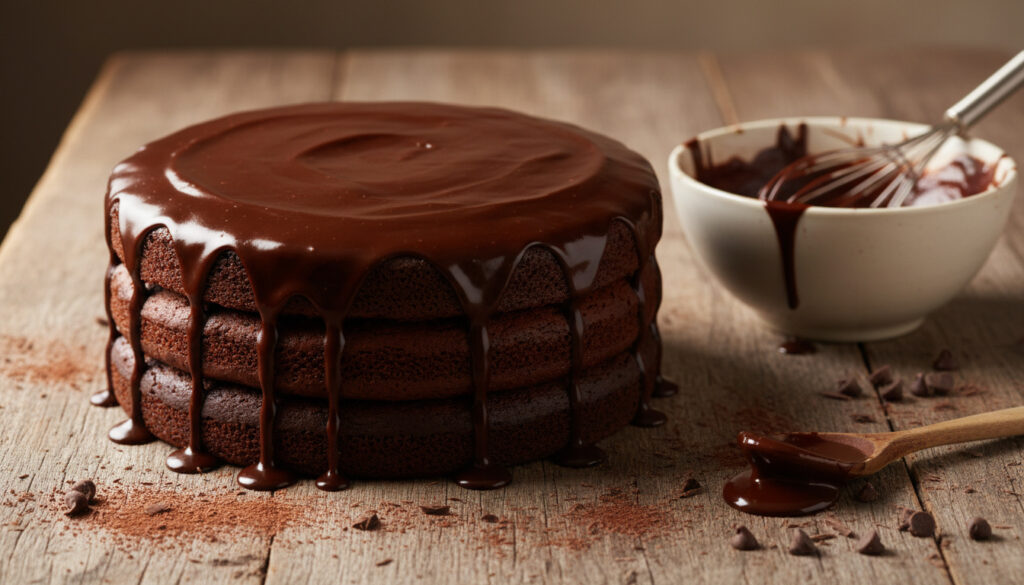
Chocolate Fudge Cake Recipe – Super Moist One-Bowl Guide
A super moist chocolate fudge cake represents the ideal balance between dense texture and approachable technique. The method emphasizes efficient preparation without sacrificing the depth of flavor expected from a traditional British sponge.
Mary Berry’s interpretation establishes a benchmark for this dessert category. Her formulation produces a moist, fudgy sponge topped with rich chocolate ganache, utilizing an all-in-one bowl approach that simplifies the baking process while maintaining professional results.
The characteristic grown-up chocolate flavor distinguishes this recipe from sweeter alternatives. By employing cocoa powder activated with boiling water and a precisely balanced ganache, the cake delivers complexity suitable for both casual occasions and formal celebrations.
Super Moist Chocolate Fudge Cake Recipe
Prep Time: 15 minutes
Cook Time: 25-30 minutes
Servings: 12 slices
Difficulty: Easy
- Blooming cocoa powder in boiling water intensifies chocolate flavor and removes bitterness
- The all-in-one mixing method minimizes washing up and reduces preparation time
- Apricot jam creates a moisture barrier and adds subtle tartness between layers
- Room temperature butter and eggs ensure smooth emulsion without curdling
- Double leavening with self-raising flour and additional baking powder creates even rise
- Ganache made with 39% cocoa solids chocolate offers balanced sweetness for the filling
| Ingredient | Quantity | Function |
|---|---|---|
| Cocoa powder | 50g | Base chocolate flavor |
| Boiling water | 6 tbsp | Blooms cocoa, develops flavor |
| Self-raising flour | 175g | Structure and primary lift |
| Baking powder | 1 tsp rounded | Additional leavening |
| Caster sugar | 275g | Sweetness and moisture retention |
| Butter (softened) | 100g | Fat for tender crumb |
| Eggs | 3 large | Binding and richness |
| Milk | 50ml | Batter consistency |
| Plain chocolate (39%) | 150g | Ganache base |
| Double cream | 150ml | Ganache creaminess |
| Apricot jam | 3 tbsp | Moisture barrier between layers |
Simple Chocolate Fudge Cake Recipe
One-Bowl Method Efficiency
The all-in-one technique eliminates the traditional creaming stage. By blending cocoa powder with boiling water first to form a smooth paste, then adding all remaining cake ingredients directly into the same bowl, the method reduces preparation time and equipment requirements. Video documentation confirms that this approach cooks the cocoa slightly, enhancing the depth of flavor.
Scaling and Adaptability
The standard formulation yields 12 servings using two 20cm sandwich tins. For larger gatherings, scaling to 1.5x the quantities requires adjusting to 9 tablespoons of water, 262g of self-raising flour, 412g of caster sugar, 150g of butter, and 4.5 large eggs. Baking time extends by 5-10 minutes beyond the standard 25-minute window, according to adaptations documented for family baking.
Adding all ingredients to the cocoa paste once it has cooled slightly prevents the eggs from cooking upon contact with the hot liquid, while still maintaining the enhanced chocolate flavor developed by the initial blooming process.
Temperature Calibration
Precision in oven calibration proves essential. The recipe specifies 180°C conventional, 160°C fan, or Gas Mark 4. Deviation from these parameters affects moisture retention. Bakers using Fahrenheit settings may find that converting 325 F to C aligns approximately with the fan oven temperature required.
Ultimate Chocolate Fudge Cake
Ganache Construction
The filling and icing utilize a ganache prepared by melting 150g of plain chocolate with 150ml of double cream over simmering water for approximately ten minutes. The mixture requires cooling until nearly set before application, allowing it to spread smoothly without dripping while maintaining structural integrity between the layers.
Flavor Profile Distinction
Described as possessing a grown-up chocolate flavor, the cake avoids excessive sweetness through the use of 39% cocoa solids chocolate in the ganache and the strategic application of apricot jam. This creates a sophisticated palate experience distinct from confectionery-style desserts, focusing on density rather than height.
Chocolate Fudge Cake Recipe with Oil
While the verified recipe specifies softened butter as the fat component, oil-based variations circulate widely within baking communities. Specialist baking resources suggest that recipes utilizing vegetable or sunflower oil theoretically produce increased moisture retention due to oil’s liquid state at room temperature, though specific proportions and textural outcomes for this particular formula remain untested.
The butter-based method documented here yields verified results. Substituting oil would require reformulating the liquid ratios and leavening agents, as oil does not cream with sugar in the same manner as butter. Specific conversion measurements for this recipe have not been established.
Step-by-Step Baking Process
- Preheat oven to 180°C/Fan 160°C/Gas 4 and grease two 20cm sandwich tins with baking parchment.
- Blend 50g cocoa powder with 6 tablespoons boiling water in a large bowl until smooth.
- Add all remaining cake ingredients—175g self-raising flour, 1 tsp baking powder, 275g caster sugar, 100g softened butter, 3 large eggs, and 50ml milk—to the cocoa paste.
- Beat until the mixture forms a smooth, thickish batter, then divide equally between the prepared tins.
- Bake for 25-30 minutes until well risen and springy to the touch.
- Cool briefly in the tins before turning out onto a wire rack to complete cooling.
- Warm 3 tablespoons of apricot jam and spread onto one cake base and the other cake top.
- Melt 150g plain chocolate with 150ml double cream in a heatproof bowl over simmering water for approximately 10 minutes, stirring occasionally.
- Cool the chocolate mixture until almost set, then spread onto both cakes, sandwich together, and smooth with a palette knife.
Established Techniques and Uncertain Variations
Verified Methods
- Cocoa powder bloomed with boiling water
- Butter-based fat content (100g)
- Double leavening system
- 20cm sandwich tin geometry
- Apricot jam moisture barrier
Unverified Variations
- Oil substitution ratios
- Exact timing for fan oven conversion
- Ganache setting temperature precision
- Dairy-free cream alternatives
- Gluten-free flour performance
Alternative culinary resources may provide additional context on oil-based variations, though specific adaptations for British metric measurements remain limited.
British Baking Tradition and Context
The chocolate fudge cake occupies a distinct position within British home baking, characterized by its use of cocoa powder rather than melted chocolate in the sponge base. This technique, championed through Mary Berry’s extensive publishing career, emphasizes practicality without compromising on the dense, fudgy texture that defines the genre.
The inclusion of apricot jam between layers references classical pastry techniques adapted for domestic kitchens. This application serves both functional and flavor purposes, preventing moisture loss from the sponge while adding a subtle tart note that balances the richness of the chocolate ganache.
Unlike American-style chocolate cakes that often prioritize height and sweetness, the British fudge cake focuses on a closer crumb and more restrained sugar content, making it suitable for afternoon tea service or as a concluding course to a substantial meal.
Documentation and Authority
A moist, fudgy sponge cake topped with a rich chocolate ganache, designed as an all-in-one bowl recipe that’s simple to make.
The Happy Foodie
The recipe is kid-friendly and suitable for decoration with items like Smarties for special occasions.
Cooking With My Kids
Comparative recipes demonstrate the diversity of approaches to chocolate cake construction internationally, though the specific metric measurements and techniques detailed here remain specific to the British tradition.
Final Considerations
This super moist chocolate fudge cake recipe delivers consistent results through its scientific approach to ingredient interaction—specifically the blooming of cocoa and the dual-texture contrast between sponge and ganache. While the butter-based method remains fully documented, those seeking to explore oil variations should consult specialized culinary resources. For alternative dessert preparations requiring no oven time, consider this No Bake Cheesecake Recipe.
Common Questions
How does Mary Berry’s chocolate fudge cake differ from standard recipes?
Mary Berry’s version uses an all-in-one bowl method with cocoa powder bloomed in boiling water, producing a specifically moist, fudgy texture with a grown-up chocolate flavor, topped with a ganache made from 39% cocoa solids chocolate and apricot jam layers.
What makes this recipe specifically suitable for UK baking measurements?
The recipe utilizes metric measurements including 175g self-raising flour, 275g caster sugar, and 20cm sandwich tins, with temperature settings provided for both conventional and fan ovens common in British kitchens.
Can the recipe be adapted for larger celebrations?
Yes, scaling to 1.5x the ingredients accommodates larger gatherings, though baking time requires extension by 5-10 minutes and tin size considerations must be adjusted accordingly.
Is oil substitution recommended for increased moisture?
While oil can theoretically increase moisture retention, specific substitution ratios for this particular recipe have not been verified, and the butter-based method yields confirmed fudgy results.
How should the ganache be prepared for optimal spreading consistency?
Melt 150g plain chocolate with 150ml double cream over simmering water for ten minutes, then cool until almost set before spreading to prevent dripping while maintaining smooth application.
What distinguishes BBC Good Food’s approach from this method?
BBC Good Food offers multiple variations of chocolate fudge cake, while the recipe documented here specifically follows Mary Berry’s tested formulation as published through The Happy Foodie, featuring the distinctive all-in-one technique.
More related posts
 Nicolas Jarry: Career, Nose Tape, Ranking, and More
 Majorca’s rising eco-tax: the real cost for a family holiday in 2025
 Discount Codes Ireland: How to Get & Use Them
 Solid Snake: The Tragic Clone Hero of Metal Gear Solid
 Cast of Wayne’s World 1992: Actors, Cameos & Trivia Guide
 Sam Quek: Biography, Olympic Gold, Husband, Children & Net Worth
 Tissot PRX Powermatic 80: Review, Specs & Comparisons
