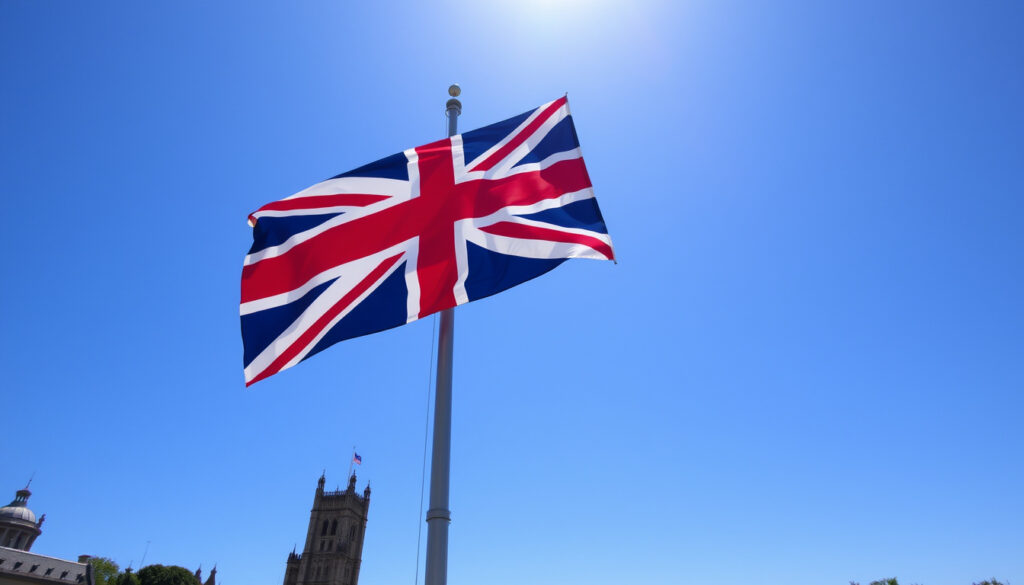
Operation Raise the Colours: UK Flag Campaign Explained
Few things spark a debate about national identity quite like a flag. When that flag starts appearing on roundabouts, lampposts, and motorway bridges across the UK, the conversation quickly shifts from patriotism to politics. Operation Raise the Colours, a campaign that began in August 2025, has done exactly that — turning a display of the Union Jack and St George’s Cross into a national talking point about far-right symbolism and local pride.
Campaign start date: August 2025 ·
Organizer (co-founder): Andrew Currien ·
Flags used: Union Jack and St George’s Cross ·
Controversy: Accused of far-right extremism by HOPE not hate ·
Geographic scope: United Kingdom (England, Scotland, Wales)
Quick snapshot
- Whether campaign is genuinely grassroots or astroturfed
- Exact number of participants
- Whether UK government will formally respond
- August 2025: Campaign gains traction on social media (Wikipedia)
- August 22, 2025: HOPE not hate publishes report linking campaign to far-right (HOPE not hate)
Six facts that frame the campaign, from its official claims to the controversy surrounding it.
| Fact | Details |
|---|---|
| Campaign name | Operation Raise the Colours |
| Start date | August 2025 |
| Organizer | Andrew Currien (co-founder) |
| Flags used | Union Jack and St George’s Cross |
| Controversy | Accused of far-right extremism |
| Government response | No official stance; local councils acting independently |
What is the Raise the Colours operation?
- Operation Raise the Colours is a campaign movement in the UK that displays the Union Flag and the St George’s Cross in public places, including lampposts and mini-roundabouts, according to Wikipedia.
- The campaign began in August 2025 (Wikipedia).
- TRT World reported that tens of thousands of Saint George flags were hoisted on lampposts, draped over roundabouts, and sprayed across road signs over the last two weeks of summer (TRT World).
Who started Operation Raise the Colours?
- TRT World identified Operation Raise the Colours as being founded by Andrew Currien, also known as Andy Saxon (TRT World).
- HOPE not hate reported that Andrew Currien’s X account linked to a fundraising page to help purchase new flags for continued display (HOPE not hate).
Is Operation Raise the Colours a far-right movement?
- HOPE not hate, the anti-racism advocacy group, said Operation Raise the Colours was organised by well-known far-right extremists (HOPE not hate).
- Stand Up to Racism and HOPE not hate opposed the movement, arguing it was a cynical attempt by the far right to promote its ideas, inflame tensions, and intimidate immigrants, asylum seekers, and other ethnic minorities (Wikipedia).
- Wikipedia reports that several far-right activists and organisations, including Britain First and Tommy Robinson, supported and promoted the campaign (Wikipedia).
- TRT World said the campaign’s support came mainly from far-right corners of the internet (TRT World).
The campaign’s own stated goal is patriotic display, but the network of supporters — from Britain First to Tommy Robinson — gives weight to accusations that it functions as a far-right organising front. For local communities, the flags become symbols whose meaning depends entirely on who is seen behind them.
The controversy highlights the difficulty of separating patriotism from political manipulation.
Why are people putting up flags in the UK?
- The stated motivation is a desire to show patriotism and display national pride amid what supporters see as a perceived lack of national identity.
- Fox News reported that Reform UK and Nigel Farage have promoted the flag dispute as part of broader populist politics (Fox News).
- Fox News said Robert Jenrick posted on X: “Raise The Colours!” and criticized councils for taking down flags (Fox News).
What is the purpose of the flag displays?
- Fox News reported that Operation Raise the Colours has called for people to put flags up where they live and in everyday life (Fox News).
- TRT World quoted a message attached to the campaign narrative suggesting that England is for the English alone (TRT World).
Are the flag displays spontaneous or organized?
- The campaign was coordinated through TikTok and Facebook groups, with supporters sharing locations and encouraging others to join.
- The Lead reported that Operation Raise the Colours was being discussed in the context of England flags placed on motorway bridges and roundabouts (The Lead).
- TRT World reported that Flag Force UK’s X account amassed almost 18,000 followers in under a month (TRT World).
A movement that claims to be spontaneous grassroots patriotism is backed by coordinated social-media campaigns, prominent political figures, and known far-right activists. The question of authenticity matters because it determines whether these flags reflect genuine public sentiment or an organised political operation.
The pattern shows that organisation and spontaneity are often indistinguishable in modern activism.
Why are people painting red crosses on roundabouts?
- The St George’s Cross has been painted on grass verges, roundabouts, and road signs across the UK — a tactic that draws attention precisely because it is visible, cheap, and communal.
- This roundabout flag-painting phenomenon became the most visible expression of Operation Raise the Colours, spreading rapidly through towns and suburbs.
- The Lead reported on England flags placed on motorway bridges and roundabouts as a key feature of the campaign (The Lead).
What is the roundabout flag painting phenomenon?
- Supporters paint or place St George’s Crosses on roundabouts, grass verges, and road infrastructure — often without permission from local authorities.
- The movement’s flag displays became controversial in part because the St George’s Cross has a history of use by anti-immigration nationalists, according to Wikipedia.
- Some members of flagging groups have reportedly engaged in anti-migrant vigilantism in northern France and on the streets of Paris, per Wikipedia.
Is painting flags on roundabouts illegal?
- Local councils have removed flags and painted-over symbols, citing road safety and lack of permission.
- Fox News reported that Tower Hamlets and Birmingham City Council decided to tear down English flags hung in streets by supporters of the movement (Fox News).
- Wikipedia says Nick Ireland, the Liberal Democrat leader of Dorset Council, warned in August 2025 about the campaign and its associations (Wikipedia).
- There is no specific law against painting a flag on public grass, but doing so without council permission can be treated as criminal damage or an infringement of highway regulations.
Councils face a no-win choice: remove the flags and be accused of suppressing patriotism, or leave them and be seen as tolerating what critics call far-right imagery. Either decision fuels the very debate the campaign intends to provoke.
The implication is that symbolic actions force authorities into reactive positions with no neutral option.
Is the UK going to change their flag?
- There is no official government plan to change the Union Jack or any other UK flag.
- The question appears to stem from satirical or speculative social-media posts about a potential redesign — not from any government announcement.
- No credible source has confirmed any official proposal to alter the national flag.
Has the UK government announced a new flag design?
- No.
- The UK government has not issued any statement about changing the flag.
- Stories about a “new Union Jack design” circulating online are not supported by any official source.
What is the Union Jack redesign story?
- Rumors of a flag redesign appear to stem from social media speculation and satirical content, not from any government announcement.
- The confusion may also relate to the unrelated question of whether the Union Jack should be redesigned to better represent the whole UK — a periodic topic in design circles but not an active policy proposal.
The pattern confirms that misinformation can divert attention from substantive issues.
Why do Muslims like St. George?
- St George is revered in some Islamic traditions, where he is associated with the figure of al-Khidr, a mysterious and revered prophet or saint.
- The connection stems from shared narratives: St George’s legend includes a Middle Eastern setting — he was born in Cappadocia (modern-day Turkey) and served as a Roman soldier in Palestine.
- Al-Khidr appears in the Quran as a wise and immortal figure, and some Islamic traditions identify him with St George.
What is the connection between St George and Islam?
- St George is not a central figure in Islam, but he is respected in some traditions as a righteous figure.
- Some Islamic scholars and folk traditions identify St George with al-Khidr, the “Green One” — a figure of great wisdom who appears in the Quran (Surah 18).
- This connection means St George is not universally seen in Muslim-majority cultures as a Christian or Western symbol alone.
How is St George viewed in Middle Eastern traditions?
- In parts of the Middle East, St George is venerated by both Christians and Muslims alike.
- Churches and mosques dedicated to St George or al-Khidr exist in Palestine, Syria, and Lebanon.
- For many Muslims in the UK, St George is simply England’s patron saint — with little religious significance attached.
The implication is that symbols carry multiple meanings depending on context.
Timeline
- August 2025: Operation Raise the Colours campaign begins gaining traction on social media.
- August 22, 2025: HOPE not hate publishes a report linking the campaign to well-known far-right extremists (HOPE not hate).
- Late August 2025: Councils in Tower Hamlets and Birmingham begin removing flags, citing safety concerns. Flag Force UK’s X account surpasses 18,000 followers (TRT World).
- Ongoing: Local authorities continue to remove painted flags and engineered displays; national debate about identity, patriotism, and far-right symbolism continues.
The pattern demonstrates the speed at which local actions can trigger national political consequences.
What we know and what remains unclear
Confirmed facts
- Campaign started in August 2025 (Wikipedia)
- Andrew Currien is a co-founder (TRT World)
- Flags include Union Jack and St George’s Cross (Wikipedia)
- HOPE not hate has identified far-right connections (HOPE not hate)
- Local councils have removed flags citing safety concerns (Fox News)
- Political figures including Robert Jenrick have publicly supported the campaign (Fox News)
What’s unclear
- Whether the campaign is genuinely grassroots or astroturfed by organised groups
- Exact number of participants and flags displayed
- Whether the UK government will issue any formal response or guidance
- The extent to which ordinary participants are aware of far-right connections
- How long the campaign will sustain momentum
- Whether the campaign will lead to changes in flag-display laws
The contrast underlines the gap between what is documented and what remains speculative.
Voices on the controversy
“Operation Raise the Colours is a campaign movement in the UK that displays the Union Flag and the St George’s Cross in public places, including lampposts and mini-roundabouts.”
— Wikipedia, the online encyclopedia
“Operation Raise the Colours was organised by well-known far-right extremists.”
— HOPE not hate, anti-racism advocacy group
“Robert Jenrick posted on X: ‘Raise The Colours!’ and criticized councils for taking down flags.”
— Fox News, US news network
“Flag Force UK’s X account amassed almost 18,000 followers in under a month.”
— TRT World, international news outlet
What this means for the UK
Operation Raise the Colours is not simply a flag campaign — it is a test case for how Britain handles the tension between patriotic display and the real-world associations of those symbols. For communities in Tower Hamlets, Birmingham, and Dorset, the immediate consequence is visible: councils remove flags, neighbours argue about what the St George’s Cross means, and the national conversation about identity sharpens. The campaign has succeeded in one thing — forcing a public reckoning with the question of who gets to claim England’s flag. For the UK government, the choice is clear: issue clear guidance on flag displays and far-right associations, or leave local authorities to navigate this political minefield alone.
Related reading: Reform UK Membership Ticker · Personal Tax Allowance 2023/24
Frequently asked questions
How can I get involved in Operation Raise the Colours?
The campaign is promoted through social media platforms including TikTok and Facebook. Supporters are encouraged to display Union Jack and St George’s Cross flags. However, independent groups and individuals should be aware of the controversy surrounding the campaign’s leadership and associations.
Is it legal to paint flags on roundabouts?
Painting flags on public land without council permission may constitute criminal damage or a highway violation. Several councils have removed flags and painted-over symbols citing safety and legal concerns.
What is the history of the Union Jack?
The Union Jack, officially the Union Flag, combines the crosses of St George (England), St Andrew (Scotland), and St Patrick (Ireland). Its current design dates from 1801. It is the official flag of the United Kingdom.
Are there any official government statements about the campaign?
No official government statement has been issued regarding Operation Raise the Colours as of writing. Some political figures, including Robert Jenrick, have expressed support on social media.
What is the connection between St George and Islam?
St George is associated with the figure of al-Khidr in some Islamic traditions. Al-Khidr appears in the Quran as a wise, immortal figure, and some traditions identify him with St George, giving the saint recognition beyond Christian contexts.
How are local councils responding to flag displays?
Tower Hamlets and Birmingham City Council have removed flags and painted symbols. Other councils are assessing displays on a case-by-case basis, balancing freedom of expression with public safety concerns.
Why is the England flag sometimes seen as racist?
The St George’s Cross has been used by anti-immigration and far-right groups, which has led to contested meanings. For many it is a neutral national symbol; for others it carries associations with xenophobia and extremism depending on context.
What is the role of social media in the campaign?
Social media platforms including TikTok, X (formerly Twitter), and Facebook have been central to organising, sharing locations, and amplifying the campaign’s reach. Flag Force UK’s X account gained nearly 18,000 followers in under a month.
More related posts
 Best Annuity Rates UK – Highest In 15 Years
 Luxmy Gopal: BBC Journalist’s Career, Age, and Personal Life
 Daryl Sabara: Spy Kids star’s sobriety, wife, kids & net worth
 Kelly Brook: Biography, Husband, Children, and Career Today
 Santander Customer Service Number – Official UK Lines & Hours
 Marty Reisman: The True Story vs. ‘Marty Supreme’ Controversy
 Matthew Macfadyen: Biography, Accent, and Why He Hated Playing Darcy
 What Is a Maisonette? Definition, Vs Flat & Key Facts
