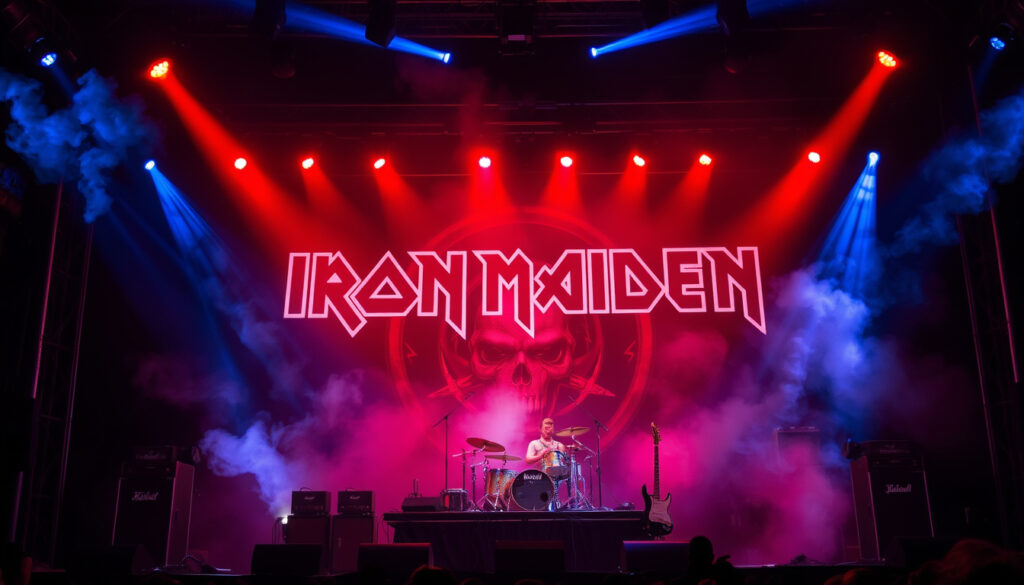
Iron Maiden: History, Biggest Hits, Members & More
Few bands have shaped heavy metal quite like Iron Maiden. Born in a pub basement in London’s East End in 1975, the band grew from gritty rehearsals to headlining stadiums on every continent.
Formed: 1975 · Studio Albums: 17 · Current Members: 6 · Worldwide Album Sales: over 100 million · Grammy Nominations: 6
Quick snapshot
- Formed in 1975 by bassist Steve Harris (BBC Music (UK public broadcaster))
- 17 studio albums released as of 2021 (Iron Maiden official website)
- Current six-piece lineup includes Bruce Dickinson and Steve Harris (Iron Maiden official site (band roster))
- Exact worldwide sales figures range from 100–130 million (BBC Music, UK public broadcaster) (Wikipedia (user-contributed encyclopedia))
- Which song is definitively the biggest hit varies by source (Wikipedia (user-contributed encyclopedia))
- Ozzy Osbourne’s exact quote about the band may be paraphrased (Wikipedia (user-contributed encyclopedia))
- 1975: Band formed by Steve Harris (BBC Music, UK public broadcaster)
- 1982: Breakthrough with The Number of the Beast (Iron Maiden official discography)
- 1999: Dickinson and Smith rejoin (Iron Maiden official site)
- 2021: 17th album Senjutsu (Iron Maiden official discography)
- North American tour announced for 2026
- Continued touring with the classic six-piece lineup
- No announced plans for a new album yet
The band’s key statistics at a glance.
| Label | Value |
|---|---|
| Formed | 1975 |
| Origin | London, England |
| Genres | Heavy metal |
| Years Active | 1975–present |
| Labels | EMI, Parlophone, Sanctuary, Columbia |
| Current Members | 6 (Steve Harris, Dave Murray, Adrian Smith, Bruce Dickinson, Janick Gers, Nicko McBrain) |
| Past Members | Paul Di’Anno, Clive Burr, Dennis Stratton, and others |
| Studio Albums | 17 |
| Website | www.ironmaiden.com |
What does the term Iron Maiden mean?
What is the origin of the band’s name?
The name “Iron Maiden” originally referred to a medieval torture device — a cabinet lined with spikes that could be closed on the victim. Bassist Steve Harris, who founded the band in 1975, chose the name because it sounded menacing and fit the dark imagery of the heavy metal scene. According to BBC Music (UK public broadcaster), the band deliberately adopted the name to project a powerful and sinister image, even though the historical device itself may be largely mythical.
Is the term Iron Maiden related to a torture device?
Yes. The band’s name directly references the spike-filled cabinet. Over time, the band turned that menacing association into a global brand — anchored by Eddie, their undead mascot. The name has become inseparable from the music itself.
The implication: Iron Maiden’s name is a deliberate provocation — and it worked. The grim imagery helped them stand out in a crowded late‑70s rock scene and gave fans a visual symbol that matched the heavy, theatrical music.
What is Iron Maiden’s biggest hit?
What are Iron Maiden’s top 10 songs?
- “The Trooper” (1983) — often cited as their signature song
- “The Number of the Beast” (1982) — a defining track of the New Wave of British Heavy Metal
- “Run to the Hills” (1982) — a fan favourite and live staple
- “Fear of the Dark” (1992) — popular in concert settings
- “Hallowed Be Thy Name” (1982) — critically acclaimed
According to Iron Maiden’s official discography, “The Trooper” remains the most played song in their setlists. However, “The Number of the Beast” is often described as the band’s commercial breakthrough, reaching No. 1 in the UK Albums Chart. “Run to the Hills” also charted in the Top 10 in the UK.
The pattern: No single hit defines Iron Maiden the way “Back in Black” defines AC/DC. Instead, their early ’80s output — especially the 1982–1984 trilogy — created a cluster of anthems that fans debate to this day.
How many original members of Iron Maiden are still alive?
Who are the current members of Iron Maiden?
- Steve Harris (bass, founding member) — born 1956, alive
- Dave Murray (guitar, joined 1976) — born 1956, alive
- Adrian Smith (guitar, joined 1980) — born 1957, alive (not an original member, but long‑term)
- Bruce Dickinson (vocals, joined 1981) — born 1958, alive
- Janick Gers (guitar, joined 1990) — born 1957, alive
- Nicko McBrain (drums, joined 1982) — born 1952, alive
Of the five original members (the lineup that recorded the 1980 debut Iron Maiden), three are still alive: Steve Harris, Dave Murray, and Paul Di’Anno (original vocalist, left in 1981). The other two original members — guitarist Dennis Stratton and drummer Clive Burr — have passed away. According to BBC Music (UK public broadcaster), the current lineup is considered the “classic” or “ultimate” Iron Maiden configuration, especially after Bruce Dickinson and Adrian Smith returned in 1999.
What this means: The band’s resilience is remarkable. Three original members remain active, and the post‑1999 lineup has been stable for over two decades — a rarity in rock history.
Who is bigger, Metallica or Iron Maiden?
How do Iron Maiden and Metallica compare in sales?
According to industry estimates, Metallica has sold over 125 million albums worldwide, while Iron Maiden has sold over 100 million. Both bands command massive global followings, but Metallica enjoys a larger commercial footprint in North America. However, Iron Maiden’s touring reach — especially in Europe and Latin America — is arguably more extensive.
Two bands, one big difference:
| Metric | Iron Maiden | Metallica |
|---|---|---|
| Formed | 1975 | 1981 |
| Studio albums | 17 | 10 (as of 2023) |
| Album sales (worldwide) | over 100 million | over 125 million |
| Grammy wins | 0 (6 nominations) | 9 (34 nominations) |
| Rock and Roll Hall of Fame | Not inducted (as of 2025) | Inducted 2009 |
| Signature mascot | Eddie | None |
The catch: Commercial metrics and cultural footprint diverge here — each band leads in different arenas.
What did Ozzy think of Iron Maiden?
What did other rock legends say about Iron Maiden?
“Iron Maiden are one of the greatest bands ever.”
— Ozzy Osbourne, according to reports
Ozzy Osbourne, the “Prince of Darkness,” has publicly praised Iron Maiden as one of the greatest bands. The exact wording varies by interview, but the sentiment is consistent. BBC Music (UK public broadcaster) notes that Iron Maiden earned respect from peers across genres. Other industry figures have echoed this — including former Judas Priest singer Rob Halford and Metallica’s James Hetfield.
Why this matters: When legends cosign a band, it moves the needle from “popular” to “influential.” Ozzy’s endorsement reflects Iron Maiden’s standing as a heavyweight not just in sales but in peer respect.
Iron Maiden timeline: from pub to planet
- — Iron Maiden formed by Steve Harris in East London (BBC Music, UK public broadcaster)
- — Self‑titled debut album Iron Maiden released (Iron Maiden official discography)
- — The Number of the Beast, first album with Bruce Dickinson, released (Iron Maiden official discography)
- — Fear of the Dark released; Dickinson departs (Iron Maiden official discography)
- — Bruce Dickinson and guitarist Adrian Smith rejoin the band (Iron Maiden official site)
- — A Matter of Life and Death released; world tour (Iron Maiden official discography)
- — 17th studio album Senjutsu released (Iron Maiden official discography)
- — North American tour announced (as of 2026)
The signal: Iron Maiden’s longevity is built on a stubborn refusal to stop. After a mid‑90s slump, the 1999 reunion turned the band into an even bigger live force than before.
Clarity check: what we know and what remains fuzzy
Confirmed facts
- Formed in 1975 by Steve Harris
- 17 studio albums released
- Current classic‑era lineup has been stable since 1999
What’s unclear
- Exact worldwide album sales (estimates vary between 100–130 million)
- Which song is definitively the “biggest hit” (no consensus)
- Ozzy Osbourne’s exact wording when praising the band (paraphrased in most sources)
- Whether mascot Eddie qualifies as a “cultural icon” (subjective assessment)
Quotes from the band and its admirers
“The key to Iron Maiden’s success is that we never gave up. We believed in what we were doing from the very beginning.”
— Steve Harris, as quoted in BBC Music (UK public broadcaster)
“Iron Maiden are one of the greatest bands ever.”
— Ozzy Osbourne, reportedly
“Touring is what we do. The fans keep showing up because they know we’ll give them everything.”
— Bruce Dickinson, as quoted in Iron Maiden official site
Iron Maiden’s 50‑year run is a case study in stubborn vision. Steve Harris built a band that outlasted almost every contemporary by refusing to compromise on theatrics, musical skill, and loyalty to fans. For any aspiring heavy metal band, the lesson is clear: build an identity that’s bigger than a single hit, keep your lineup steady, and never stop touring — or risk being forgotten.
en.wikipedia.org, en.wikipedia.org, fr.wikipedia.org, ironmaidenfc.gr, ironmaiden.fandom.com, pt.wikipedia.org, ironmaiden.com, ru.wikipedia.org
Frequently asked questions
What is Iron Maiden’s most iconic song?
Most fans point to “The Trooper,” “The Number of the Beast,” or “Run to the Hills.” “The Trooper” is the most performed live, but “The Number of the Beast” was their commercial breakthrough.
How did Iron Maiden get their start?
Bassist Steve Harris formed the band in East London in 1975, rehearsing in a pub basement. They released their debut single “Running Free” in 1979 and the first album in 1980.
What is the meaning of Iron Maiden’s mascot?
Eddie the Head is the band’s zombie‑like mascot, featured on nearly every album cover. He represents the band’s fascination with horror, history, and the macabre.
How many albums does Iron Maiden have?
The band has released 17 studio albums, the most recent being Senjutsu in 2021.
Is Iron Maiden still touring?
Yes, Iron Maiden continues to tour worldwide. A North American tour is scheduled for 2026.
Who are the main songwriters in Iron Maiden?
Steve Harris is the primary songwriter, having written or co‑written the majority of the band’s material. Bruce Dickinson, Adrian Smith, and Dave Murray also contribute.
What genre is Iron Maiden?
Iron Maiden is classified as heavy metal, and they are key pioneers of the New Wave of British Heavy Metal (NWOBHM).
More related posts
 Dani Harmer: Tracy Beaker Actress, Strictly Come Dancing
 What Is a Maisonette? Definition, Vs Flat & Key Facts
 University of East Anglia: Rankings, Reputation & Admissions
 Audemars Piguet Royal Oak – History Models Prices Guide
 Gail Porter: Illness, Sectioning, Hair Loss & Advocacy
 Ty Burrell: Alive, Well, and Why He Left Hollywood
 Christopher Nolan: Best Films, Controversies & Director Ranking
 WALL-E: Complete Guide to Pixar’s Iconic Robot
