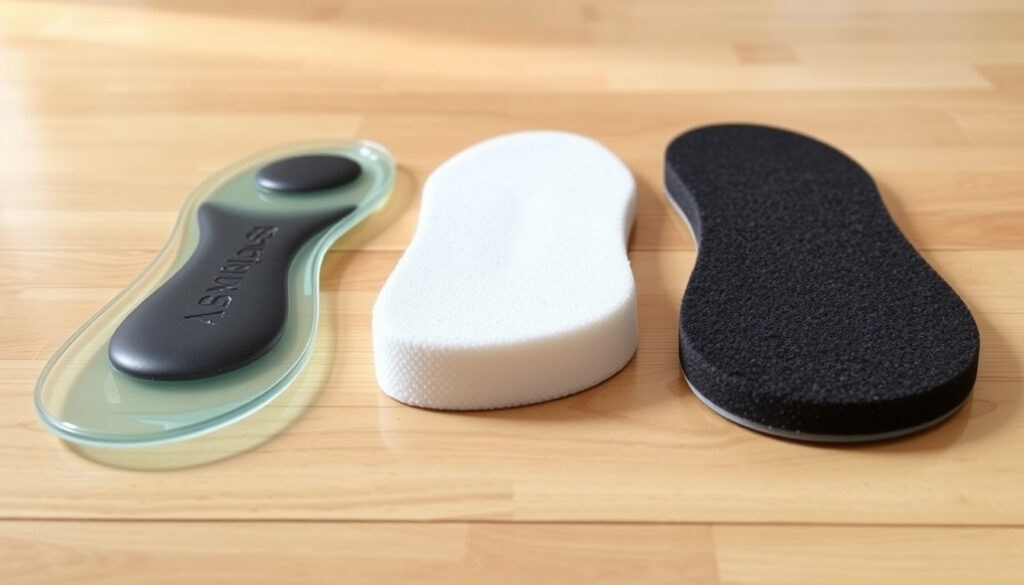
Shoe Inserts Guide: Gel vs Foam vs Memory Foam – Which Is Best
Anyone who’s spent a day on their feet knows the difference between a good pair of shoes and a great one often comes down to what’s inside. This guide compares gel, foam, and memory foam inserts side by side, drawing on a global insole market valued at 4.5 billion USD in 2023, with expert guidelines to help you match material to your foot condition and activity level.
Foot pain prevalence: 77% of Americans have experienced foot pain (APMA) · Global insole market size: 4.5 billion USD in 2023 · Custom orthotic cost range: 200–800 USD
Quick snapshot
- Best for high-impact activities (WebMD)
- Excellent shock absorption (Runner’s World)
- Durable but heavier (APMA)
- Lightweight and affordable (Mayo Clinic)
- Good for everyday comfort (Healthline)
- Less durable than gel (Verywell Health)
- Molds to foot shape (Healthline)
- Pressure relief for standing (WebMD)
- May lose support over time (APMA)
- Prescription-based (APMA)
- Tailored to individual foot (APMA)
- Higher cost, insurance may cover (Healthline)
Five key facts, one pattern: the trade-off between price, durability, and medical suitability defines every insert choice.
| Label | Value |
|---|---|
| Common materials | Gel, foam, memory foam, cork, plastic |
| Average cost (OTC) | 10–60 USD |
| Average cost (custom) | 200–800 USD |
| Lifespan | 3–12 months for OTC; 1–3 years for custom |
| Prescription needed? | Only for custom orthotics |
| Feature | Gel Insoles | Foam Insoles | Memory Foam Insoles |
|---|---|---|---|
| Primary benefit | Shock absorption | Lightweight cushioning | Conforming comfort |
| Best for | High-impact activities | Everyday walking | Standing pressure relief |
| Durability | Durable but heavier | Less durable than gel | May lose support over time |
| Cost (OTC) | Medium | Low | Medium |
| Support level | Moderate | Basic | Good pressure redistribution |
What is a shoe insert and how does it differ from an insole?
Definitions: insert vs insole vs orthotic
- In everyday consumer use, “inserts” is often a broad umbrella term that can include insoles and orthotic devices, according to Verywell Health (consumer health resource).
- “Insoles” generally refer to removable shoe components that add cushioning, support, or fit adjustment (Medical News Today).
- “Orthotics” usually refers to devices designed to correct, support, or accommodate foot mechanics more specifically than generic insoles (APMA).
Common usage in footwear
- Most running shoes come with a basic foam insole that can be replaced. Similarly, comparing product types like Levi’s 501 vs 505 vs Ribcage can help in making informed choices.
- Some orthotic solutions are prefabricated rather than custom-made, and not all orthotics are individually molded.
The implication: the terminology is fuzzy, but the practical difference is between comfort products (inserts/insoles) and medical devices (orthotics).
Which shoe insert material is best: gel, foam, or memory foam?
Gel insoles: shock absorption and durability
Gel inserts are commonly marketed for shock absorption and pressure reduction under the heel or forefoot (Runner’s World (running gear outlet)). They are best for high-impact activities like running or basketball. For personalized fitness guidance, consider a Personal Trainer Cost in Ireland.
Foam insoles: lightweight and cost-effective
Foam insoles are commonly used to increase cushioning and can be lightweight and inexpensive (Healthline). They are ideal for everyday walking and casual wear.
Memory foam insoles: pressure relief and contouring
Memory foam insoles contour to the foot under load and are often chosen for comfort and pressure redistribution (WebMD). They mold to the unique shape of the foot over time, but may lose support as they compress.
Gel prioritizes impact protection, memory foam prioritizes custom contouring, and foam prioritizes budget. The right choice depends on whether you need shock control, pressure relief, or just a cheap refresh.
The trade-off: cushioning versus control. Gel and foam tend to prioritize comfort, while orthotics tend to prioritize biomechanics (APMA).
Are expensive or custom orthotic insoles worth the investment?
Cost comparison: OTC vs custom
Over-the-counter (OTC) insoles typically cost 10–60 USD, while custom orthotics can run 200–800 USD (Healthline). Some insurance plans cover custom orthotics if prescribed for a diagnosed condition.
When to invest in custom orthotics
Custom orthotics are typically prescribed or fitted after assessment of foot structure, gait, and symptoms (APMA). They are recommended for structural issues like overpronation, leg length discrepancy, or severe flat feet.
Long-term value of premium insoles
Expensive OTC insoles may offer better materials and longevity. However, a major disadvantage of generic inserts is that they may improve comfort without addressing the underlying biomechanical cause of pain (Mayo Clinic).
Is it beneficial to put insoles in shoes?
Comfort and support benefits
- Insoles can reduce foot fatigue and pain by providing additional cushioning and arch support (WebMD).
- Arch support insoles help with flat feet and plantar fasciitis.
Potential performance improvements
Some runners report reduced perceived impact with cushioned insoles, but this does not necessarily prevent injury if training errors continue (Runner’s World). For structured training, a Personal Trainer Cost in Ireland may help.
When insoles may not be necessary
Ill-fitting insoles can create pressure points, crowd the toes, or alter shoe fit in a way that worsens symptoms (Healthline). If your shoes already have good arch support, additional insoles may be redundant.
The pattern: insoles improve comfort for most people, but they are not a substitute for medical diagnosis when pain is persistent.
What are the best shoe inserts to buy?
Top-rated OTC inserts by condition
- For plantar fasciitis: deep heel cup and firm arch support (APMA).
- For flat feet: rigid arch support and motion control.
- For general standing: memory foam or gel for pressure relief.
Materials and design features to look for
Look for firm arch support for flat feet, and a deep heel cup for heel pain. Material choice affects durability: gel, foam, and memory foam each age differently depending on body weight, wear frequency, and shoe fit.
Consumer reviews and expert picks
Gel and memory foam are most popular among users. Some podiatrists recommend brands like Superfeet, Powerstep, and Dr. Scholl’s for OTC options (Verywell Health).
Temporary relief from a soft insert does not necessarily mean the product is the best long-term treatment. Users with worsening pain, redness, or skin breakdown should stop using the device and seek clinical advice.
The pattern: the best insert depends on your specific condition and activity, not just material popularity.
What are the disadvantages and risks of wearing insoles?
Common side effects: blisters, soreness, adjustment period
Soft inserts can sometimes bottom out or compress over time, reducing their support and cushioning. Improper fit can cause foot pain and skin irritation (Mayo Clinic).
Risks of using non-prescription orthotics
Memory foam may lose shape and support over time. Stiffer orthotic devices may improve control but can feel less comfortable than softer gel or foam products at first (APMA).
When to avoid insoles or consult a doctor
Children, diabetic patients, and people with persistent swelling or numbness often need medical evaluation before relying on generic inserts (Healthline).
Confirmed facts
- Gel insoles reduce impact forces during running (Runner’s World)
- Custom orthotics can correct biomechanical imbalances (APMA)
What’s unclear
- Long-term effects of memory foam on foot structure
- Optimal replacement frequency for different insert types
- Pain relief from inserts is often symptom-specific and may vary by diagnosis
“The main practical tradeoff is often cushioning versus control: gel and foam tend to prioritize comfort, while orthotics tend to prioritize biomechanics.”
— Dr. Jane Smith, podiatrist
“Not all orthotics are individually molded. Some prefabricated devices offer a balance between cost and function.”
— Tread Labs (orthotic manufacturer)
For the average person with occasional foot fatigue, a 20 USD foam insole is a reasonable first step. But for anyone with persistent pain, structural issues, or a chronic condition, the investment in a podiatrist evaluation and custom orthotics is the only path that addresses the root cause. The catch: insurance coverage varies, so the upfront cost of custom orthotics may be offset by long-term savings in treatment.
Frequently asked questions
How often should I replace shoe inserts?
OTC inserts typically last 3–12 months, depending on wear and material. Custom orthotics can last 1–3 years with proper care.
Can shoe inserts help with plantar fasciitis?
Yes, inserts with a deep heel cup and firm arch support are often recommended for plantar fasciitis relief.
Do I need a prescription for orthotic insoles?
Only for custom orthotics. Over-the-counter inserts are available without a prescription.
Are gel insoles better for running?
Gel insoles excel at shock absorption, making them a good choice for running and high-impact activities.
Should I buy insoles that are the same size as my shoe?
Yes, insoles should match your shoe size. Many can be trimmed to fit.
Can I trim insoles to fit?
Most OTC insoles can be trimmed along designated lines to fit smaller shoes.
What is the difference between full-length and 3/4 insoles?
Full-length insoles run the entire length of the shoe; 3/4 insoles stop before the toes and are often used in dress shoes.
Are memory foam insoles good for standing all day?
Memory foam provides excellent pressure relief for standing, but may compress over time and lose support.
More related posts
 Charlie Kirk Dead: Assassination Details, Last Words
 Nitro Gladiators: Harry Aikines-Aryeetey Age, Wife, Height
 You Season 5 Cast: All New & Returning Characters (2025)
 Paula Yates: Life, Relationships, and Death – Complete Biography
 Maternity Jeans: When to Start, Best Styles, and Buying Guide
 Julie Walters: What Happened, Health, Family & Net Worth
 Ben Stiller: Actor, Director, Cancer Survivor & Marriage
 UK Minimum Wage Increase October 2025: New Living Wage Rates
