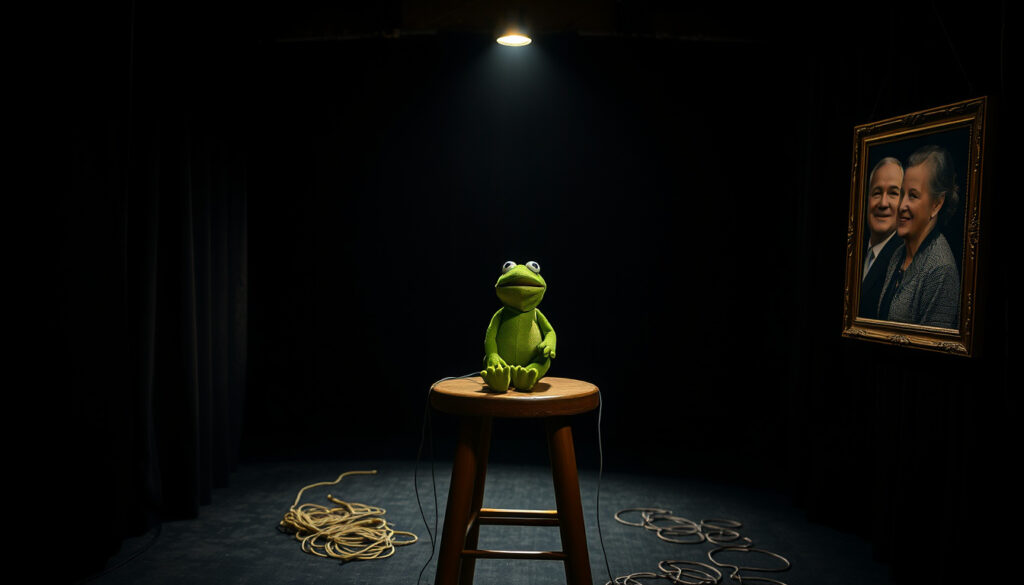
Jim Henson: Death, Wife, Kermit, and a Lasting Legacy
Jim Henson created characters that felt like old friends — Kermit, Miss Piggy, Big Bird — and changed how children’s television could look, but behind the cheerful puppets, people still ask pointed questions about how he died, why he delayed seeing a doctor, and what happened to his marriage. This article separates the documented facts from the lingering rumors.
Born: September 24, 1936, Greenville, Mississippi ·
Died: May 16, 1990, New York City ·
Age at death: 53 ·
Known for: Creating The Muppets and helping launch Sesame Street ·
Spouse: Jane Nebel, married in 1959
Quick snapshot
- The Muppets (Wikipedia)
- Sesame Street Muppet characters (Wikipedia)
- The Dark Crystal and Labyrinth (Wikipedia)
- Died May 16, 1990 (Wikipedia)
- Cause: bacterial pneumonia (Wikipedia)
- He was 53 (Wikipedia)
- Kermit existed before Sesame Street (Wikipedia)
- Sesame Workshop owns the Sesame Street Muppets (The Jim Henson Company press release)
- Kermit is now part of The Walt Disney Company’s Muppets franchise (Wikipedia)
Seven key facts, one pattern: the biographical record is solid on dates and public achievements, but much thinner on the private reasoning behind his choices.
| Category | Detail |
|---|---|
| Full name | James Maury Henson |
| Born | September 24, 1936, Greenville, Mississippi |
| Died | May 16, 1990, New York City |
| Cause of death | Group A streptococcal bacterial pneumonia |
| Spouse | Jane Nebel, married 1959 |
| Children | Five |
| Known for | The Muppets, Sesame Street, The Dark Crystal, and Labyrinth |
What did Jim Henson pass away from?
Jim Henson died on May 16, 1990, in New York City, at age 53. The cause was bacterial pneumonia caused by a Group A streptococcal infection, according to Wikipedia’s biographical entry.
Biography.com’s biographical entry reports Henson died of pneumonia at age 53 in May 1990. Contemporary coverage from the Roanoke Times archive described his death as caused by a massive bacterial infection and noted he had entered the emergency room less than 24 hours earlier with acute respiratory distress and symptoms of pneumonia.
How old was Jim Henson when he died?
He was 53 years old at the time of his death. Henson was born September 24, 1936, and died May 16, 1990 — a span of 53 years and about eight months.
A relatively young death from a treatable infection shocked the public. The speed of his decline — from flu-like symptoms to fatal respiratory failure in roughly four days — is what still drives the question “why didn’t he go to the hospital sooner?”
The implication: the medical cause is well-documented, but the public’s lingering unease is less about the bacteria and more about the short window in which a healthy 53-year-old became critically ill.
Why did Jim Henson not go to the hospital?
Biographical accounts say Henson initially treated his symptoms like a flu-like illness. Biography.com notes that he delayed hospital care for several days after becoming ill. A doctor was called to evaluate him before he was taken to the hospital, and his condition worsened quickly once his breathing became difficult.
The contemporary Roanoke Times report confirms that Henson entered the emergency room less than 24 hours before his death. The timeline suggests he was already in severe respiratory distress by the time he arrived.
No one has ever given a definitive public explanation for why Henson waited. Biographers suggest he simply misjudged the severity — a common mistake with fast-moving bacterial pneumonia. But the absence of a clear statement from his family or close colleagues leaves room for continued speculation.
What this means: the most likely answer is also the most human one — he thought it was a bad flu. But the lack of a documented explanation from anyone who was with him in those final days means the question will keep surfacing.
Was Jim Henson faithful to his wife?
Jim Henson married Jane Nebel in 1959, and the couple had five children together. Biography.com’s biographical entry states the marriage lasted 31 years and the couple separated toward the end of Henson’s life. The separation occurred in the mid-1980s, but they remained legally married until his death in 1990.
Neither Jim nor Jane publicly gave a detailed explanation for their separation. Because the couple chose to keep the reasons private, no named source has confirmed or denied whether Henson had any romantic relationship outside his marriage. The question cannot be answered with available evidence.
Why did Jim Henson leave his wife?
There is no publicly documented statement from Henson or Jane explaining why they separated. Biographers generally describe the split as amicable — Jane remained involved with the company and spoke warmly of Jim in interviews after his death. The Biography.com account notes the separation happened toward the end of his life but offers no stated cause.
The absence of a public statement from either party means this is a private matter that the available biographical record simply does not cover. For readers, the honest answer is that no reliable source exists to confirm or deny the speculation.
The pattern: Henson’s public life is exhaustively documented. His private reasoning — about his health, his marriage, his choices — often is not. The gap between those two zones is what generates the persistent questions.
Did Jim Henson support LGBTQ?
No widely documented personal statement by Jim Henson specifically about LGBTQ rights appears in major biographical references. The question is complicated by the fact that Henson’s public work and the social messages embedded in Sesame Street emphasized tolerance and inclusion. The show’s commitment to representing diverse families and teaching acceptance is well-documented, but it is not the same as a personal political position.
If no direct evidence exists, the honest answer is that Henson’s personal politics on this specific issue are not part of the public record. The inclusive themes of his creative projects should not be conflated with a documented personal stance.
The Jim Henson Company continues to produce content that promotes inclusion, but that reflects the company’s current values, not necessarily a documented position Henson himself took.
The trade-off: it is tempting to project Henson’s gentle, inclusive public persona into a specific political alignment, but the biographical record simply does not support that leap. The absence of evidence is not evidence of absence — but it is also not evidence of presence.
Was Jim Henson a good guy?
Longtime collaborators described Henson as kind, calm, and collaborative. Wikipedia’s biography notes that he was known for a positive on-set manner even during difficult productions. Frank Oz, who worked closely with Henson for decades as a Muppet performer and director, has publicly recalled Henson’s calm, collaborative directing style.
Jane Henson, in interviews about their long separation and collaborative career, spoke of Jim with warmth and respect. His son Brian Henson has offered public tributes describing his father’s creative legacy and his gentle approach to leadership.
At the same time, his family and friends have publicly acknowledged that his intense focus on work came with personal costs. The separation from Jane, who was also his business partner, suggests that the demands of building a global entertainment company affected his personal relationships.
Henson was widely described as a good person to work with — patient, creative, respectful. But the same drive that made him a brilliant creator also strained his marriage. The question “was he a good guy?” is too simple for a life that contained both genuine warmth and real human cost.
The pattern: the documented recollections paint a picture of a man who was kind to his collaborators but whose dedication to his craft came at a price. The answer is not a moral verdict but a trade-off.
Why was Kermit removed from Sesame Street?
Kermit the Frog was created by Jim Henson in 1955, before Sesame Street existed. The character appeared on Sesame Street under a separate licensing arrangement involving Henson’s company. Wikipedia’s entry on Kermit the Frog notes that Kermit was acquired by The Walt Disney Company in 2004.
A 2004 press release from The Jim Henson Company confirms that Disney would acquire the Muppets and Bear in the Big Blue House properties, including Kermit, Miss Piggy, Fozzie Bear, Gonzo, and Animal. The same release states that Sesame Street characters such as Big Bird and Elmo are separately owned by Sesame Workshop (formerly known as Children’s Television Workshop).
Wikipedia further notes that Sesame Workshop bought full ownership of its characters from Henson for $180 million and excluded Kermit from the deal. Kermit now belongs to The Muppets Studio, a division of Disney.
Who owns Kermit the Frog?
Kermit is owned by The Walt Disney Company through its Muppets Studio division. The rights split is the reason Kermit stopped appearing as a regular Sesame Street character. Sesame Workshop retains the rights to show old Kermit segments from the Sesame Street library, but the character is no longer available for new Sesame Street content.
For fans, the split means Kermit’s Sesame Street appearances are frozen in time — the old episodes still exist, but no new ones with Kermit will be made. The character continues to appear in Disney-produced content, including the recent Muppets Now series.
The implication: the ownership split is not a creative decision — it is a straightforward business reality that dates back to the 2004 acquisition. Kermit’s absence from Sesame Street is a legal and contractual outcome, not a reflection of the character’s popularity.
Timeline: Jim Henson’s life and legacy
- 1936 — Jim Henson was born on September 24 in Greenville, Mississippi. (Wikipedia)
- 1955 — Kermit the Frog first appeared in Sam and Friends. (Wikipedia)
- 1958 — Henson co-founded Muppets, Inc., which later became The Jim Henson Company. (Wikipedia)
- 1969 — Sesame Street premiered with Henson’s Muppets. (Wikipedia)
- 1976 — The Muppet Show premiered. (Wikipedia)
- 1979 — The Muppet Movie was released. (Wikipedia)
- 1986 — Jim and Jane Henson separated. (Biography.com’s biographical entry)
- 1990 — Jim Henson died on May 16 of bacterial pneumonia. (Wikipedia)
- 2004 — The Walt Disney Company acquired the Muppets franchise while Sesame Street stayed with Sesame Workshop. (The Jim Henson Company press release)
Henson’s career is a story of relentless expansion — from a local TV puppet to a global entertainment empire — but the ownership structure that outlived him is more fragmented than most fans realize. The Muppets, Sesame Street characters, and The Jim Henson Company are now three separate entities.
Confirmed facts
Confirmed facts
- Jim Henson was born September 24, 1936, and died May 16, 1990. (Wikipedia)
- He married Jane Nebel in 1959 and had five children. (Biography.com’s biographical entry)
- He died after being hospitalized for bacterial pneumonia. (Wikipedia)
- Kermit the Frog was created before Sesame Street and is not owned by Sesame Workshop. (Wikipedia)
What’s unclear
- Why Henson delayed going to the hospital is not fully documented; biographers suggest he treated it as the flu. (Biography.com’s biographical entry)
- Whether Henson had any romantic relationship outside his marriage is not publicly confirmed.
- Whether Henson held a personal position on LGBTQ issues has no widely documented statement.
- Exact net worth at the time of his death is not reliably established in the available materials.
The pattern: The confirmed facts anchor the biography, but the unanswered questions remind us that Henson’s private life remains partly out of reach.
de.wikipedia.org, muppet.fandom.com, canadianwire.net, reddit.com, thefamouspeople.com, muppetcentral.com
Frequently asked questions
What is The Jim Henson Company?
The Jim Henson Company is an independent entertainment company founded by Jim and Jane Henson in 1958. It produced The Muppet Show, Fraggle Rock, and Bear in the Big Blue House, and also designed the Muppet characters for Sesame Street. The company is now independently owned and operated by the Henson children, according to Wikipedia.
What is the Jim Henson Foundation?
The Jim Henson Foundation is a nonprofit organization that supports the art of puppetry in the United States. It was established by Jim Henson and continues to provide grants to puppet artists and theaters.
What is Fraggle Rock?
Fraggle Rock is a children’s television series created by Jim Henson that aired from 1983 to 1987. It featured a community of puppet creatures called Fraggles and explored themes of cooperation and environmental awareness.
Which characters did Jim Henson perform?
Henson performed Kermit the Frog, Rowlf the Dog, Dr. Bunsen Honeydew, Waldorf (from the balcony), and the Swedish Chef, among others. He was the primary voice of Kermit from 1955 until his death in 1990.
How many children did Jim Henson have?
Jim Henson and his wife Jane had five children: Lisa, Cheryl, Brian, John, and Heather. Several of them have continued to work in the entertainment industry.
What was Jim Henson’s net worth?
Exact net worth at the time of his death is not reliably established in the available materials. His estate included the Muppets franchise, which was later acquired by Disney for a reported sum that is part of the public record but difficult to separate from Henson’s personal wealth.
What was Jim Henson’s first television series?
His first television series was Sam and Friends, a five-minute puppet show that aired on WRC-TV in Washington, D.C., starting in 1955. It was on this show that Kermit the Frog made his first appearance.
Related reading
- Robin Williams’ Cause of Death: The Full Story Behind His Final Days
- WALL-E: Complete Guide to Pixar’s Iconic Robot
Jim Henson left behind a creative legacy that spans generations, but the private man behind the puppets remains partly out of reach. For the millions of fans who grew up with Kermit, Big Bird, and the Fraggles, the honest answer to many of life’s lingering questions is that the documented record simply does not cover everything. The trade-off is clear: we can trace his public achievements with precision, but the private reasoning — about his health, his marriage, his beliefs — often stays in the shadows. That is not a failing of the biographical record. It is a reminder that even the most beloved public figures are entitled to their privacy.
More related posts
 Richard Branson: Biography, Net Worth, Family, and Health Facts
 Aljaž Škorjanec & Janette Manrara Announce 2026 Tour
 Slow Horses Season 1 – Episodes, Streaming and Full Guide
 Romania National Football Team – 2026 Qualifiers Squad Details
 Ben Affleck 2025: Divorce, Recovery & Career Comeback
 Alex Oxlade-Chamberlain: Career, Family & Perrie Edwards
 What Is This Song – Guide to Identifying Music Fast
 Drop Dead Fred 2026: Reboot, Teaser Trailer and Original Film
