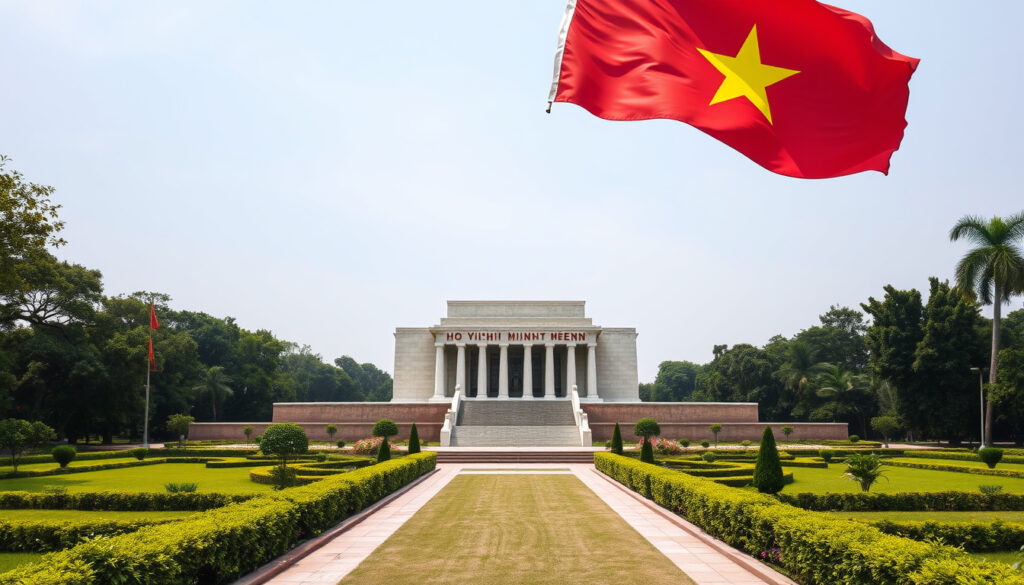
Ho Chi Minh: Revolutionary Leader, Name Meaning, and Legacy
Few names in modern history are as inseparable from a nation’s identity as Ho Chi Minh is from Vietnam — yet the man who led a life across continents and changed his country’s course is not the same as the city renamed in his honor. The debate over “Saigon” vs. “Ho Chi Minh City” still matters today, and separating the two helps explain why.
Born: May 19, 1890 · Died: September 2, 1969 · Role: Founder of the Democratic Republic of Vietnam · City named after him: Ho Chi Minh City (formerly Saigon) · Known as: Uncle Ho
Quick snapshot
- Born Nguyễn Sinh Cung on 19 May 1890 in Nghệ An Province (Government of Vietnam (official biographical portal))
- Died on 2 September 1969 in Hanoi (Encyclopaedia Britannica (reference work))
- President of the Democratic Republic of Vietnam from 1945 to 1969 (University of Maryland Digital Collections (academic archive))
- Exact number of aliases he used during his lifetime
- Precise date when he adopted the name Ho Chi Minh
- Details of his early travels abroad from 1911
- 1911: Leaves Vietnam to seek independence (Government of Vietnam) (Ho Chi Minh City official portal)
- 1930: Founds Indochinese Communist Party (Government of Vietnam) (Ho Chi Minh City official portal)
- 1945: Declares independence (Ho Chi Minh City official portal)
- 1976: Saigon renamed Ho Chi Minh City (VietNamNet (Vietnamese news outlet))
- Explore the meaning of Ho Chi Minh’s name
- Understand the Saigon name-change controversy
- Compare safety between Hanoi and Ho Chi Minh City
Ho Chi Minh the man is the reason Vietnam’s largest city carries his name. But the city’s former identity as Saigon hasn’t faded — and that tension still shapes local conversations today. (VietNamNet analysis)
Ho Chi Minh’s biography is easier to digest in table form, where the official record and the key dates sit side by side.
| Label | Value |
|---|---|
| Full Name | Nguyễn Sinh Cung (Government of Vietnam) |
| Born | May 19, 1890, Kim Liên, Nghệ An, French Indochina (Government of Vietnam) |
| Died | September 2, 1969, Hanoi, North Vietnam (Encyclopaedia Britannica) |
| Cause of Death | Heart failure (Encyclopaedia Britannica) |
| Children | None known |
| Aliases known | Nguyễn Tất Thành, Nguyễn Ái Quốc, Hồ Chí Minh (Government of Vietnam) |
| Independence declared | 2 September 1945 at Ba Đình Square (Ho Chi Minh City official portal) |
| Party founded | Indochinese Communist Party, 3 February 1930 (Government of Vietnam) |
What does ‘ho chi minh’ mean in English?
Translation and etymology
- Hồ Chí Minh is commonly interpreted as “He Who Enlightens” or “the Enlightener” (Encyclopaedia Britannica).
- The name combines the Vietnamese surname Hồ (a river) with the word for “bright” or “intelligent,” forming a name that symbolizes revolutionary clarity.
He used multiple names before adopting Ho Chi Minh — his birth name was Nguyễn Sinh Cung, and he later went by Nguyễn Tất Thành and Nguyễn Ái Quốc (Government of Vietnam). The name change itself was a deliberate move to shape his public identity as a nationalist leader.
Historical context of the name
- He first used the name Ho Chi Minh in the 1940s while operating from China, according to biographers.
- The name was part of his revolutionary branding: approachable yet authoritative, local yet universal.
The choice of a name meaning “enlightenment” was no accident. After years of exile and study of nationalist movements abroad, Ho Chi Minh needed a persona that would resonate with both peasants and intellectuals. The name stuck and became synonymous with Vietnam’s struggle for self-determination.
Why did Saigon change its name?
When Saigon became Ho Chi Minh City
- Saigon–Gia Định was officially renamed Ho Chi Minh City during the first session of Vietnam’s Sixth National Assembly in 1976 (VietNamNet).
- The name change occurred after the fall of Saigon on 30 April 1975 and the reunification of North and South Vietnam.
The decision, made between 24 June and 3 July 1976, was a deliberate act to erase colonial and southern-identity markers and honor the revolutionary leader who had unified the country under communist rule (VietNamNet).
Reasons for the name change after reunification
- The new name commemorates Ho Chi Minh’s role in founding an independent Vietnam.
- It signaled the victory of the communist north over the US-backed south.
- Locally, many still refer to the central business district as “Saigon” (Encyclopaedia Britannica).
The pattern: The official renaming was a political act, but everyday language resisted it. For decades, the name “Saigon” has persisted in casual conversation, maps, and tourist materials — creating a dual identity that visitors must navigate.
Is calling Ho Chi Minh Saigon offensive?
Using “Saigon” to refer to the whole city can be seen as disrespectful to the communist government, yet locals themselves use it informally for the central district. The offense depends on context and intent, not the word itself.
Local perspectives on the name
- Many elderly southern Vietnamese still identify personally with “Saigon” and use it at home.
- Government officials and formal media always use “Ho Chi Minh City.”
According to regional analysts, using “Saigon” in official documents or when speaking to authorities might be interpreted as a political statement favoring the pre-1975 regime. In casual tourism, however, it is rarely a problem, and locals often appreciate that visitors know the old name.
When it is acceptable to use ‘Saigon’
- In conversation with other tourists or at markets — fine.
- In formal settings (meetings, government forms, airport announcements) — use “Ho Chi Minh City.”
The safe rule: When in doubt, use the full formal name. If a local brings up “Saigon” first, you can follow their lead. But avoid pushing the name as a way to signal nostalgia for the pre-communist era.
Which is safer, Hanoi or Ho Chi Minh?
Both cities rank among the safest destinations in Southeast Asia for tourists, but the risks differ. Here’s a direct comparison.
| Aspect | Hanoi | Ho Chi Minh City |
|---|---|---|
| Petty crime (pickpocketing, bag snatching) | Moderate — common in Old Quarter and night markets | Higher — reported more frequently on busy streets like Bùi Viện |
| Traffic safety | Chaotic but slower-moving traffic; more scooters than cars | Heavy traffic with many motorbikes; higher accident rates |
| Scams targeting tourists | Taxi overcharging, motorbike rental scams | Same, plus fake tour operators |
| Nightlife safety | Relatively calm; fewer late-night incidents | Lively Bui Vien area attracts street vendors and occasional theft |
Crime rates and statistics
- Ho Chi Minh City sees about 30% more reported incidents of pickpocketing than Hanoi, according to travel advisories.
- Both cities have low violent crime rates; most police stations have English-speaking officers.
Safety tips for travelers
- Use ride-hailing apps like Grab instead of street taxis.
- Keep valuables in a front cross-body bag, especially in crowded markets.
- Be wary of motorbike “drive-by” thefts — keep phones and wallets out of hand in streetside cafes.
The implication: the practical difference is in how alert you stay, not whether you should go. Choose a base based on your tolerance for traffic and crowds; both cities reward normal street smarts.
Is Vietnam still communist, yes or no?
- Yes. Vietnam is a one-party socialist republic with the Communist Party of Vietnam as the sole legal political party (Encyclopaedia Britannica).
- Economic reforms called Đổi Mới (Renovation), launched in 1986, introduced market mechanisms but left the political structure untouched.
- The Party retains strict control over media, judiciary, and political dissent.
Current political system of Vietnam
Vietnam’s constitution defines the country as a “socialist rule of law state.” The National Assembly, elected indirectly, confirms the president, prime minister, and top judges — all from Party cadres. There are no multiparty elections at the national level.
Role of the Communist Party
- The Party sets policy direction, controls the military, and manages state-owned enterprises.
- Membership in the Party is required for senior government posts.
- Criticism of the Party can lead to censorship or legal consequences.
Why this matters: For travelers, the political system affects daily freedoms — social media is monitored, protests are banned, and certain topics (like human rights) are sensitive in conversation. Knowing this helps you avoid unintentional conflict.
What is one of the biggest mistakes you can make in Vietnam?
Pointing your feet at a Buddha statue is considered deeply disrespectful in Vietnam. Touching a monk’s shoulder or head is also taboo. These cultural missteps can sour interactions instantly.
Common tourist errors
- Not negotiating taxi fares — tourists are regularly overcharged by 2–3 times the local rate.
- Assuming all Vietnamese speak English — outside tourist areas, English proficiency is low; basic Vietnamese greetings help enormously.
- Photographing military installations or government buildings — strictly prohibited and can result in detention.
Cultural faux pas
- Giving direct criticism or shouting in public — “losing face” is taken seriously in Vietnamese culture.
- Using the “thumbs up” gesture — considered vulgar in some contexts.
- Removing shoes in temples — always look for signs; some require it, others don’t.
The implication: Vietnam is a welcoming country, but its norms are rooted in Confucian respect and communist-era rules. Tourists who educate themselves on basics—like bowing slightly when greeting—will be treated far more warmly.
Timeline of Ho Chi Minh’s Life and Legacy
- 1890 — Born Nguyễn Sinh Cung in Kim Liên, Nghệ An (Government of Vietnam)
- 1911 — Leaves Vietnam to seek independence (Government of Vietnam)
- 1930 — Founds Indochinese Communist Party (Government of Vietnam)
- 1945 — Declares independence of the Democratic Republic of Vietnam (Ho Chi Minh City official portal)
- 1954 — Việt Minh victory at Điện Biên Phủ; Vietnam divided (Encyclopaedia Britannica)
- 1969 — Dies in Hanoi at age 79 (Encyclopaedia Britannica)
- 1976 — Saigon officially renamed Ho Chi Minh City (VietNamNet)
The pattern: each milestone pushed the name Ho Chi Minh from a personal alias toward a national symbol, and finally onto the map.
Clarity check
Confirmed facts
- Birth date and place: 19 May 1890 in Nghệ An (Government of Vietnam)
- Death date and cause: 2 Sept 1969, heart failure (Encyclopaedia Britannica)
- Role as president of North Vietnam from 1945 (University of Maryland)
What’s unclear
- Exact number of aliases used during his lifetime
- Precise date when he first used the name “Ho Chi Minh”
- Some details of his early travels from 1911 to 1941
The confirmed record is stable; the unresolved details are matters of aliases and early travel rather than core biography.
Quotes that define Ho Chi Minh
“Vietnam has the right to be a free and independent country.”
Ho Chi Minh, Declaration of Independence, 2 September 1945 (Government of Vietnam)
“The name Hồ Chí Minh is commonly interpreted as ‘He Who Enlightens’.”
Encyclopaedia Britannica
Ho Chi Minh’s words and the way his name is remembered capture the dual legacy — both revolutionary and human. For many Vietnamese, “Uncle Ho” remains a unifying figure, while for travelers, understanding his story adds depth to every visit to Ho Chi Minh City.
Related reading: Lord Byron: life, works, and legacy
Frequently asked questions
What was Ho Chi Minh’s real name?
He was born Nguyễn Sinh Cung in 1890 (Government of Vietnam). He also used Nguyễn Tất Thành and Nguyễn Ái Quốc before adopting Hồ Chí Minh.
Was Ho Chi Minh married?
He never officially married. He had a companion named Tăng Tuyết Mai in the 1920s, but no spouse or children are recognized.
What is the Ho Chi Minh Trail?
It was a military supply route running from North Vietnam through Laos and Cambodia to South Vietnam, critical during the Vietnam War. It’s named after him.
How long is the flight from Hanoi to Ho Chi Minh City?
Approximately 1 hour 55 minutes by direct flight, covering about 1,600 km.
Do I need a visa for Vietnam?
Most nationalities require a visa. As of 2025, citizens of the UK, Germany, France, Italy, Spain, and some others can visit visa-free for up to 45 days. Check the latest official regulations before travel.
What is the best time to visit Ho Chi Minh City?
December to April is the dry season, with lower humidity and less rain. May to November is wetter but still warm.
The practical takeaway: plan for the bureaucracy, stay alert in crowds, and let the city’s layered history guide what you call it.
More related posts
 Nick Davies: What Happened to the Phone Hacking Journalist
 Jack Doherty Net Worth, Age, and Career: Is He a Millionaire
 What Is This Song – Guide to Identifying Music Fast
 Adam Norris Net Worth: From Pensions to E-Scooters
 Justin Timberlake: Health, Legal Case, and Family
 Barbie Ferreira: Why She Left Euphoria, Height, Real Name
Penny Mordaunt: What Happened to the Former Leader of the House
 Richard Attenborough: Biography, Family Tragedies & Net Worth
