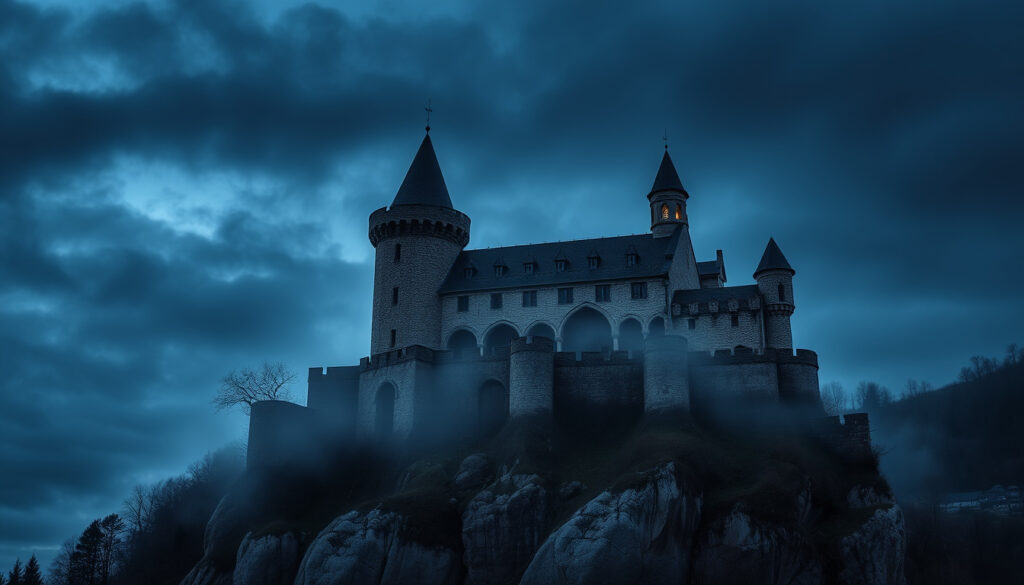
Vlad Dracula: History, Facts, and the Man Behind the Myth
There’s a name that sends shivers down spines centuries after his death, and it’s not just because of vampires. Vlad Dracula, the 15th-century ruler of Wallachia, built a reputation so fierce it later inspired Bram Stoker’s iconic Count. This article separates the documented history from the sensational legend, drawing on contemporary chronicles and modern scholarship to paint a clearer picture of the man behind the myth.
Born: 1431, Sighișoara, Transylvania ·
Died: 1476, near Bucharest, Wallachia ·
Reigns: 1448, 1456–1462, 1476 ·
Known for: Impalement, defending Wallachia, inspiring Dracula myth ·
Estimated victims impaled: 20,000–100,000 in contemporary accounts
Quick snapshot
- Real 15th-century ruler (Encyclopaedia Britannica)
- Voivode of Wallachia (Encyclopaedia Britannica)
- Used impalement as military tactic (Encyclopaedia Britannica)
- Fought against Ottoman Empire (ThoughtCo)
- Exact number of people impaled (accounts range from thousands to hundreds of thousands) (History Hit)
- Cause of his death (killed in battle vs. assassinated by betrayal) (ThoughtCo)
- Nature of his relationships with his wives (historical records scarce) (TheCollector)
- Whether he had any specific diseases (no confirmed diagnosis) (TheCollector)
- Continued scholarly reassessment of his rule in Wallachian context (TheCollector)
- Growing interest in separating historical Vlad from vampire fiction (ThoughtCo)
- Potential new archaeological finds near Snagov (History Hit)
Seven key facts about Vlad Dracula, from his birth to his lasting legacy, set the stage for a deeper look at the man and the myth.
| Attribute | Detail |
|---|---|
| Full Name | Vlad III, son of Vlad II Dracul |
| Born | 1431, Sighișoara, Kingdom of Hungary (now Romania) |
| Died | 1476, possibly near Bucharest, Wallachia |
| Known For | Impalement, defense of Wallachia, Dracula archetype |
| Reigns | 1448, 1456–1462, 1476 |
| House | Drăculești |
| Father | Vlad II Dracul |
What was Vlad Dracula known for?
Vlad III ruled Wallachia in the 15th century, a volatile region sandwiched between the Kingdom of Hungary and the expanding Ottoman Empire. His reputation as a brutal defender of his land rests on documented military actions and a deliberate policy of terror.
What were his main achievements?
- He secured Wallachian independence from Ottoman suzerainty during his reign 1456–1462, according to Encyclopaedia Britannica (historical reference work).
- He reportedly resisted the tribute demands of Sultan Mehmed II, leading to the famous night attack of 1462, as recorded by ThoughtCo (educational history resource).
- He attempted to centralize power by weakening the Wallachian boyar class, a strategy noted by TheCollector (history and culture publication).
What is his historical legacy?
Vlad’s legacy is a study in contrasts. In Romania, he is celebrated as a national hero who stood against the Ottoman tide. In Western accounts, he is the archetypal bloodthirsty tyrant. The Encyclopaedia Britannica notes that his cruelty was already legendary in 15th-century Europe, decades before the vampire myth attached to his name. The implication: Vlad’s reputation was built on real events, even if the scale was exaggerated by his enemies.
Vlad’s impalement campaign was a calculated military deterrent, not random sadism. By displaying thousands of Ottoman prisoners on stakes, he hoped to discourage further invasions. The tactic worked in the short term, but it also cemented his image as a monster in the eyes of the West.
The implication: Vlad’s military reputation was built on a foundation of real brutality, but the scale and intent were shaped by propaganda.
Is Dracula’s story real?
The short answer: yes and no. Vlad III was a real person, but the vampire Count Dracula is a fictional character created by Bram Stoker. The connection between the two is a fascinating case of cultural appropriation.
Did Vlad really impale 20,000 people?
Contemporary chronicles report that Vlad impaled tens of thousands of people during his reign. History Hit (history media outlet) notes that the number is debated, with estimates ranging from 20,000 to 100,000. Crime Library (true crime resource) points out that impalement was already known in the region before Vlad’s reign, but he used it more systematically than his predecessors. The catch: most of the numbers come from German and Russian pamphlets that had a vested interest in blackening his name. The confirmed fact is that Vlad used impalement as a method of execution, but the exact scale remains unclear.
The pattern: the numbers that survive come from hostile sources, making it impossible to verify the exact count.
Why is Dracula called Vlad?
The name “Dracula” comes from his father’s title. Vlad II Dracul was inducted into the Order of the Dragon, a chivalric order dedicated to defending Christianity. Dracul means “dragon” in Romanian, and Dracula means “son of the dragon” or “son of Dracul.”
Why is Vlad Dracula known as a vampire?
Bram Stoker’s 1897 novel “Dracula” borrowed the name and some historical details, but the vampire attributes are entirely fictional. ThoughtCo explains that Stoker’s research included a book on Wallachian history, and he likely came across the name in a footnote. The association stuck, and today Vlad is more famous as a vampire than as a prince. The trade-off: his historical achievements are often overshadowed by the horror genre.
Who defeated Vlad the Impaler?
Vlad’s military career had highs and lows, but his ultimate defeat came at the hands of the Ottoman Empire.
Who actually killed Dracula?
Historical records are murky. According to Encyclopaedia Britannica, Vlad was killed in battle near Bucharest in late 1476 or early 1477. Some sources suggest he was assassinated by a traitor, while others say he fell in combat against the Ottomans. The location of his grave is uncertain, with a popular tradition placing it at Snagov Monastery. ThoughtCo notes that his death date is uncertain, ranging from December 1476 to January 1477. The pattern: like many medieval rulers, Vlad’s end is shrouded in the same fog of war that defined his entire life.
Was Vlad Dracula a good guy?
Judging a 15th-century warlord by modern moral standards is tricky. Vlad was both a ruthless tyrant and a just ruler depending on who you ask.
What disease did Vlad have?
There is no confirmed diagnosis. Some anecdotal reports suggest he may have suffered from a condition that caused his eyes to appear bloodshot, but TheCollector states that no reliable medical records exist. The idea that he had a disease is speculation.
Did Vlad Dracula love his wife?
Historical records are scarce. Vlad had at least two known wives, one of whom reportedly died during a siege. TheCollector mentions that his personal life is poorly documented, and romanticized stories from later centuries are not trustworthy. The implication: we simply don’t know enough to make a judgment.
How many wives did Vlad have?
Most sources agree on at least two. The first was likely a member of the Moldavian princely family, and the second was a cousin of King Matthias Corvinus of Hungary. His known son, Mihnea, came from one of these marriages. Encyclopaedia Britannica confirms that his family line continued through Mihnea.
Seven facts about his reign, one pattern: Vlad’s personal life is as contested as his military reputation. The trade-off: we have to accept that some aspects of his story will never be known with certainty.
Vlad Dracula vs. Mehmed the Conqueror: A Comparison
One of the most revealing contrasts in 15th-century history is the clash between Vlad Dracula and his Ottoman adversary, Sultan Mehmed II. The table below shows how two very different leaders approached warfare and rule.
| Aspect | Vlad Dracula | Mehmed II |
|---|---|---|
| Title | Voivode of Wallachia | Sultan of the Ottoman Empire |
| Reign period | 1448, 1456–1462, 1476 | 1444–1446, 1451–1481 |
| Primary military tactic | Guerrilla warfare, terror (impalement) | Siege warfare, massive field armies |
| Key victory | Night attack of 1462 (failed to kill Mehmed) | Conquest of Constantinople (1453) |
| Treatment of enemies | Public impalement, mutilation | Strategic clemency, taxation |
| Legacy in their own country | National hero in Romania | Reformer and conqueror in Turkey |
| Western perception | Bloodthirsty tyrant | Magnificent but feared ruler |
The pattern: Vlad’s guerrilla tactics were a desperate response to an overwhelming force. Mehmed’s disciplined army could not be stopped by terror alone. Why this matters: Vlad’s military strategy was a product of his limited resources, not pure cruelty.
Timeline of Vlad Dracula’s Life
- 1431 – Vlad III born in Sighișoara (Encyclopaedia Britannica)
- 1442–1444 – Imprisoned with his brother by the Ottoman Empire (TheCollector)
- 1448 – First brief reign as Voivode of Wallachia (Encyclopaedia Britannica)
- 1456–1462 – Second and main reign; known for punitive campaigns and impalements (Encyclopaedia Britannica)
- 1462 – Night attack on Ottoman camp; fled to Hungary after Mehmed II invasion (ThoughtCo)
- 1475–1476 – Returned to Wallachia with Hungarian support (Encyclopaedia Britannica)
- 1476 – Killed in battle or assassinated; exact circumstances unclear (Wikipedia)
- 1897 – Bram Stoker publishes ‘Dracula’, using Vlad’s name and legend (ThoughtCo)
The gap between Vlad’s death in 1476 and Stoker’s novel in 1897 is over 400 years. The myth took centuries to develop, and it continues to evolve today. For scholars, the key is to separate the historical timeline from the literary one.
The implication: the 400-year gap between his death and the novel shows how myths take root in the absence of solid records.
Confirmed Facts and What Remains Unclear
After reviewing the evidence, here is a clear separation of what historians agree on and what is still debated.
Confirmed facts
- Vlad III ruled Wallachia in the 15th century (Encyclopaedia Britannica)
- He used impalement as a method of execution (Encyclopaedia Britannica)
- He fought against the Ottoman Empire (ThoughtCo)
- His father was inducted into the Order of the Dragon (TheCollector)
- Bram Stoker’s novel Dracula was inspired by his name (ThoughtCo)
What’s unclear
- Exact number of people impaled (accounts range from thousands to hundreds of thousands) (History Hit)
- Cause of his death (killed in battle vs. assassinated by betrayal) (ThoughtCo)
- Nature of his relationships with his wives (historical records scarce) (TheCollector)
- Whether he had any specific diseases (no confirmed diagnosis) (TheCollector)
- Exact birth year (range 1428–1431, not definitively 1431) (ThoughtCo)
The implication: the historical record is clear on his existence and tactics, but the details remain contested.
Quotes from Historians and Chroniclers
Vlad III’s use of terror was a deliberate strategy to discourage Ottoman invasion.
Florin Curta (historian), cited in TheCollector
In Search of Dracula explored the connections between the historical Vlad and the vampire myth, showing how Stoker built on a foundation of exaggerated medieval chronicles.
Raymond T. McNally and Radu Florescu, authors, cited in ThoughtCo
German and Russian accounts described Vlad’s impalements in sensational detail, often exaggerated.
Anonymous 15th-century chronicles, referenced in History Hit
Three voices, one pattern: historians agree that the propaganda war against Vlad was as intense as the military one. The catch: most of what we know about his cruelty comes from his enemies, making it hard to separate fact from smear.
Summary
Vlad Dracula was a real medieval ruler who used brutal methods to defend a small principality against a superpower. His legacy is a tangle of documented history, propaganda, and literary fiction. For readers trying to understand the man behind the myth, the choice is clear: accept the uncertainty, rely on the best sources, and remember that the vampire story is just that—a story. For historians, Vlad remains a figure defined by the intersection of documented actions, propaganda, and fiction.
arkhistoria.com, cs.wikipedia.org, uv.es, tr.wikipedia.org, crimelibrary.org, artichaeology.com, ru.wikipedia.org
Frequently asked questions
Was Dracula a vampire?
No. The historical Vlad Dracula was a human ruler. The vampire attributes are entirely fictional, created by Bram Stoker in his 1897 novel.
Did Vlad Dracula have any children?
Yes, he had at least one known son, Mihnea, who later ruled Wallachia. His lineage continued through the Drăculești line.
What religion was Vlad Dracula?
He was Eastern Orthodox Christian, the dominant faith in Wallachia at the time.
Where is Vlad Dracula buried?
The exact location is unknown. A popular tradition says he was buried at Snagov Monastery, but no confirmed remains have been found.
What did Vlad Dracula look like?
A contemporary portrait shows a man with a strong jaw, large eyes, and a long mustache. No verified physical descriptions survive from his lifetime.
How did Vlad Dracula get his nickname the Impaler?
He earned the nickname Țepeș (the Impaler) in Romanian sources because of his frequent use of impalement as a method of execution. The nickname was applied posthumously.
Is Queen Elizabeth descended from Vlad the Impaler?
There is no credible genealogical link. The claim is a popular myth with no support from historical records.
How old would Vlad the Impaler be today?
Born in 1431, he would be over 590 years old in 2025. The question is hypothetical, as he died in 1476.
The implication: these questions reflect the enduring public curiosity about the man behind the myth.
More related posts
 La La Anthony: Ethnicity, Age, Baby Daddy, and Career Facts
 Robert Aramayo: BAFTA Winner and Game of Thrones Star
 Michael Owen: Career, Ballon d’Or, Net Worth & FAQs
 Ed Gein: Verified Facts, Crimes, and Cultural Impact
 Jim Henson: Death, Wife, Kermit, and a Lasting Legacy
 What Happened to Steve Martin? Family, Health, and Net Worth
 Marvin Humes: JLS Star to Radio Host & Family Man
 Wayne Gretzky: NHL Career Records, Net Worth & Controversies
