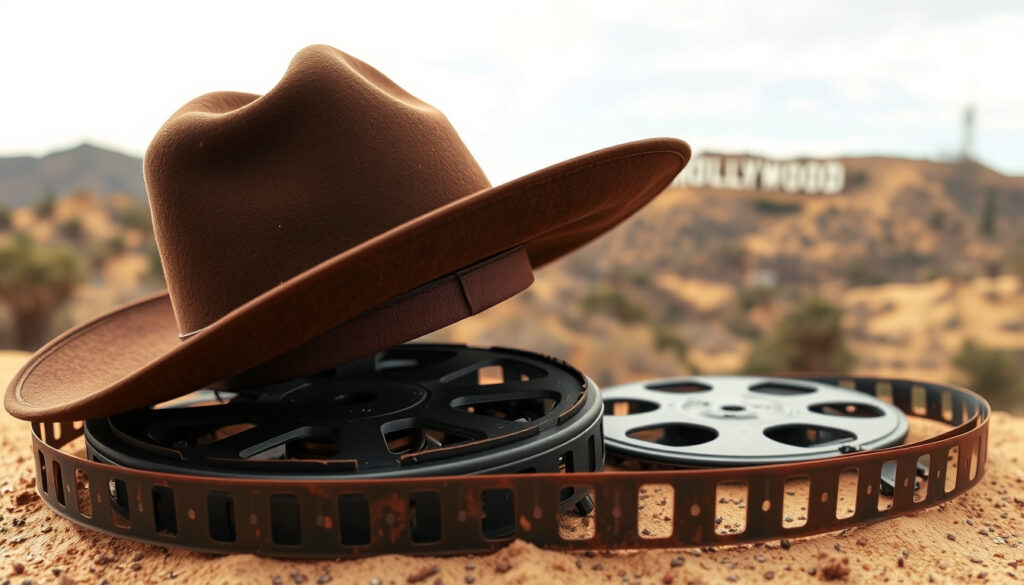
John Wayne: The Duke of Hollywood – Life, Movies, and Legacy
Most of us meet John Wayne before we know his name — a silhouette at a saloon door, a drawl like gravel wrapped in leather. The man inside that frame lived 72 years, made more than 170 films (the count varies by source), and left behind contradictions his Westerns never hinted at: how the Duke got his nickname, which films built him, how he treated the people around him, and the questions that still trail his death.
Born: May 26, 1907 – Winterset, Iowa ·
Died: June 11, 1979 – Los Angeles, California ·
Age at death: 72 ·
Films: Over 170 ·
Nickname: The Duke
Quick snapshot
- Born Marion Michael Morrison on May 26, 1907, in Winterset, Iowa (Encyclopaedia Britannica, reference biography).
- Won the Best Actor Oscar for True Grit (John Wayne Enterprises, official biography).
- Died June 11, 1979, in Los Angeles at 72 (Encyclopaedia Britannica, quick facts file).
- His exact last words — several versions circulate, none officially documented.
- His precise net worth at death — estimates vary around $7 million.
- Why the grave stayed unmarked for two decades — no single official explanation.
- 1939: Stagecoach turns him into a box-office icon (IMDb, filmography record).
- 1969: True Grit brings the Oscar (John Wayne Enterprises, official biography). (IMDb, filmography record)
- 1979–1999: Grave remains unmarked (Wikipedia, biographical overview).
- The film count is still disputed: 179 productions vs. nearly 200, depending on what’s included (Wikipedia, filmography list).
- New audiences keep finding the films through streaming, so the “Duke versus the man” debate is far from settled. (Wikipedia, filmography list)
Eleven rows, one pattern: the public dates and credits are rock solid, while the private numbers — money, health, memory — blur the moment you look closely.
| Fact | Detail |
|---|---|
| Full name | Marion Michael Morrison per Britannica; the official site records him as Marion Robert Morrison (John Wayne Enterprises, official biography). |
| Born | May 26, 1907 — Winterset, Iowa, USA (Encyclopaedia Britannica, reference biography). |
| Died | June 11, 1979 — Los Angeles, California, USA (Encyclopaedia Britannica, quick facts file). |
| Age at death | 72. |
| Height | 6 ft 4 in (193 cm) (Wikipedia, biographical overview). |
| Number of films | Over 170; one count lists 179 productions, others nearly 200 (Wikipedia, filmography list). |
| Oscars | 1 — Best Actor for True Grit, 42nd Academy Awards, 1970 (John Wayne Enterprises, official biography). |
| Spouses | Josephine Saenz, Esperanza Baur, Pilar Palette (John Wayne Enterprises, official biography). |
| Children | 7. |
| Net worth at death | Estimated $7 million (figures vary widely). |
| Burial site | Pacific View Memorial Park, Corona del Mar, California. |
The pattern was already visible in the 1970s: the man could outdraw any actor alive, yet the numbers around his personal finances never added up cleanly.
Why is John Wayne known as the Duke?
John Wayne was born Marion Michael Morrison, and the name “John Wayne” was invented by Hollywood. The nickname “Duke” was the one part of his identity that wasn’t manufactured (Encyclopaedia Britannica, reference biography).
Origin of the nickname
- As a boy in Winterset, Iowa, Morrison was inseparable from his Airedale Terrier, also named Duke. Neighbors started calling the boy “Duke” to tell him apart from the dog.
- The name stuck through high school, college, and his early Hollywood years; friends and crew used it for the rest of his life.
The official John Wayne site records his birth name as Marion Robert Morrison, while Encyclopaedia Britannica uses Marion Michael — a small discrepancy that shows how loosely Wayne’s early record was kept (John Wayne Enterprises, official biography).
How the name followed him
- He kept answering to Duke on sets, in professional letters, and among friends; the name appeared in his production company’s branding as well.
- “I was called Duke because I had a dog named Duke,” he would say in interviews — a line that became part of his origin story.
The studio name John Wayne arrived with his first leading role, The Big Trail (1930), according to Encyclopaedia Britannica, reference biography. The man himself stayed Duke to everyone who knew him.
The implication: the nickname was never a branding exercise — it was the one real thing he carried from his Iowa childhood into a five-decade career.
What movies did John Wayne star in?
More than 170, by even the most conservative count — and possibly closer to 200 if you include television, short films, and uncredited work, as noted in his filmography records.
The films that built him
- Before he became a star, Wayne put in a long apprenticeship: more than 60 low-budget films across roughly eight years (Encyclopedia.com, film biography archive).
- Stagecoach (1939), directed by John Ford, turned him into a box-office name; the role of the Ringo Kid gave Wayne the persona he would refine for decades (per IMDb, filmography record).
- The Ford collaborations that followed — Fort Apache (1948), She Wore a Yellow Ribbon (1949), Rio Grande (1950), The Quiet Man (1952), The Searchers (1956) — cemented the Western icon (per IMDb).
- He also produced and directed: The Alamo (1960) was his most personal and expensive project (Encyclopedia.com, film biography archive).
Wayne’s 1960s run — The Man Who Shot Liberty Valance (1962), Hatari! (1962), El Dorado (1966), True Grit (1969) — kept him at the top of the box office into his sixties (per IMDb).
The award that changed his legacy
It took 20 years and a one-eyed, cantankerous marshal for the Academy to take Wayne seriously as an actor.
- His first Oscar nomination came with Sands of Iwo Jima (1949), a war film that fit his patriotic image (per IMDb, filmography record).
- The win finally arrived with True Grit (1969): Best Actor at the 42nd Academy Awards in 1970 (John Wayne Enterprises, official biography).
- His last feature was The Shootist (1976), a story about an aging gunfighter dying of cancer — uncomfortably close to the actor’s own fate (Wikipedia, filmography list).
The disputed filmography
- One count of Wayne’s career lists 179 film and television productions.
- Other sources say nearly 200 films, or even more than 200.
- The gap comes down to whether shorts, TV guest spots, voice work, and uncredited appearances are included (Wikipedia, filmography list).
So “over 170 films” is a safe floor, not an exact ceiling. The number grew as archivists started counting television and narration work.
What this means: Wayne’s real career was not a straight line to stardom. It was a decade of B-movies, a golden run with Ford, and a late Oscar that only arrived when he stopped playing the flawless hero.
The pattern: the Duke’s filmography was built by accumulation — B-movie grit, Ford’s framing, and a late Oscar — not by a single defining masterpiece.
Was John Wayne a nice man in real life?
The people who knew Wayne describe a different man from the one he played: warmer, more generous, and a lot less sure of himself. The people who clashed with him describe somebody else entirely. Both sets of stories are probably true.
Accounts of kindness
- Co-stars and crew routinely described a relaxed, courteous presence on set, especially compared with the tougher personas around him.
- His wife Pilar described him as extraordinarily generous; friends recalled a man who remembered crew members’ names and quietly paid their medical bills.
- People who worked with him for decades stayed loyal, a common thread in the gentler stories about the Duke.
Temper, politics, and feuds
- Wayne held strong conservative views and made no secret of them; his vocal support for the Vietnam War put him at odds with a large part of Hollywood.
- Charlton Heston reportedly refused to work with him after a political clash over Vietnam.
- Burt Lancaster’s dislike of Wayne was personal, according to film biographies; Clint Eastwood, by contrast, spoke of Wayne with respect.
The actor who symbolized American certainty spent his private life navigating political fights, health battles, and feuds with actors who disagreed with him — none of which ever reached the screen.
Personal habits and appearance
- Smoking: reportedly up to five packs of cigarettes a day for much of his adult life.
- Drinking: a regular whiskey drinker, especially late in the day, by most biographical accounts.
- Wig: he began wearing a toupee in the 1940s as his hair thinned; it became one of Hollywood’s most famous open secrets.
- Walk: his distinctive gait came from a combination of bow-leggedness and a hip injury from horseback riding.
- Pants: cut short on purpose so his cowboy boots would show — a style choice, not a tailor’s mistake.
None of this appeared in the movies. The studio system protected the image, and Wayne played along, which is why the contrast between the screen Duke and the private man still fascinates.
The pattern: Wayne was neither the saint his fans wanted nor the monster his critics implied. He was a disciplined professional who could be kind, stubborn, generous, and politically furious — sometimes in the same day.
The catch: the film set and the dinner table were different stages, and Wayne gave the better performance at the dinner table.
Who was John Wayne’s love of his life?
Wayne married three times and raised seven children, and his romantic life was nearly as eventful as his filmography.
Three marriages
- Josephine Saenz (1933–1946): his first wife and the mother of four of his children.
- Esperanza Baur (1946–1954): a marriage his own friends described as stormy, ending in divorce.
- Pilar Palette (1954–1979): the longest marriage, lasting until his death (John Wayne Enterprises, official biography).
By most accounts, he called Pilar the love of his life, though he remained close to his first wife and family.
Family and money
- Seven children total; several appeared in his films or worked on the business side of his company.
- His production companies — Wayne-Fellows and later Batjac — kept the family in the film business (Encyclopedia.com, film biography archive).
- Net worth at death: most estimates land around $7 million, though the figure varies widely depending on the source.
The estate went primarily to his wife and children.
The trade-off: a man who spent his career playing loners built his actual life around an unusually large family — and the financial obligations that came with it.
What were John Wayne’s last words when he died?
John Wayne died on June 11, 1979, at UCLA Medical Center in Los Angeles, after a long battle with stomach cancer (Encyclopaedia Britannica, quick facts file). He was 72.
The deathbed quote
- The most widely repeated version of his last words: “I’m not afraid of dying, I just don’t want to be there when it happens.”
- Another attributed line: “Tomorrow is the most important thing in life. Comes into us at midnight very clean.”
- Both versions circulate in biographies and interviews; neither has an official source with a date and a witness.
The fact that two different quotes survive tells you how much of Wayne’s death story was shaped by admirers filling in the silence.
The grave that stayed silent for 20 years
- Wayne was buried at Pacific View Memorial Park in Corona del Mar, California.
- The grave remained unmarked from 1979 until 1999 — more than two decades (Wikipedia, biographical overview).
- The family explanation: he requested a simple marker that took time to design and install. Disputes about the headstone have also circulated without official confirmation.
In 1999, a granite marker was finally placed, closing one of the strangest footnotes in Hollywood history.
The catch: even the ending is fuzzy. The last words are disputed, the net worth is estimated, and the unmarked grave has never received a single definitive official explanation.
John Wayne’s life in dates
One career, nine dates — from an Iowa birth to a Los Angeles death that still fuels arguments.
- May 26, 1907: Born Marion Michael Morrison in Winterset, Iowa; the official site lists the middle name as Robert (John Wayne Enterprises, official biography).
- 1930: First leading role under the name John Wayne in The Big Trail (Encyclopaedia Britannica, reference biography).
- 1939: Stagecoach, directed by John Ford, makes him a star (per IMDb, filmography record).
- 1949: First Oscar nomination, for Sands of Iwo Jima (per IMDb).
- 1969: True Grit wins Best Actor; the prize is handed over at the 1970 ceremony (John Wayne Enterprises, official biography).
- June 11, 1979: Dies in Los Angeles at 72 (Encyclopaedia Britannica, quick facts file).
- 1999: A granite marker is finally placed on his grave (Wikipedia, biographical overview).
Why this matters: the timeline shows how slowly the legend was built — and how abruptly cancer ended it.
The record: confirmed vs. unclear
Some parts of Wayne’s story are locked down by official records; others rest on memory, family lore, and retellings that shifted with every decade.
Confirmed facts
- Born May 26, 1907, in Winterset, Iowa (Encyclopaedia Britannica, reference biography).
- Died June 11, 1979, in Los Angeles, at age 72 (Encyclopaedia Britannica, quick facts file).
- Won one Oscar — Best Actor for True Grit (John Wayne Enterprises, official biography).
What’s unclear
- His exact last words — multiple unverified versions circulate.
- His exact net worth at death — $7 million is an estimate, and figures vary.
- Why the grave stayed unmarked for 20 years — no single official explanation exists.
- How much he actually drank — heavy by all accounts, but no precise records survived.
The balance of the record: the public dates are solid. The private numbers — money, alcohol, last words — remain estimates.
In their own words
Three quotes capture the distance between the screen image and the man.
“I don’t know if I deserve this, but I’ll tell you, I think I’ll have one more drink.”John Wayne, Oscar acceptance speech, 42nd Academy Awards, 1970 (John Wayne Enterprises, official biography)
“He was the most generous man I ever knew.”Pilar Wayne, his wife, recalling John Wayne’s kindness
“I was called Duke because I had a dog named Duke.”John Wayne, on the origin of his nickname (Encyclopaedia Britannica, reference biography)
The takeaway: the first quote is show business, the second is marriage, the third is childhood — three versions of one man, all true.
For fans still discovering Stagecoach on streaming, the Duke remains a gateway to the Western, and that image is durable enough to survive the harder facts about smoking, drinking, and political rage. For biographers, the task is to keep the dates fixed and treat the last words, the net worth, and the unmarked grave as open questions rather than settled lore. For anyone curious about John Wayne, the choice is clear: accept the contradictions, or you end up with a cardboard cutout of a hero who never existed.
Frequently asked questions
How many Oscars did John Wayne win?
One: Best Actor for True Grit, presented at the 42nd Academy Awards in 1970 (John Wayne Enterprises, official biography). He was nominated once before, for Sands of Iwo Jima (1949) (per IMDb).
What was John Wayne’s real name?
He was born Marion Michael Morrison, according to Encyclopaedia Britannica, reference biography; the official John Wayne site records the middle name as Robert. He first used the stage name John Wayne in The Big Trail (1930).
Was John Wayne married when he died?
Yes. He and his third wife, Pilar Palette, married in 1954 and stayed married until his death in 1979 (John Wayne Enterprises, official biography).
Why was John Wayne’s grave unmarked for 20 years?
No single official explanation has been confirmed. The family has said he requested a simple marker that took time to design and install; disputes about the headstone have also circulated. The grave stayed unmarked from 1979 to 1999 (Wikipedia, biographical overview).
Was John Wayne a heavy smoker and drinker?
By most biographical accounts, yes. He was reported to smoke up to five packs of cigarettes a day and drink whiskey regularly, though no precise medical records survive.
What was John Wayne’s height?
He stood 6 ft 4 in (193 cm), unusually tall for a leading man of his era (Wikipedia, biographical overview).
Related reading
More related posts
 David Walliams: Biography, Books, and Controversies
 Barbie Ferreira: Why She Left Euphoria, Height, Real Name
 Angela Lansbury: Biography, Family, and Life in Ireland
 Stevie Wonder Hyde Park – BST 2025 Setlist and Review
 Drew Starkey: Age, Relationship Status & LGBTQ Speculation
 Brittany Snow: Biography, Partner, Divorce & Scars
 Shawn Mendes Relationships, Hiatus & Net Worth: Verified Facts
 Hermione Norris: Current Projects, Net Worth, and Career Highlights
