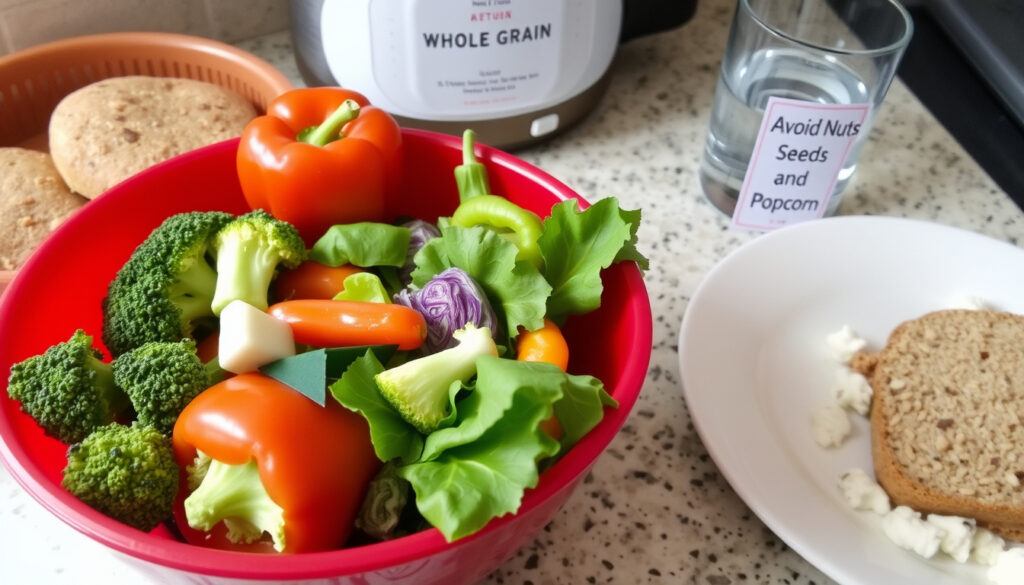
7 Foods to Avoid with Diverticulitis: Flare-Up Diet
If you’re managing diverticulitis, you’ve likely heard the old rule: avoid nuts, seeds, and popcorn. Today, the Mayo Clinic (leading academic medical center) says those foods are safe for most people. But during a flare-up, some foods can definitely make things worse. Here’s what the latest evidence says about the seven foods most worth avoiding when your colon needs a rest.
Adults over 60 with diverticulosis: Approximately 50% · Annual US hospitalizations for diverticulitis: Around 200,000 · Typical recovery time for mild flare with clear liquid diet: 3 to 4 days
Quick snapshot
- Seeds and nuts do not increase flare-up risk for most people (Mayo Clinic)
- Low-fiber diet (10–15 g/day) is recommended during acute inflammation (Stanford Health Care)
- Exactly which foods trigger individual flare-ups varies widely
- Role of specific dietary fibers in prevention is still being studied
- Mild flare: symptoms improve within 3–7 days with dietary changes and antibiotics if needed
- Full healing may take 2–4 weeks before returning to high-fiber diet
- Gradual reintroduction of high-fiber foods after symptoms resolve
- Long-term high-fiber diet (25–35 g/day) can reduce recurrence risk
The table below summarizes the key dietary management points for diverticulitis.
| Condition | Diverticulitis (inflammation of diverticula in the colon) |
|---|---|
| Primary dietary management during flare | Low-fiber or clear liquid diet |
| Commonly avoided foods (flare) | Red meat, fried foods, spicy foods, high-fiber grains, alcohol |
| Recovery time (mild) | 3–7 days |
What’s the Worst Thing to Eat with Diverticulitis?
Are seeds and nuts dangerous?
- For years, doctors warned against nuts, seeds, popcorn, and corn. That advice was based on the theory that these particles could get trapped in diverticula and cause inflammation. But the Mayo Clinic (leading academic medical center) now states that there is no evidence linking these foods to a higher risk of diverticulitis.
- Northwestern Medicine (top-ranked hospital) does not list nuts or seeds among foods to avoid during a flare.
The implication: if you had diverticulitis in the past, you do not need to fear a handful of almonds or a bowl of popcorn. The real culprits lie elsewhere.
Which meats should be avoided?
- Red meat and processed meats are consistently flagged. Houston Methodist (large teaching hospital) explains that beef, pork, and lamb can be pro-inflammatory, and processed meats contain preservatives that may contribute to colon inflammation.
- Northwestern Medicine includes red meat and processed meats on its “avoid” list for flare-ups.
The pattern: animal proteins that are high in saturated fat or additives are the ones to cut first during a flare.
Why are fried and greasy foods problematic?
- Fried foods, greasy takeout, and foods high in refined sugar are hard to digest and can irritate an inflamed colon. Northwestern Medicine specifically advises avoiding fried or greasy foods and foods high in refined sugar during a flare.
- Houston Methodist also recommends limiting fatty and ultra-processed foods because they can worsen inflammation.
The catch: a single fast-food meal can set back recovery by a day or more, while a bland, low-fat menu gives the bowel the rest it needs.
Red meat, fried foods, and processed meats top the list of worst offenders. But the old fear of seeds and nuts is largely outdated. The real challenge is knowing which foods to eat instead.
What Triggers Diverticulitis Flare-Up?
Dietary triggers
- During remission, a diet too low in fiber can contribute to the formation of diverticula and increase the risk of flare-ups. Mayo Clinic recommends a high-fiber diet when you’re symptom-free.
- But during an acute flare, high-fiber foods are the very items to avoid. WebMD (health information publisher) lists fresh fruit, vegetables other than canned, beans, whole grains, brown rice, and popcorn as foods to stay away from during a flare.
- SingleCare (pharmacy benefits manager) notes that some experts think a low-FODMAP diet may reduce colon pressure and limit acute attacks, though evidence is still emerging.
Non-dietary triggers (stress, medications)
- Certain medications increase flare-up risk. Houston Methodist points out that NSAIDs (ibuprofen, naproxen) and steroids are associated with a higher risk of diverticulitis.
- Stress itself doesn’t cause diverticulitis, but it can alter gut motility and immune function, possibly making a flare more likely.
The catch: dietary triggers get most of the attention, but medications and lifestyle factors play a significant role. If you rely on NSAIDs for chronic pain, talk to your doctor about alternatives during flare-ups.
What Can You Eat During a Diverticulitis Flare-Up?
Best breakfast options
- Northwestern Medicine suggests low-fiber cereals, white bread, and ripe bananas as safe breakfast choices.
- Porridge (oatmeal) made from refined oats and well-cooked is generally okay, says Mayo Clinic, but avoid adding high-fiber toppings like nuts or seeds during a flare.
- Weetabix may be too high in fiber for the acute phase; stick to cream of wheat or cornflakes instead.
Comfort foods that are safe
- Clear broths, strained fruit juices (no pulp), and popsicles are ideal at the start of a flare, according to WebMD.
- White rice, white pasta, and well-cooked vegetables without skins or seeds (e.g., mashed potatoes, canned carrots) are safe. Northwestern Medicine includes these in its recommended flare-up diet.
Can I eat porridge, bananas, Weetabix, or soup?
- Bananas: ripe bananas are low in fiber and safe (Mayo Clinic).
- Porridge: okay if refined oats and well-cooked; avoid whole oats.
- Weetabix: contains whole wheat, may be too high in fiber for acute phase; choose refined cereals instead.
- Soup: clear broth soup with well-cooked, skinless vegetables and white rice is fine; avoid chunky vegetable soups with seeds or skins.
The pattern: the safe list during a flare reads like a “white diet” — white bread, white rice, white pasta, and pale, cooked fruits and vegetables. Color and crunch are temporarily off the menu to let your colon heal.
What Calms a Flare-Up of Diverticulitis?
Dietary steps to reduce inflammation
- Mayo Clinic recommends starting with a clear liquid diet — broth, clear juices without pulp, ice pops, and gelatin — for 2–3 days.
- Then gradually add low-fiber foods. Stanford Health Care (academic medical center) recommends a low-fiber diet with only 10–15 grams of fiber per day until symptoms subside.
When to see a doctor
- If you have severe abdominal pain, fever, chills, or blood in your stool, seek medical attention promptly. Mild cases can often be managed at home, but complicated diverticulitis may require hospitalization.
- WebMD advises seeing a doctor if symptoms do not improve within 2–3 days of starting a clear liquid diet.
Role of antibiotics and pain management
- Antibiotics are often prescribed for diverticulitis because it involves bacterial infection. Houston Methodist notes that antibiotics help resolve the infection.
- Avoid NSAIDs for pain; they can increase the risk of perforation. Acetaminophen is a safer choice, according to Mayo Clinic.
Why this matters: the combination of bowel rest, antibiotics, and pain management with acetaminophen typically resolves a mild flare within a few days. Ignoring symptoms or taking the wrong painkiller can lead to complications.
How Long Does It Take Your Gut to Heal from Diverticulitis?
Acute flare recovery
- WebMD states that a low-fiber diet should be followed for 2 to 3 days, or as long as a doctor suggests. Most people feel significantly better within 3–7 days.
- Mayo Clinic says symptoms typically improve within a few days with treatment.
Return to normal diet
- Once symptoms resolve (no pain, fever, or changes in bowel habits), you can gradually add fiber back. Stanford Health Care recommends working up to 30–35 grams of fiber per day.
Full healing and prevention
- Full resolution of inflammation may take 2–4 weeks, though many people resume a normal diet within 1–2 weeks.
- Mayo Clinic emphasizes that a long-term high-fiber diet can reduce the risk of recurrence.
The trade-off: the faster you switch from a low-fiber flare diet to a high-fiber maintenance diet after symptoms pass, the lower your chances of another attack. But rushing it can reignite inflammation.
What’s Confirmed and What’s Still Unclear
Confirmed facts
- Seeds and nuts do not increase the risk of diverticulitis flare-ups in most people (Mayo Clinic).
- A low-fiber diet is recommended during acute inflammation (Stanford Health Care).
- Red meat, fried foods, and alcohol should be avoided during a flare (Northwestern Medicine).
What’s unclear
- Exactly which foods trigger an individual’s flare-ups can vary widely.
- The role of specific dietary fibers in prevention is still being studied.
- The effectiveness of low-FODMAP diets for diverticulitis is not yet established (SingleCare).
Expert Perspectives on Diet and Flare-Ups
For many years, doctors told people with diverticulitis to avoid certain foods, including seeds, popcorn, and nuts. This warning was based on the theory that these particles could get lodged in the diverticula and cause inflammation.
WebMD (health information publisher)
During a flare-up, avoid fried or greasy foods, spicy foods, red meat and processed meats, alcohol, and foods high in refined sugar.
Northwestern Medicine (top-ranked hospital)
For patients managing diverticulitis, the choice between a quick return to a normal diet and a cautious, phased approach is clear: prioritize healing over convenience. Rushing back to high-fiber foods or indulging in trigger items can prolong pain and increase the risk of recurrence. Stick with the low-fiber plan until you are symptom-free for at least 48 hours, then reintroduce fiber slowly. Your colon will thank you.
For those seeking authoritative guidance, the NHS official advice on diverticulitis provides a reliable list of foods to avoid during a flare-up.
Frequently asked questions
Can I eat nuts if I have diverticulitis?
Yes, for most people. Current evidence from the Mayo Clinic (leading academic medical center) shows that nuts do not increase the risk of flare-ups. However, during an acute flare, it’s best to avoid them because they are high in fiber and hard to digest.
Is dairy bad for diverticulitis?
Dairy is not inherently bad, but some people with diverticulitis become temporarily lactose intolerant during a flare. If you notice bloating or diarrhea after milk or cheese, switch to lactose-free options or small portions.
What drinks should I avoid with diverticulitis?
Northwestern Medicine (top-ranked hospital) recommends avoiding alcohol during a flare. Caffeinated drinks like coffee and cola may also irritate the gut; stick to water, clear broths, and diluted fruit juices without pulp.
Can I eat bread with diverticulitis?
Yes, but choose white bread or refined breads during a flare. Whole wheat and whole grain breads are too high in fiber for the acute phase. According to Northwestern Medicine, white bread is safe.
Is coffee allowed during a flare-up?
Coffee is often discouraged during a diverticulitis flare because it can stimulate bowel movements and worsen cramping. Houston Methodist (large teaching hospital) includes caffeine among gut irritants to limit. Herbal tea or clear broth are better choices.
How soon can I return to a high-fiber diet?
Once your symptoms have fully resolved (no pain, fever, or bowel changes), you can start adding fiber back gradually. Stanford Health Care (academic medical center) suggests increasing fiber to 30–35 grams per day over the course of 1–2 weeks.
Are eggs safe to eat with diverticulitis?
Yes, eggs are low in fiber and easy to digest. They make a good protein source during a flare, as long as they are not fried or cooked in excessive fat. Scrambled or poached eggs are safe.
More related posts
 Brian Shaw: Height, Weight, Comparisons & Allegations
 Angela Scanlon: Bio, Family, ADHD, Religion & Facts
 Jack Doherty Net Worth, Age, and Career: Is He a Millionaire
 Black Cardigan Styles: Styling Tips and Where to Buy
 Bobby George: Biography, Net Worth, Darts Career & Current Life
 Ric Flair: 16 Championships, Net Worth, and Legacy
 Wincey Willis Dead at 76: ITV’s First Female Weather Presenter
 Pol Pot: Verified Facts, Sources, and Unanswered Questions
