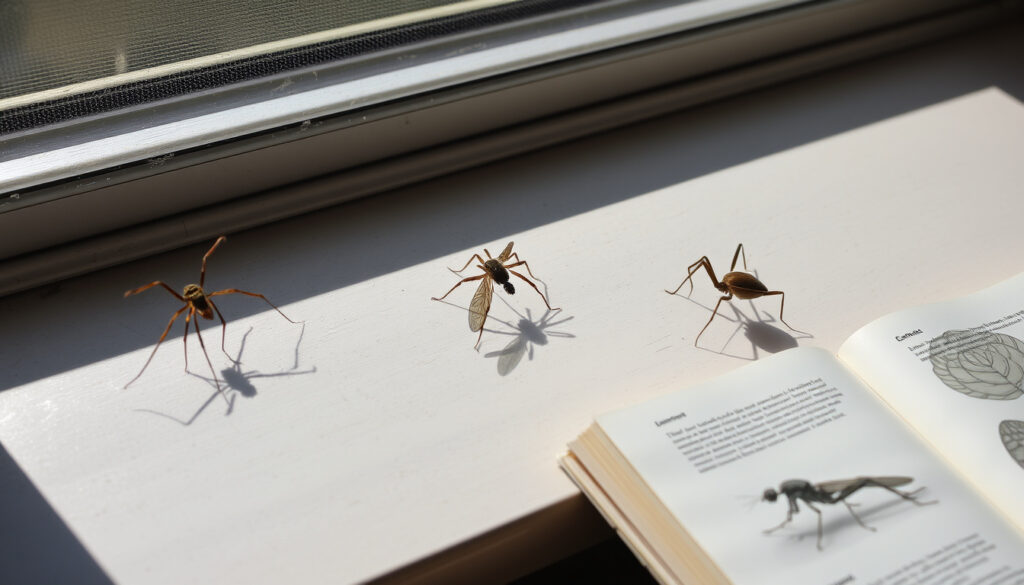
Daddy Long Legs: Spider, Crane Fly, Harvestman? Myths & Facts
You’ve probably heard the name “daddy long legs” and pictured a spindly creature with impossibly long legs. But here’s the thing: that name doesn’t refer to just one animal—it’s a nickname shared by three very different arthropods. In this article, we’ll untangle which is which, bust the lingering myth about venom, and explain why the answer changes depending on whether you’re in Ireland, the UK, or the US. By the end, you’ll know exactly what you’re looking at the next time one of these leggy visitors crosses your path.
Number of species in Pholcidae (cellar spider) family: over 2,000 ·
Leg span of a typical daddy long legs spider: up to 5 cm (2 inches) ·
Common myth status: daddy long legs are the most venomous spiders but cannot bite humans – false ·
Number of distinct creatures called “daddy long legs”: three: cellar spider, crane fly, harvestman ·
Crane fly (Tipulidae) leg count: six (insect) vs. eight (spider/harvestman)
Quick snapshot
- Cellar spiders (Pholcidae) are true spiders with venom not dangerous to humans (West Cork People (local Irish news))
- Crane flies (Tipulidae) are harmless insects, not spiders (The Wildlife Trusts (UK conservation charity))
- Harvestmen (Opiliones) are arachnids with no venom glands (University of Wisconsin-Milwaukee Field Station (entomology research))
- Exact origin of the name “daddy long legs” is undocumented folk usage (Encyclopaedia Britannica (reference publisher))
- Whether the venom myth traces to a single 1930s article remains uncertain (Encyclopaedia Britannica (reference publisher))
- Regional name overlap: some US regions call crane flies “daddy long legs” too (Reddit community discussion)
- Crane flies appear most heavily in late summer and early autumn, especially September (West Cork People)
- Cellar spiders are active year-round indoors but most visible in warmer months (West Cork People)
- Harvestmen peak in late summer but can be found until first frost (West Cork People)
- If you see one indoors in autumn, it’s likely a crane fly; if in a damp basement, a cellar spider
- Harvestmen will retreat to leaf litter as temperatures drop
- No evidence of long-term population decline – seasonal variation is normal
The table below lays out the key differences side by side so you can spot which creature you are dealing with at a glance.
| Attribute | Cellar spider (Pholcidae) | Crane fly (Tipulidae) | Harvestman (Opiliones) |
|---|---|---|---|
| Common name | Daddy Long Legs (multiple organisms) | Often called daddy long legs in Ireland/UK | Also called granddaddy long legs in US |
| Scientific families | Pholcidae (spider) | Tipulidae (crane fly) | Opiliones (harvestman) |
| Venomous? | Cellar spiders have venom but it is not dangerous to humans | Crane flies and harvestmen are non-venomous | Non-venomous |
| Bite risk | Cellar spiders rarely bite | Crane flies cannot bite | Harvestmen cannot bite |
| Typical leg span | Up to 5 cm (spider) | Up to 4 cm (crane fly) | Up to 3 cm (harvestman) |
| Life span | 1-2 years | 10-15 days (adult) | 1 year |
| Regional names | Ireland/UK: crane fly; US: harvestman or cellar spider | Ireland/UK: daddy long legs; US: also called mosquito hawk | US: daddy long legs, granddaddy long legs |
Seven key differences, one clear pattern: only one of the three is a true spider, and none poses a threat to humans.
What are daddy long legs in Ireland?
Daddy long legs as a crane fly (Tipulidae)
- In Ireland, “daddy long legs” usually refers to the crane fly, a long-legged insect with six legs and two wings (The Wildlife Trusts (UK conservation charity)).
- Ireland has 205 recorded crane fly species (NBN Atlas (UK biodiversity database)).
- Crane flies belong to the family Tipulidae within the order Diptera (NBN Atlas (UK biodiversity database)).
The implication: in Ireland, the most common encounter is with a harmless insect, not a spider.
Daddy long legs as a harvestman (Opiliones)
Harvestmen are arachnids in the order Opiliones – not true spiders (University of Wisconsin-Milwaukee Field Station (entomology research)). They have a single body segment and no venom glands. In the UK and Ireland, 34 harvestman species have been recorded (Field Studies Council (UK biodiversity publisher)).
Daddy long legs as a cellar spider (Pholcidae)
The common cellar spider in Ireland is Pholcus phalangioides (West Cork People (local Irish newspaper)). It is a true spider (Araneae) with eight legs and two body segments (Biodiversity Maps (Ireland’s National Biodiversity Data Centre)).
What are the biggest spiders in Ireland?
The largest spider in Ireland is the giant house spider (Eratigena atrica), with a leg span up to 10 cm. The missing sector orb weaver (Zygiella x-notata) is also common. Neither is called daddy long legs.
If you hear “daddy long legs” in Ireland, the speaker almost certainly means a crane fly – but the same name applies to two other creatures, so context matters more than ever.
The pattern: regional naming habits determine which creature you are dealing with, so always consider location first.
Is Daddy Long Legs considered a spider?
Characteristics of cellar spiders (Pholcidae)
- Cellar spiders are true spiders: eight legs, two body segments, fangs, and spinnerets (Biodiversity Maps).
- They build messy webs in corners and basements.
Why harvestmen are not spiders
Harvestmen have a single, fused body segment and lack spinnerets, fangs, and venom glands. They are arachnids in order Opiliones, distinct from spiders (order Araneae) (University of Wisconsin-Milwaukee Field Station (entomology education)).
Why crane flies are not spiders
Crane flies are insects: they have six legs, two wings, and belong to Diptera (The Wildlife Trusts). They have no venom at all.
The pattern: only the cellar spider is a true spider; the other two are commonly misidentified arachnids or insects.
Why is it called daddy long legs?
Historical origins of the name
The term “daddy long legs” is a folk nickname dating back at least to the 19th century, probably inspired by the exaggeratedly long, thin legs resembling a father’s legs. It has always been applied to multiple long-legged arthropods (Encyclopaedia Britannica).
Regional variations in naming
- Ireland & UK: “daddy long legs” = crane fly almost exclusively.
- US: “daddy long legs” often refers to harvestmen or cellar spiders.
- Some US regions also call crane flies “daddy long legs.”
Comparison with similar names
In the US, harvestmen are also called “granddaddy long legs.” The Irish phrase Pilib an Gheataire (“Skinny Philip”) is a local name for the crane fly (Wikipedia (community encyclopedia) – low confidence).
A single common name covering three different animals creates genuine confusion. Knowing the regional default helps you avoid misidentifying a harmless harvestman as a venomous spider.
The implication: naming is a linguistic shortcut, not a biological classification — always verify what people mean by context.
Are daddy long legs ok in the house?
Is it safe to pick up a daddy long leg spider?
Cellar spiders are fragile and may drop a leg if handled roughly, but they are harmless. They rarely bite, and if they do, the venom is not medically significant (West Cork People).
Daddy long legs poisonous: myth vs. reality
The persistent myth that daddy long legs are the most venomous spiders but cannot bite humans is false. It has been debunked by multiple sources, including the University of Wisconsin-Milwaukee Field Station and Encyclopaedia Britannica. The myth likely started because cellar spiders can bite thin skin between fingers, but no confirmed human envenomation has ever been recorded.
How to manage daddy long legs indoors
All three types are harmless. Crane flies can be gently guided outside; cellar spiders can be left to catch other pests; harvestmen prefer moist leaf litter and rarely stay indoors long.
The trade-off: you gain a natural pest controller (cellar spiders) or lose a harmless visitor (crane flies). No extermination needed.
Why don’t you see daddy long legs anymore?
Seasonal population changes
Crane fly adults live only 10-15 days, peaking in September. The rest of the year, they exist as larvae in soil. Cellar spiders are present year-round indoors but are secretive. Harvestmen become less visible in dry or cold weather.
Habitat loss and urbanization
Harvestmen are sensitive to moisture and may decline with habitat fragmentation, but there is no evidence of a long-term decline in crane fly or cellar spider populations in most regions.
Climate change impacts
No clear data links climate change to significant population shifts for any of these species in Ireland or the UK.
What this means: if you think you see fewer daddy long legs, it’s almost certainly normal seasonal variation – not a crisis.
What we know and what remains unclear
Confirmed facts
- Cellar spiders (Pholcidae) are true spiders with venom that is not medically significant (West Cork People).
- Crane flies (Tipulidae) are insects, not spiders, and are harmless (The Wildlife Trusts).
- Harvestmen (Opiliones) are arachnids but not spiders; they lack venom glands (University of Wisconsin-Milwaukee Field Station).
- The myth of deadly venom has been repeatedly debunked by arachnologists.
What’s unclear
- The exact origin of the name “daddy long legs” – it is a folk term with no documented first use.
- Whether the venom myth originated from a specific 1930s source remains uncertain.
- Regional usage overlaps: some US residents call crane flies “daddy long legs” as well.
- The exact number of crane fly species in Ireland is not independently cross-verified across all sources.
“The adult daddy longlegs is a brown, long-bodied insect, with translucent wings and very long legs.”
– The Wildlife Trusts (UK conservation charity), describing the crane fly
“Harvestmen are in the class Arachnida and the order Opiliones, while spiders are in the order Araneae.”
– University of Wisconsin-Milwaukee Field Station (entomology education)
“The label daddy long legs is unhelpful because it refers to three unrelated arthropods.”
– West Cork People (local Irish newspaper)
“34 harvestmen species have been recorded in Britain and Ireland as of July 2022.”
– Field Studies Council (UK biodiversity publisher)
Whether you live in Ireland, the UK, or the US, the name “daddy long legs” is a linguistic shortcut that causes more confusion than clarity. The next time someone warns you about a venomous daddy long legs, you can confidently explain that only one of the three is even a spider – and it’s harmless. For Irish readers, the default is the crane fly; for Americans, the harvestman; for basement dwellers everywhere, the cellar spider. The choice is clear: enjoy these leggy neighbours as harmless oddities, not threats.
Related reading: What Exactly Is a Daddy Long Legs? · Daddy Longlegs
Frequently asked questions
What is the most common type of daddy long legs in the United States?
In the US, “daddy long legs” most often refers to harvestmen (Opiliones) or cellar spiders (Pholcidae), depending on the region. Crane flies are less commonly called by this name.
Can daddy long legs fly?
Only crane flies can fly – they are insects with two wings. Cellar spiders and harvestmen do not have wings.
Are daddy long legs found worldwide?
Yes – all three groups are found globally. Cellar spiders are common in human dwellings everywhere; crane flies live on every continent except Antarctica; harvestmen are widespread in temperate and tropical regions.
Do daddy long legs eat mosquitoes?
Cellar spiders do catch small insects in their webs, including mosquitoes. Crane flies do not eat mosquitoes – many adult crane flies do not feed at all. Harvestmen eat decaying organic matter and small invertebrates.
How can I tell if a daddy long legs is a spider or a crane fly?
Count the legs: eight legs = spider/harvestman; six legs = crane fly. If it has wings, it’s a crane fly. If it has a single oval body segment, it’s a harvestman. If it has a distinct waist (two segments) and builds a web, it’s a cellar spider.
What should I do if I find a daddy long legs in my bedroom?
Leave it alone or gently usher it outside. All are harmless. If it’s a cellar spider, it may help control other insects.
Are daddy long legs beneficial to the garden?
Yes – crane fly larvae feed on decaying roots (sometimes damaging lawns), but adults pollinate. Harvestmen are scavengers that break down organic matter. Cellar spiders control indoor pests.
Why do daddy long legs legs fall off so easily?
Leg autotomy (self-amputation) is a defence mechanism against predators. The leg twitches to distract the predator while the animal escapes. The loss is not fatal, and the leg does not regenerate.
More related posts
 David Hasselhoff Wheelchair: Health, Sobriety, Net Worth 2026
 Ava Gardner: Life, Marriages, Cause of Death & Movies
 Eva Longoria: Age, Children, Husband, Net Worth & Career
 Emily MacDonagh: NHS Doctor, Peter Andre Wife, Mother of Three
 Alan Carr: Husband Split, Net Worth, Sobriety, Career Facts
 Horrid Henry: Answers to Your Biggest Questions About the Show
 Kindergarten Cop: Is It a Hit, Flop, or OK for Kids
 Kendrick Lamar: Politics, Faith, Sobriety, and the Drake Feud
