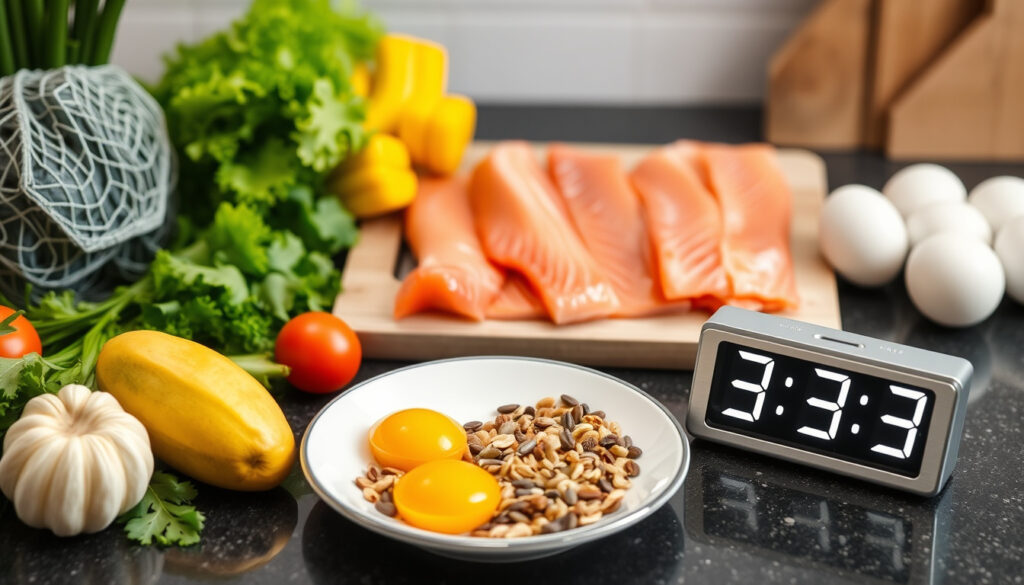
Eddie Abbew diet, hormones and the 3-3-3 rule
If you’ve scrolled through fitness Instagram lately, you’ve likely seen a man in his 60s urging you to “wake up” and eat more eggs. That’s Eddie Abbew — a former competitive bodybuilder and qualified psychiatric nurse whose high-protein, low-carb diet has gathered a loyal following. This article cuts through the hype to examine what the Eddie Abbew diet actually involves, the hormones he says drive weight loss, the 3-3-3 rule, his 90-day plan, and whether his advice holds up under scrutiny.
Age: 63 ·
Occupation: Former bodybuilder & psychiatric nurse ·
Diet focus: High-protein, low-carb ·
Program: 90-day plan ·
Book: Available on Amazon ·
Community: Abbew Crew on Skool
Quick snapshot
- High-protein, low-carb (The Face (culture & lifestyle magazine))
- Whole foods, no processed items (The Boar (university publication))
- Emphasis on meat, fish, eggs, vegetables (The Sun (UK tabloid))
- Insulin and glucagon (Mayo Clinic (medical institution))
- Low insulin promotes fat loss (Medical News Today (health publisher))
- 3-3-3 rule to manage insulin (Gymfluencers (fitness blog))
- 90-day plan (paid) (Eddie Abbew (official site))
- 7-day challenge (free) (Trustpilot (review platform))
- Book with recipes and principles (Amazon (e-commerce))
- Former bodybuilder and psychiatric nurse (Instagram (social media))
- Trustpilot reviews mixed (Trustpilot (review platform))
- Large social media following (Financial Times (business newspaper))
| Detail | Value |
|---|---|
| Age | 63 |
| Profession | Former bodybuilder, psychiatric nurse |
| Diet type | High-protein, low-carb |
| Main hormone focus | Insulin and glucagon |
| Program length | 90 days |
| Book available | Yes on Amazon |
What is the Eddie Abbew diet?
Eddie Abbew describes his approach as eating “single-ingredient foods” — meat, fish, eggs, avocados, and cruciferous vegetables — while cutting out processed sugar, grains, and convenience meals entirely. A March 2024 profile in The Face (UK culture magazine) says his diet centers on exactly those items. In an interview with The Boar (student-run publication), he confirmed he rejects “convenience meals” and bases his eating around whole foods.
What can I eat on the Eddie Abbew diet?
The daily template, as described by Abbew on Instagram in November 2023 and covered by The Sun (UK daily newspaper), follows a four-meal structure built around eggs, avocado, fatty protein, cruciferous vegetables, and later-added carbs around training. A Daily Mail (UK newspaper) report noted that Abbew recommends starting the day with six eggs for men and four eggs for women plus a small avocado. Beef liver appears three times a week, not daily, according to a YouTube video (user-generated content) featuring Abbew.
- Meat and fish — emphasis on fatty protein
- Eggs — 4–6 per day as a baseline
- Avocados and cruciferous vegetables (broccoli, cabbage, kale)
- Limited fruit — berries preferred
- No processed sugar, grains, or convenience foods
- No calorie counting — focus on food quality
The implication: Abbew’s diet is simple to grasp but rigid. The emphasis on eggs and meat makes it relatively expensive compared to standard UK dietary patterns, and the lack of grains or legumes runs counter to NHS guidelines on fibre intake.
Abbew’s diet works because it removes the hardest variable — calorie counting — and replaces it with a binary rule: eat whole foods or don’t. The catch: his audience is largely composed of men over 40 who feel overwhelmed by mainstream nutritional advice and respond well to strict, unambiguous guidance.
What is the hormone that Eddie Abbew talks about?
Abbew repeatedly focuses on two hormones: insulin and glucagon. His core argument, as repeated across his social media and interviews, is that keeping insulin low unlocks fat burning and that most people eat too frequently to ever let insulin drop.
What are the two hormones that help you lose weight?
Insulin and glucagon work as a hormonal seesaw. When insulin is high — after a carb-heavy meal — the body stores energy and blocks fat burning. When insulin is low, glucagon signals the body to release stored fat for fuel. Mayo Clinic (US medical research institution) confirms that insulin promotes fat storage and that chronically high insulin is linked to weight gain. NHS (UK national health service) explains that glucagon raises blood glucose levels by triggering the liver to release stored sugar — but does not directly endorse Abbew’s framework for weight loss.
Abbew’s diet aims to keep insulin low by reducing carbohydrate intake and, crucially, by reducing meal frequency. Longer gaps between meals give the body time to enter a low-insulin state where glucagon can act. This is not unique to Abbew — intermittent fasting and low-carb diets operate on the same hormonal logic. What distinguishes Abbew is the bluntness of his messaging: he tells followers to stop snacking, stop eating breakfast, and eat just two or three meals a day.
The pattern: Abbew takes mainstream endocrinology — low insulin promotes fat burning — and translates it into a strict eating schedule. The science behind the hormones themselves is well-established; the originality lies in the rules he derives from it.
Abbew’s hormonal framework is broadly consistent with established endocrinology, but the specific claim that his 3-3-3 rule “resets” insulin sensitivity has not been tested in a clinical setting. Followers with type 1 diabetes or those on insulin medication should not attempt this diet without medical supervision.
Is Eddie Abbew’s diet just keto?
In short, no — but the overlap is significant. Both approaches are low-carb, both aim to lower insulin, and both eliminate sugar and refined grains. But Abbew’s diet differs from standard ketogenic protocols in key respects.
Six points of comparison reveal a single pattern: Abbew’s diet is a low-carb, high-protein plan that borrows keto’s hormonal logic but rejects its macronutrient targets.
| Feature | Standard Keto Diet | Eddie Abbew Diet |
|---|---|---|
| Carb intake | Below 50g/day, often 20–30g | Low but not strictly counted; some carbs from vegetables |
| Fat intake | High (70–80% of calories) | Moderate — not specifically targeted |
| Protein intake | Moderate (20–25% of calories) | High — eggs, meat, fish as staples |
| Ketosis requirement | Yes — measured via blood/urine | No — not a stated goal |
| Meal timing rules | Optional (IF common but not required) | Central — 3-3-3 rule, long overnight fast |
| Allowed foods | Meat, fish, eggs, dairy, oils, low-carb veg, berries | Same list plus avocados, minus dairy emphasis |
Wikipedia (encyclopedic source) defines a ketogenic diet as very high fat, moderate protein, and very low carbohydrate — a ratio Abbew does not advocate. Instead, Healthline (health information publisher) describes low-carb diets as more flexible, which aligns better with Abbew’s approach. His 3-3-3 rule — three meals, three hours apart, three ingredients per meal — is his own invention and has no keto parallel.
The trade-off: Abbew’s diet is easier to follow than keto because there are no macros to track. But that simplicity means it lacks the metabolic precision that keto dieters use to maintain ketosis. For weight loss alone, the difference likely does not matter. For metabolic therapy, it does.
Is Eddie Abbew genuine?
This is the question that surfaces most often in forums and review threads. Abbew holds two genuine professional credentials: he is a qualified psychiatric nurse and a former competitive bodybuilding champion. His Instagram bio — “Ex-bodybuilding Champ, Qualified Psychiatric Nurse, Ebooks & Abbew Crew” — presents both openly.
What are Eddie Abbew’s credentials?
Abbew’s nursing qualification was earned through formal training. His bodybuilding background is evidenced by competition history and multiple profile pieces, including one in the Financial Times (UK business newspaper) that describes his diet as “mostly carnivore-style” and his persona as both charismatic and confrontational. The Daily Mail (UK newspaper) noted that he claims to have eaten 38 eggs a day during his bodybuilding prime, a figure that draws both awe and skepticism from nutritionists.
What Abbew does not hold is a qualification in dietetics, nutrition science, or endocrinology. His advice on hormones and metabolism comes from personal research and experience, not from formal medical training in those specific fields. The same Daily Mail piece quoted a registered dietician who warned that Abbew’s diet could be deficient in fibre and certain micronutrients, and that his blanket rejection of grains and dairy was not evidence-based.
What do reviews say about his program?
Trustpilot reviews for the Abbew Crew program show mixed results. One user reported losing 2 stone and over 50 cm in key measurements on the 90-day plan, according to Trustpilot (customer review platform). Others have noted that the program’s materials are largely self-published e-books and videos, not peer-reviewed content. No independent clinical trial has tested Abbew’s 90-day plan, and no mainstream medical body has endorsed his approach.
Eddie Abbew is both more qualified than the average fitness influencer — he holds a real nursing credential — and less qualified than the average dietician. His audience trusts him because he is a nurse who has actually done the bodybuilding himself. The gap between trust and expertise is exactly where the risk lives: his advice may work for some, but it bypasses the institutional safeguards of regulated nutrition advice.
Why this matters: Abbew’s authenticity is not really in doubt — he is visibly doing what he preaches. What is in doubt is the generalizability of his advice. A 63-year-old former bodybuilder eating 3,300–3,500 calories a day, as estimated by a YouTube experiment (fitness content creator), is not a template that applies to a sedentary 45-year-old woman or a person with metabolic disease.
What is the 3-3-3 rule to lose weight?
The 3-3-3 rule is Abbew’s signature dietary structure. It consists of three simple directives: three meals per day, three hours between each meal, and three ingredients per meal (or three components: a protein, a vegetable, and a fat).
How does the 3-3-3 rule work?
The logic is hormonal. By spacing meals three hours apart and keeping each meal to whole-food ingredients, Abbew aims to keep insulin spikes small and infrequent. The long overnight fast — often from a late-afternoon meal until the next day’s first meal — extends the period of low insulin even further. Gymfluencers (fitness blog) reported that Abbew often fasts until 5 pm, a pattern also noted in the Daily Mail (UK newspaper) profile.
- 3 meals per day — breakfast is often skipped, so the first meal may be lunch or even early dinner
- 3 hours between meals — a strict minimum gap to allow insulin to drop between eating occasions
- 3 ingredients per meal — keeps meals simple and avoids the complexity of multi-component processed foods
The rule is practical, not magical. It works because it imposes structure on people who eat erratically. The three-ingredient limit also serves as a cognitive shortcut: instead of deciding what to eat from infinite options, you ask yourself whether each ingredient is a single whole food.
The catch: the 3-3-3 rule has never been tested in a clinical trial. Its logic is consistent with endocrinology, but its specific parameters are Abbew’s own invention. There is no evidence that three hours is the optimal gap, or that three ingredients is the ideal number.
What is the Eddie Abbew 90-day plan?
The 90-day plan is Abbew’s flagship paid offering, available through his official website. It includes meal plans, video guidance, and access to the Abbew Crew community on Skool, a private social platform designed for course creators.
What is the Eddie Abbew 7-day challenge?
The 7-day challenge is the free entry point — a shorter, less intensive version of the 90-day plan. It gives potential members a taste of the eating rules, meal templates, and community style without a financial commitment. According to Trustpilot (review platform), some users who completed the 7-day challenge went on to purchase the full 90-day program.
What is the Eddie Abbew book about?
Abbew’s book, available on Amazon (e-commerce platform), contains recipes and diet principles aligned with his general philosophy: high-protein, low-carb, whole-food eating. The format is an e-book, not a traditionally published volume, and its contents appear to be an extension of the same advice he shares for free on social media, with more detailed recipes and meal schedules.
For UK readers, the cost of the 90-day program should be weighed against free alternatives. The NHS (UK national health service) offers free, evidence-based weight loss guidance through its “Eat Well” programme, and the Healthline (health information publisher) low-carb guide provides similar principles at no cost.
The implication: the 90-day plan’s value lies more in its accountability structure and community support than in unique nutritional information. Abbew’s advice is freely available on Instagram; the paid plan monetises the coaching layer around it.
Clarity check
Confirmed facts
- Eddie Abbew is a former competitive bodybuilder (Financial Times)
- He holds a qualification as a psychiatric nurse (Instagram bio)
- He advocates a high-protein, low-carb, whole-food diet (The Face)
- His diet eliminates processed sugar and grains (The Boar)
- He sells a 90-day plan and a book (Eddie Abbew official site)
- He emphasises insulin and glucagon in his weight loss framework (Gymfluencers)
What’s unclear
- The exact science behind his hormone claims lacks mainstream medical consensus — no clinical trial has verified his specific protocol (Daily Mail)
- The effectiveness of the 3-3-3 rule has not been independently tested (Mayo Clinic)
- Long-term health impacts of his diet are not documented beyond user testimonials (Trustpilot)
- No independent medical body has endorsed his approach (NHS)
“My mission is to help people reclaim their health, body and energy.”
Eddie Abbew, official website
“Ex-bodybuilding Champ, Qualified Psychiatric Nurse, Ebooks & Abbew Crew”
Eddie Abbew, Instagram bio
Summary — Abbew has built a following by translating complex hormonal science into ultra-simple rules. For UK men over 40 who feel failed by mainstream dietary advice, his direct style and personal transformation story are magnetic. But the evidence gap between his claims and independent verification is real. For anyone considering his 90-day plan, the simple question remains: does the structure justify the cost, or would the same results come from any low-carb, whole-food diet paired with basic accountability? For the UK consumer who has tried everything else and is looking for a firm hand, the choice is clear: try the free 7-day challenge before committing to the full program, or invest the same money in a session with a registered dietician who can tailor advice to individual health conditions.
Readers interested in the specifics of his insulin-focused plan can explore Eddie Abbews diet method guide for a comprehensive guide.
Frequently asked questions
What is the Eddie Abbew website?
His official site is eddieabbew.com, where he sells his 90-day plan, ebooks, and offers access to the Abbew Crew community.
How much does the 90-day plan cost?
Pricing is listed on his official site. The plan is a paid product that includes meal guides, video content, and community support. Exact prices may vary by region and promotions.
Does Eddie Abbew offer a free trial?
Yes — the 7-day challenge is a free introduction to his approach, available through his website and social media.
What is the Abbew Crew?
The Abbew Crew is his private community hosted on Skool, a social platform for course members. It provides peer support, accountability, and direct access to Abbew’s guidance.
Is Eddie Abbew’s diet safe for everyone?
No. His diet is very low in carbohydrates and high in protein, which may not be suitable for people with kidney disease, diabetes requiring medication, or those who are pregnant or breastfeeding. Consultation with a GP is strongly recommended before starting.
What are the main principles of the Eddie Abbew diet?
Whole foods only, high protein, low carbohydrate, no processed sugar or grains, no calorie counting, and the 3-3-3 rule (three meals, three hours apart, three ingredients per meal).
How can I purchase Eddie Abbew’s book?
His e-book is available on Amazon UK and through his official website.
What is the Eddie Abbew 7-day challenge?
A free, shorter version of his 90-day plan designed to introduce his eating rules and philosophy without commitment.
More related posts
 Rebecca Zamolo: Biography, Miscarriage, Family & Net Worth
 Rachel Riley: Countdown career, libel case, husband, children
 Jackie Apostel: Age, Cruz Beckham Relationship & Career
 Thandie Newton Movies and TV Shows: Filmography & Awards
 Half Up Half Down Hairstyles – Easy Guide for All Occasions
 Kendrick Lamar: Politics, Faith, Sobriety, and the Drake Feud
 Jade Little Mix: Verified Facts on Relationships & More
 Simon Le Bon: Net Worth, Wife, Children, and Current Activities
