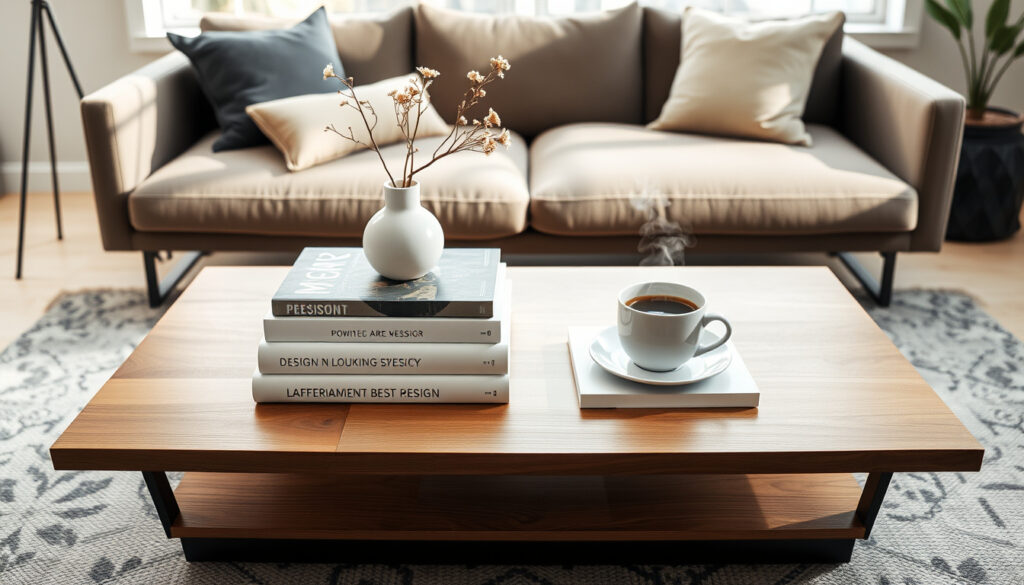
Coffee Tables: Trends, Rules, and Best Picks for Your Living Room
There’s something about a coffee table that makes a living room feel complete. But the piece that once served as a simple surface for drinks and remotes now doubles as a workspace for laptops, a storage unit for board games, and a style anchor for the entire room.
Standard coffee table height: 16–18 inches · 2/3 rule: table length 2/3 of sofa length · Typical width: 48 inches · Trending material mix: wood + ceramic/glass
Quick snapshot
- Coffee tables remain widely used in living rooms (Homes & Gardens (interior design authority))
- The 2/3 rule is a standard interior design guideline (Povison (modern furniture retailer))
- Natural materials (wood, stone, ceramic) are a current trend (Homes & Gardens)
- Exact market share of coffee tables vs alternatives
- Which brands will lead in 2026
- Long-term effect of remote work on coffee table use
- 2010–2015: Glass and chrome rectangular tables dominated (Homes & Gardens)
- 2016–2020: Mid-century modern wood/metal designs (Povison)
- 2021–2024: Rise of multifunctional tables (Homes & Gardens)
- 2025: Natural materials and organic shapes (Povison)
- 2026 predicted: Sustainability and adaptable designs lead (Homes & Gardens; Povison)
- Sustainably sourced materials, tactile finishes, and adaptable designs expected to lead (Homes & Gardens; Povison)
| Attribute | Value |
|---|---|
| Standard coffee table height | 16–18 inches |
| Recommended table-to-sofa length ratio | 2/3 |
| Common materials | Wood, glass, metal, marble, ceramic |
| Trending shapes (2025–2026) | Oval, round, sculptural organic |
| Top alternative | Storage ottoman with tray |
The implication is that the coffee table’s role has expanded beyond a simple surface.
What is the current trend for coffee tables?
Coffee table design is shifting away from the rigid, boxy forms that defined earlier decades. According to Homes & Gardens (leading interior design publication), the direction is toward softer, sculptural silhouettes—rounded, oval, and pebble-like tops with softened corners. Povison (modern furniture retailer) adds that warm woods like walnut and oak, fluted bases, and slim legs are defining the quiet-luxury look for 2026. Material mixing is also key: glass on gold-toned metal frames, walnut paired with travertine (Povison modern coffee table catalog).
The pattern is clear: the industry is moving toward softer forms that prioritize tactile appeal over rigid geometry.
What are the most popular coffee tables in 2026?
- Sculptural organic tables with asymmetrical silhouettes (VerityRank (home decor analysis))
- Low-profile lounge-height tables (12–16 inches) for a relaxed, gallery-like feel (Povison)
- Lift-top tables for dual-purpose lounging and working (Povison)
- Tinted, smoked, and ribbed glass tables that add a layer of texture (Povison)
What color furniture is in style for 2026?
Earthy tones and warm neutrals are overtaking the cool grays of previous seasons. Povison reports that burl wood is experiencing a renaissance, while high-gloss lacquer is declining in favor of honed, matte, and textured surfaces. The palette is shifting to warmer browns, taupe, and terra-cotta.
Natural materials and organic shapes are not just a trend—they are a response to a desire for calm, tactile interiors that feel grounded.
What is the best coffee table for a living room?
The best coffee table depends on three variables: sofa size, room layout, and storage needs. Homes & Gardens emphasises that material choice directly affects durability and style—wood offers warmth, glass keeps the space airy, and marble adds a luxurious focal point. Round tables typically work better for sectional sofas, while rectangular tables fit traditional sofa setups.
A survey by Accio (business data platform) found that 49% of respondents prefer storage in coffee tables, confirming that functionality is a top priority.
What this means: the “best” table balances proportions, materials, and storage needs against your specific living room layout.
What is the 2/3 rule for coffee tables?
Interior designers widely recommend that a coffee table’s length should be roughly two-thirds the length of the sofa. According to Povison, the height ideally aligns with the sofa seat cushion or sits 1–2 inches below it. This rule applies to both rectangular and round tables and ensures the table doesn’t overwhelm the room or look undersized.
Ignoring the 2/3 rule is the most common mistake in coffee table shopping—a table that’s too large makes the room feel cramped; one that’s too small feels lost.
What are some common mistakes to avoid when decorating a coffee table?
- Overloading the surface creates visual clutter
- Ignoring scale (a table that’s too small or too large for the seating area)
- Mismatched materials and overly themed decorations that look tacky
- Using cheap, flimsy materials that make the living room feel low-quality
- Outdated styles such as heavily distressed wood or chrome-and-glass combos
The catch: each mistake undermines the coffee table’s role as a functional and aesthetic anchor.
What makes your home look tacky?
Homes & Gardens notes that 2026 styling moves toward personality rather than overdone tropes. Overly themed decor—like too many seashells or generic signs—can make a room feel cluttered and unconsidered.
What makes a living room look cheap?
Flimsy particleboard tables, visibly mismatched finishes, and an obvious lack of proportion signal low quality. A coffee table that doesn’t match the scale of the seating area cheapens the entire room.
What makes a home look outdated?
Heavily distressed wood, chrome-and-glass tables from the 1990s, and dark, heavy finishes are signs of an outdated living room. Modern design favours clean lines, natural textures, and functional features.
Are coffee tables no longer in style?
Coffee tables remain a living-room staple, but alternatives are gaining ground. Homes & Gardens confirms that the classic coffee table is evolving, not vanishing. VerityRank groups the 2026 market into four categories, with sculptural organic tables leading the charge.
What are people using instead of coffee tables?
- Ottomans with trays for flexibility and extra seating
- Nesting tables and side tables for smaller spaces
- Multifunctional storage benches that offer seating and hidden compartments
- Lift-top tables that switch between coffee table and dining/work surface
The implication: the coffee table is not disappearing—it is being reimagined as a more versatile piece of furniture.
Four material options bring a trade-off between style, durability, and maintenance.
| Material | Durability | Style | Maintenance | Cost |
|---|---|---|---|---|
| Wood (walnut, oak) | High | Warm, timeless | Medium (requires polishing) | $$–$$$ |
| Glass | Medium (prone to chips) | Airy, modern | Low (wipes clean) | $–$$ |
| Metal (gold, black) | High | Industrial, sleek | Low | $$ |
| Marble / stone | Medium (etchable) | Luxurious, bold | High (sealing needed) | $$$ |
The pattern: material choice dictates not only the look but the long-term livability of the table.
Upsides of Coffee Tables
- Central anchor for the living room layout
- Wide variety of shapes, materials, and price points
- Multifunctional models offer storage, lift-top, or nesting capabilities
- Easy to refresh the room’s look by swapping decor on the surface
Downsides of Coffee Tables
- Can overcrowd a small living room
- Low surface requires bending to use
- Glass tops show fingerprints and scratches
- Trendy designs may date faster than classic styles
How to Choose the Perfect Coffee Table
- Measure your sofa length and apply the 2/3 rule: the table’s length should be about two-thirds of the sofa.
- Choose the shape based on your layout: round or oval for sectionals, rectangular for traditional sofas.
- Select the material to match your lifestyle: wood for durability, glass for openness, marble for wow factor.
- Consider storage needs: lift-top, drawers, or hidden compartments if you need to stow remotes, chargers, or games.
- Test the height: the table top should align with or sit 1–2 inches below your sofa’s seat cushion for comfortable reach.
The catch: each step prioritizes one variable over another—choosing shape may limit material options, and storage features can compromise aesthetic purity.
Timeline: Coffee Table Design Evolution
- 2010–2015: Glass and chrome rectangular tables dominated living rooms (Homes & Gardens)
- 2016–2020: Mid-century modern wood and metal designs gained popularity (Povison)
- 2021–2024: Rise of multifunctional tables (storage, lift-top, drawer units) (Homes & Gardens)
- 2025: Emphasis on natural materials (wood, ceramic, stone) and organic shapes (Povison)
- 2026 (predicted): Sustainably sourced materials, tactile finishes, and adaptable designs expected to lead (Homes & Gardens; Povison)
What this means: the trajectory is clear—from cold, mass-produced materials to warm, sustainable, and adaptable designs.
Multifunctional designs can compromise aesthetic purity—a lift-top mechanism may break the clean lines of a minimalist table. The catch is choosing function without sacrificing form.
What We Know and What’s Unclear
Confirmed facts
- Coffee tables remain widely used in living rooms (Homes & Gardens)
- The 2/3 rule is a standard interior design guideline (Povison)
- Natural materials are a current trend (Homes & Gardens)
What’s unclear
- Exact market share of coffee tables vs alternatives
- Which specific brands will be most popular in 2026
- Long-term impact of remote work on coffee table functionality
What Experts Say
“Coffee tables are broadly trending toward softer, more sculptural forms rather than strict geometric boxes.”
Homes & Gardens (interior design authority)
“Lift-top coffee tables are highlighted for switching between lounging height and laptop or dinner height.”
Povison (modern furniture retailer)
“Sharp, boxy designs are giving way to sculptural forms with pebble-like tops, softened corners, and asymmetrical silhouettes.”
Povison catalog
povison.com, povison.com, povison.com, linkedin.com, jane-athome.com, nytimes.com, wayfair.com, apartmenttherapy.com
Frequently Asked Questions
What is the ideal height for a coffee table?
The standard height is 16–18 inches, aligning with or slightly below your sofa seat cushion.
Should a coffee table be round or rectangular?
Round tables work well with sectional sofas and in small spaces; rectangular tables suit traditional sofa arrangements.
Do coffee tables need to match end tables?
Not necessarily—coordinating materials or a common finish is enough; matching sets can look too uniform.
What is the best material for a coffee table?
Wood is durable and timeless, glass keeps the room airy, marble adds luxury, and metal suits industrial style.
How much space should be left around a coffee table?
Leave 12–18 inches between the table and seating for easy reach and legroom.
Can a coffee table be used as a dining table?
Lift-top tables can double as a dining or work surface for casual use, but standard coffee tables are too low for comfortable eating.
How do I choose a coffee table for a small living room?
Choose a round or oval table with a small footprint, or opt for a nesting set or ottoman with a tray to save space.
Related reading
- Jeans for Women: 2026 UK Trends, Best Brands & Style Guide
- IKEA Desk with Drawers: Best Picks for Ireland
For homeowners in 2026, the coffee table choice is no longer just about a surface—it’s about versatility, sustainability, and personal style. Whether you go with a sculptural organic table or a lift-top storage unit, the key is to match your living habits. The trade-off is clear: invest in quality materials and thoughtful proportions, or risk a dated look that cheapens the room. The coffee table now demands that buyers balance aesthetic purity with functional adaptability.
More related posts
 Don Toliver: Biography, Age, Net Worth, Music & Personal Life
 Tommy Flanagan: The Story Behind His Scars and His Acting Career
 Jeans for Women: 2026 UK Trends, Best Brands & Style Guide
 Lisa Stansfield in 2025: Life, Net Worth and Career
 Dance Classes Near Me – LA’s Top Studios for 2025
 Kristin Davis: Marriage, Relationships, Sobriety & Career Guide
 Charles de Gaulle: Death Sentence, Assassination Attempts, Legacy
 Jim Henson: Death, Wife, Kermit, and a Lasting Legacy
