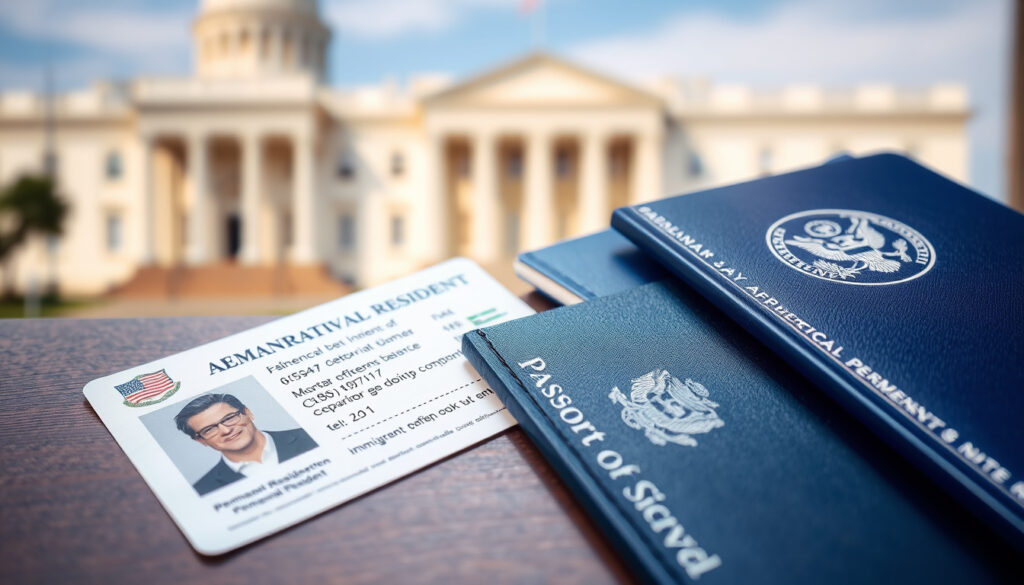
Permanent Resident: Meaning, Duration, and How to Get It
Few immigration terms carry as much weight — and confusion — as “permanent resident”. It’s a status that promises indefinite stay, yet comes with conditions that can catch even careful applicants off guard. Whether you’re an EU national exercising treaty rights or a non-EEA worker on a Critical Skills permit, the path to permanent residence in Ireland and beyond has specific timelines, costs, and pitfalls.
Standard qualifying residence period: 5 years (common in EU, Ireland, and New Zealand) ·
Permanent residence card validity (Ireland): 10 years ·
EU nationals acquiring PR status: Automatic after 5 years of legal residence ·
Countries with PR pathways: Over 60 countries globally
Quick snapshot
- A 5‑year continuous residence is a standard qualifying period for permanent residence in the EU and Ireland (Citizens Information).
- Permanent residence cards have a physical expiry date (e.g., 10 years), while the status itself is indefinite (Irish Immigration).
- Permanent residents cannot vote in national elections. (Citizens Information)
- The precise definition of “continuous residence” can vary between countries and permit types. (European Commission)
- Processing times for permanent residence applications fluctuate based on immigration backlogs and policy changes. (European Commission)
- The exact impact of Brexit on the permanent residence rights of UK citizens in the EU is still being clarified in some jurisdictions (European Commission).
- Year 0–1: Arrives on employment permit or student visa.
- Year 5: Applies for permanent residence permission (Stamp 4 in Ireland).
- Year 10+: Eligible to apply for citizenship (naturalisation).
- Ireland’s immigration rules are under annual review; new 2026 updates may affect quotas and permit types (The Daily Guardian).
- Critical Skills holders may see faster routes to Stamp 4 after 2 years. (The Daily Guardian)
- EU Treaty Rights continue to provide an automatic path for qualifying nationals. (The Daily Guardian)
| Attribute | Value |
|---|---|
| Standard qualifying period | 5 years (most EU countries, Ireland, New Zealand) |
| Card validity (Ireland) | 10 years |
| Voting rights | Cannot vote in national elections |
| Absence limit (varies) | Typically 1–2 years |
| Application fee (Ireland, non‑EEA) | €500 (The Daily Guardian) |
| Processing time (Ireland) | 6–8 months (The Daily Guardian) |
| IRP card cost (Ireland) | €300 (Total Law) |
| Critical Skills fast‑track | Qualify for Stamp 4 after 21 months (reportedly) (Immigration World) |
| EU national automatic right | After 5 years continuous legal residence (Citizens Information) |
| Stamp 5 (without condition as to time) | Available after 8 years qualifying residence (Immigrant Council of Ireland) |
These figures show that permanent residence is a defined, documentable status—but the details depend heavily on your nationality and permit type.
What Is the Meaning of Permanent Resident?
A permanent resident is a person who holds the legal right to live indefinitely in a country where they are not a citizen. This status is granted by the host nation’s immigration authority and comes with both entitlements and obligations. According to Citizens Information (Ireland’s official public service website), permanent residents can work, study, and access public services, but they cannot vote in national elections.
Defining permanent resident status
- Indefinite right to stay – the status itself does not expire, although the physical card does (Irish Immigration).
- Conditional on meeting continuous residence requirements – leaving for too long can trigger loss of status.
- Not a citizen – no passport of the host country, no diplomatic protection abroad.
The catch: the definition of “continuous residence” is not uniform. Some countries measure it in days per year; others allow absences up to six months without penalty. For non‑EEA nationals in Ireland, what many guides call “permanent residency” is officially long‑term residency or a Stamp 4 permission, as noted by Immigration World (immigration advisory site).
Key rights and obligations of a permanent resident
- Right to work without an employment permit (Immigrant Council of Ireland (legal advice body)).
- Access to public healthcare and education on the same basis as citizens.
- Must pay taxes in the host country.
- Obligation to comply with immigration rules – serious criminality can lead to revocation.
The pattern: permanent residence offers near‑citizen benefits, but the missing piece is the franchise. That single difference shapes the debate between staying in “permanent limbo” versus taking the final step to naturalisation.
What Is Permanent Residence in Ireland?
Ireland does not use a single “permanent resident” label for all non‑citizens. Instead, the rights are conferred through different immigration permissions depending on the applicant’s nationality. The most common stamps are Stamp 4 for non‑EEA nationals and a Permanent Residence Certificate for EU nationals.
General rules for non‑EEA nationals
| Eligibility criterion | Requirement |
|---|---|
| Minimum legal residence | 5 continuous years (Immigrant Council of Ireland) |
| Permit type required | Work permit (Stamp 1) or equivalent |
| Clean criminal record | Yes |
| Financial stability | Must show sufficient means |
Those who meet these criteria can apply for Stamp 4 permission – effectively long‑term residency without an employment permit. According to Immigration World, this is the closest non‑EEA nationals can get to “permanent residence” in Ireland.
The implication: Stamp 4 is a major step up from temporary permits, but it still requires renewal every few years.
Residence rights of EU citizens and their families in Ireland
- EU nationals automatically acquire the right of permanent residence after 5 continuous years of legal residence in Ireland (Citizens Information).
- Applying for a certificate of permanent residence is optional but provides documentary proof (Irish Immigration).
- Non‑EEA family members of EU nationals can receive a Permanent Residence Card valid for 10 years.
What is a Stamp 4 permission?
Stamp 4 allows the holder to live and work in Ireland without requiring a separate employment permit. It is not strictly “permanent” – it is usually valid for a fixed period (e.g., 2–5 years) but is renewable. After 8 years of qualifying residence, a person may apply for Stamp 5, a permission without condition as to time (Immigrant Council of Ireland).
What’s the Difference Between Residence and Permanent Residence?
The line between temporary and permanent residence is more than just a time stamp. It defines how free you are to change jobs, travel, and plan your life.
Temporary residence permits vs permanent residence
| Feature | Temporary residence | Permanent residence |
|---|---|---|
| Duration | Fixed expiry date (e.g., 1–3 years) | Indefinite status (card may expire) |
| Tied to employer/activity | Yes – permit linked to a specific job or study | No – free to work for any employer |
| Path to citizenship | Must first obtain permanent residence | Direct step toward naturalisation |
| Deportation risk | Higher – visa expiry or job loss can trigger removal | Stronger protections; revoked only for serious offences |
“Temporary residence is like renting a flat – you have a lease, but you can’t paint the walls,” one immigration adviser put it. “Permanent residence is more like a long‑term tenancy with security of tenure.”
Path from temporary residence to permanent residence
- Start on a temporary permit (work, study, family reunification).
- Maintain continuous legal residence and renew permits on time.
- After the qualifying period (typically 5 years), apply for permanent status.
- In Ireland, the transition often involves moving from Stamp 1 to Stamp 4, and eventually Stamp 5.
The trade‑off: temporary residence is relatively easy to get but comes with restrictions. Permanent residence is harder to qualify for but offers freedom and a clear path to citizenship.
Becoming a permanent resident of New Zealand
New Zealand offers several residence visas, including the Skilled Migrant Category and the Resident Visa. After holding a resident visa for 2 years, holders can apply for a Permanent Resident Visa. The process requires demonstrating commitment to New Zealand – typically by living there for 184 days in each of two years.
The contrast with Ireland: New Zealand uses a formal “Permanent Resident Visa” label, while Ireland uses Stamp 4/5. But the principle – indefinite stay with conditional maintenance – is the same.
How Long Can You Be a Permanent Resident?
The short answer: potentially for life. But the physical card you carry has an expiry date, and your behaviour – especially how long you leave the country – can undo your status.
Is permanent residency for life?
In most countries, permanent resident status does not expire on its own. However, the card that proves your status must be renewed – in Ireland, every 10 years for non‑EEA family members of EU nationals (Irish Immigration). If you let your card expire but remain in the country, you can usually apply for a fresh one without losing status. Leave the country with an expired card, and re‑entry becomes complicated.
What happens if you leave the country for too long?
- Common rule: absence of 1–2 years can trigger abandonment of status.
- Ireland: no fixed statutory period, but long absences may be seen as breaking continuous residence for naturalisation or renewal of Stamp 4.
- New Zealand: absence of 12 months or more can result in loss of Permanent Resident Visa.
According to Immigrant Council of Ireland, the status is not automatically revoked by absence – but immigration officers have discretion. The safest approach is to treat it as a “use it or lose it” asset.
Can a permanent resident expire?
No – the status itself is indefinite. But the permission to remain can be revoked if you commit a serious criminal offence, obtain status through fraud, or fail to meet the continuous residence obligation. In Ireland, a person who spends more than 5 continuous years outside the country may be considered to have abandoned their residence.
The implication: permanent residence is not a one‑way ticket. It requires active maintenance – renewals, tax compliance, and physical presence.
How Can I Get Permanent Residency in Ireland?
Ireland offers several routes, each with different timeframes and requirements. The most common is the 5‑year track, but faster options exist for critical skills holders.
How to get permanent residency in Ireland for international students
- Graduate on a Stamp 1G (stay‑back visa) for up to 2 years.
- Find permanent employment and transition to a work permit (Stamp 1).
- After 5 years on Stamp 1, apply for Stamp 4 (long‑term residency).
The catch Student visa residence does not normally count toward the 5‑year qualifying period for permanent residency (AmberStudent). That means the clock starts only when you get your employment permit.
Permanent residency in Ireland via Critical Skills
Holders of the Critical Skills Employment Permit can apply for Stamp 4 after just 21 months, according to Immigration World (immigration advisory). This is one of the fastest routes to long‑term residence in Europe. The permit is designed for occupations where Ireland faces skills shortages – ICT, engineering, healthcare, and finance.
What are the new rules for immigration in Ireland 2026?
Immigration rules in Ireland are subject to annual review. The 2026 updates reportedly include adjustments to permit quotas and a focus on critical skills sectors. Applicants should monitor Gov.ie (official immigration portal) for the latest changes. The core 5‑year rule remains, but the Critical Skills fast‑track is expected to stay in place.
Ireland Permanent Residency vs Citizenship
Once you hold permanent residence, the final question is whether to naturalise. The decision hinges on voting rights, passport utility, and the risk of losing status.
What are the benefits of citizenship over permanent residency?
| Right | Permanent resident | Citizen |
|---|---|---|
| Voting in national elections | No | Yes |
| Irish passport | No | Yes |
| Cannot be deported | Revocable for serious crimes | Cannot be deported |
| Lost by absence | Yes – after prolonged absence | No – citizenship is for life |
Citizenship also grants EU freedom of movement and consular protection. For many, the passport is the deciding factor.
How long does it take to go from permanent residency to citizenship in Ireland?
In Ireland, you must be a permanent resident for 12 months (minus 1 day) before applying for naturalisation, following 5 years of total residence (Citizens Information). That means the minimum time from arrival to citizenship is about 6 years. Dual citizenship is generally permitted in Ireland, so you don’t have to renounce your original nationality.
Residence vs Permanent Residence – A Comparison
Three distinctions, one pattern: temporary ties you to a purpose; permanent sets you free.
| Dimension | Temporary residence | Permanent residence |
|---|---|---|
| Duration of status | Fixed (1–5 years) | Indefinite (card may expire) |
| Employment mobility | Restricted to one employer or sector | Free to switch jobs |
| Path to citizenship | Must first get PR | Direct pathway |
| Deportation protection | Weak – can be removed after visa expiry | Strong – only for serious offences |
What this means: temporary residence is a probationary phase. Permanent residence is the reward – but it still falls short of the full security that citizenship provides.
Upsides
- Indefinite stay – no need to renew permits every few years.
- Free to work for any employer without sponsorship.
- Access to healthcare and education on par with citizens.
- Stepping stone to citizenship.
Downsides
- Cannot vote in national elections.
- Status can be lost by prolonged absence.
- Physical card must be renewed periodically (costs involved).
- No host‑country passport.
Steps to Get Permanent Residency in Ireland
- Secure a qualifying residence permit (work, family, or EU Treaty Rights).
- Maintain continuous legal residence for the required period (typically 5 years).
- Gather supporting documents: passport, IRP card, employment records, proof of residence.
- Submit application to the Irish Naturalisation and Immigration Service (INIS) with the €500 fee.
- Wait for processing (6–8 months estimated) (The Daily Guardian).
- Upon approval, pay the fee within 28 days and receive Stamp 4 or Stamp 5 permission.
Timeline to Permanent Residency
- Year 0–1: Arrive on employment permit or student visa.
- Year 1–5: Hold temporary residence (Stamp 1, 2, or 1G). Renew permits as needed.
- Year 5: Apply for permanent residence permission (Stamp 4 in Ireland).
- Year 5–10: Maintain permanent residence status. PR card valid for 10 years.
- Year 10+: Apply for citizenship (naturalisation) after meeting residency requirements.
Confirmed Facts vs What’s Unclear
Confirmed facts
- A 5‑year continuous residence is a standard qualifying period for permanent residence in the EU and Ireland (Citizens Information).
- Permanent residence cards have a physical expiry date (e.g., 10 years), while the status itself is indefinite (Irish Immigration).
- Permanent residents can have their status revoked for serious criminal offenses or abandonment.
- EU nationals automatically acquire the right of permanent residence after 5 years of legal residence (Citizens Information).
What’s unclear
- The precise definition of “continuous residence” can vary between countries and permit types.
- Processing times for permanent residence applications fluctuate based on immigration backlogs and policy changes.
- The exact impact of Brexit on the permanent residence rights of UK citizens in the EU is still being clarified in some jurisdictions (European Commission).
- Whether student visa years will ever count toward the qualifying period for permanent residence in Ireland remains a subject of debate.
Expert Perspectives
“EU citizens automatically acquire the right of permanent residence in Ireland after a continuous period of five years of legal residence.”
– Citizens Information (Citizens Information (official public service))
“A person legally resident in Ireland for over eight years may qualify for Stamp 5, a permission without condition as to time.”
– Immigrant Council of Ireland (Immigrant Council of Ireland (legal advice body))
“Critical Skills Employment Permit holders can qualify for Stamp 4 after 21 months.”
– Immigration World (Immigration World (immigration advisory))
The pattern: official bodies (Citizens Information, Immigrant Council) provide the clearest, most reliable guidance. Commercial sites add useful detail but should be cross‑checked with primary sources.
The 2026 Outlook for Permanent Residents
For anyone pursuing permanent residence in 2026, the key is to understand the specific rules of your target country. In Ireland, the Critical Skills fast‑track offers the quickest route for skilled workers, while EU nationals benefit from an automatic system. But the underlying truth is the same across jurisdictions: permanent residence is a stable but conditional status – one that rewards those who maintain it diligently and penalises those who neglect it.
For non‑EEA workers in Ireland, the choice is clear: use the Stamp 4 years to build your life, plan for citizenship, and never assume the status is permanent without your active care. Or risk losing everything with a single long absence.
Related reading: Personal Trainer Cost in Ireland: Is It Worth Hiring? · Maiden Names: Definition, Examples, and Writing Tips
thedailyguardian.com, irishimmigration.ie, liveandinvestoverseas.com, globaladvisoryexperts.com, citizenmatch.com, ggims.com, nascireland.org, updatevietnam.com
Frequently asked questions
How does permanent residency affect my tax status?
Permanent residents are generally taxed on their worldwide income if they reside in the country for more than 183 days per year. Ireland operates a similar rule. Consult Revenue.ie (Irish tax authority) for specifics.
Can a permanent resident sponsor family members for immigration?
Yes – most countries allow permanent residents to sponsor spouses, children, and sometimes parents. In Ireland, Stamp 4 holders can apply for family reunification under certain conditions (Irish Immigration).
What is the difference between permanent residency and indefinite leave to remain in the UK?
Indefinite Leave to Remain (ILR) is the UK equivalent of permanent residence. Both grant indefinite stay, but ILR holders must apply for a “right of abode” endorsement or British citizenship to secure full passport rights. The UK also requires a “life in the UK” test for naturalisation.
Can I hold permanent residency in multiple countries?
Yes – many people hold permanent residence in one country while being a citizen of another, or hold dual permanent residence. However, maintaining the required physical presence in both can be logistically challenging and may risk losing one of the statuses.
What happens if a permanent resident commits a serious crime?
Permanent residence can be revoked for serious offences. In Ireland, a conviction carrying a sentence of one year or more can trigger deportation proceedings (Gov.ie). The status is a privilege, not a right.
How can I prove my permanent resident status if my card is lost or stolen?
File a police report and contact the local immigration office for a replacement. In Ireland, you can apply for a new Irish Residence Permit card at the Immigration Registration Office.
Can a permanent resident be denied re‑entry to the host country?
Generally no – if your status is still valid. But if you have been absent for an extended period or your card has expired, the immigration officer at the border can question your right to re‑enter. Renewing your residency card before travel is strongly advised.
More related posts
 Ali Khamenei: Life, Death, and Fallout for Iran and Hamas
 James Nesbitt: Biography, Partner, Net Worth, and Famous Roles
 Antonio Banderas: Health, Relationships, and Career Facts
 Liam Tuffs: The Dozen Podcast Host, Contact, and Personal Life
 Don Johnson: Life After Miami Vice, Sobriety & Family
 Julian Caillon: Age, Career, and Strictly Journey
 Seth MacFarlane: Marriage, Family Guy, and Net Worth
 Michelle Phillips: Life, Career, and Net Worth (Updated 2024)
