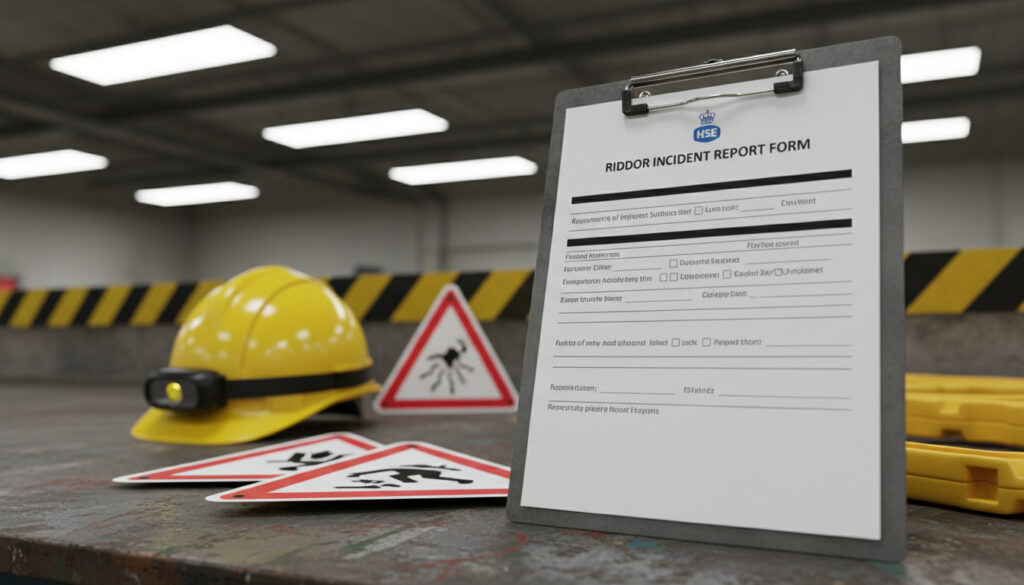
What Does RIDDOR Stand For – UK Workplace Reporting Explained
RIDDOR stands for the Reporting of Injuries, Diseases and Dangerous Occurrences Regulations 2013, the statutory framework that mandates the reporting of specific workplace incidents to the Health and Safety Executive in the United Kingdom. This legislation requires employers, self-employed individuals, and premises controllers to notify the HSE of work-related deaths, serious injuries, diagnosed occupational diseases, and near-miss events capable of causing significant harm.
The regulations operate alongside broader UK health and safety legislation, creating a comprehensive reporting structure designed to identify hazards, track occupational risks, and prevent future incidents through data-driven enforcement. Understanding these obligations remains essential for any organization operating within UK jurisdiction, as non-compliance constitutes a criminal offense potentially resulting in prosecution.
What Does RIDDOR Stand For?
The acronym RIDDOR refers specifically to the Reporting of Injuries, Diseases and Dangerous Occurrences Regulations 2013, which came into force on October 1, 2013. These regulations replaced the 1995 version to streamline reporting thresholds and clarify responsibilities for duty holders across Great Britain.
- RIDDOR applies exclusively to work-related incidents where the work activity itself contributes to the accident or disease.
- The 2013 revision raised the injury reporting threshold from over-three-day to over-seven-day incapacitation, reducing administrative burden on employers.
- Specified injuries require immediate notification, while over-seven-day injuries allow a 15-day reporting window.
- Self-employed individuals must report incidents affecting their own workers or themselves if working on premises controlled by others.
- Reports must be submitted through the HSE’s online portal, with specific record-keeping requirements extending beyond the initial notification.
| Category | Examples | Reporting Timeframe |
|---|---|---|
| Deaths | Any work-related fatality | Immediate notification; full report within 10 days |
| Specified Injuries | Fractures (excluding fingers/thumbs/toes), amputations, permanent sight loss, serious burns | Immediate notification; full report within 10 days |
| Over-7-Day Injuries | Incapacity lasting more than 7 days | Within 15 days of the accident |
| Occupational Diseases | Carpal tunnel syndrome, HAVS, occupational asthma, occupational cancers | Immediately upon diagnosis |
| Dangerous Occurrences | Lifting equipment collapse, scaffolding collapse, electrical explosions, gas leaks | Immediate notification; full report within 10 days |
| Gas Incidents | Gas leaks causing danger | Immediate notification; full report within 10 days |
| Non-Worker Injuries | Members of public injured and taken to hospital | Immediate notification; full report within 10 days |
What Needs to Be Reported Under RIDDOR?
The regulations establish six primary categories of reportable events, ranging from fatal accidents to near-miss incidents capable of causing serious injury. The HSE maintains detailed guidance on distinguishing between minor injuries requiring internal recording and major incidents mandating statutory notification.
Reportable Deaths and Specified Injuries
Any death arising from a work-related accident requires immediate notification through the quickest practicable means, followed by a written report within 10 days. Specified injuries include fractures (excluding fingers, thumbs, and toes), amputations of limbs, permanent loss of sight or reduction in vision, crush injuries to the head or torso causing brain or internal organ damage, serious burns covering more than 10% of the body or damaging eyes/respiratory/vital organs, scalping requiring hospital treatment, loss of consciousness caused by head injury or asphyxia, and injuries from enclosed spaces resulting in hypothermia, heat illness, resuscitation, or hospital admission exceeding 24 hours.
Occupational Diseases and Biological Agents
When a doctor diagnoses specific conditions linked to workplace exposure, responsible persons must report immediately. Reportable diseases encompass carpal tunnel syndrome, severe cramp of the hand or forearm, occupational dermatitis, hand-arm vibration syndrome (HAVS), occupational asthma, tendonitis or tenosynovitis of the hand or forearm, and any occupational cancer. Additionally, diseases resulting from biological agent exposure—such as blood-borne viruses from needlestick incidents or Legionnaires’ disease—fall within this category. COVID-19 may also require reporting when linked to occupational exposure to biological agents.
Dangerous Occurrences and Gas Incidents
The regulations list 27 distinct categories of dangerous occurrences—near-miss events with potential for significant harm. These include the collapse or failure of lifting equipment, explosions or fires stopping work for more than 24 hours, the release or potential release of biological agents, failure of breathing apparatus during use, the collapse or partial collapse of scaffolding, electrical short circuits or overloads causing fire or explosion, the collapse of buildings, walls, or floors, explosive misfires, and uncontrolled gas leaks. Gas incidents involving appliances or fittings that cause death, unconsciousness, or hospital treatment also require immediate notification.
Deaths, specified injuries, dangerous occurrences, and gas incidents require immediate notification to the HSE by the quickest practicable means, followed by a written report within 10 days. Delays beyond these statutory timeframes may trigger enforcement action.
Who Is Responsible for RIDDOR Reporting?
Responsible persons under the regulations include employers, self-employed individuals, and those controlling work premises. The specific reporting obligations vary depending on the employment relationship and the location where the incident occurs.
Employers and Organizations
Employers bear primary responsibility for reporting incidents affecting their employees. Within organizational structures, managers typically notify health and safety teams, which then submit reports to the HSE and conduct investigations. Companies must maintain records of all reportable events, including the date, time, affected person’s details, injury or disease specifics, location, and circumstances.
Self-Employed Workers
Self-employed individuals must report incidents affecting their own workers, or themselves if injured while working on premises controlled by another party. However, self-employed persons working alone on their own premises generally do not need to report injuries to themselves under RIDDOR, though they must report dangerous occurrences and gas incidents.
Controllers of Premises
Persons in control of work premises, including landlords, facility managers, and site operators, must report incidents involving non-workers (such as visitors or contractors) who suffer injuries requiring hospital treatment. This obligation exists regardless of whether the injured party is an employee of another organization.
How Do You Report Under RIDDOR?
The HSE operates a secure online reporting system accessible through the official gov.uk portal. Submitters must provide comprehensive details including organization information, incident date and location, injured person details, event description, and specific injury or disease classifications.
The Online Reporting Portal
Reports are submitted electronically via the HSE’s dedicated RIDDOR portal. The system generates an automatic acknowledgment containing a unique reference number. For fatalities and major incidents requiring immediate notification, duty holders should contact the HSE by telephone initially, then complete the online form within the statutory timeframe.
Documentation and Record-Keeping
Organizations must maintain detailed records of all reportable incidents for a minimum period. Required documentation includes the date and time of the incident, the affected person’s name and occupation, details of the injury, disease, or occurrence, the precise location, and a comprehensive description of circumstances. These records assist HSE investigations and support internal safety audits.
While the regulations specify what information must be recorded, organizations should maintain these records for at least three years to align with general health and safety documentation requirements and potential enforcement proceedings.
Critical Timeframes
Different incident categories carry distinct reporting deadlines. Fatalities and specified injuries require immediate notification with written reports within 10 days. Over-seven-day incapacitation injuries allow 15 days from the accident date. Occupational diseases must be reported immediately upon medical diagnosis. If injury effects manifest after the initial incident, the reporting clock starts when the connection to work becomes apparent.
When injury effects appear days or weeks after the initial accident, duty holders must submit reports within the relevant timeframe beginning from the date the symptoms became apparent and were linked to the work activity.
When Was RIDDOR Introduced?
The regulatory framework has evolved through three distinct iterations since 1985, with each revision aiming to improve clarity and reduce administrative burden while maintaining robust safety monitoring.
- 1985: Original Reporting of Injuries, Diseases and Dangerous Occurrences Regulations established the foundational requirements for workplace incident reporting in Great Britain.
- 1995: Major update consolidated previous provisions and refined reporting categories, though maintained the over-three-day incapacitation threshold for injury reporting.
- October 1, 2013: RIDDOR 2013 came into force, replacing the 1995 version. Key changes included raising the injury reporting threshold from over-three-day to over-seven-day incapacitation, streamlining the list of reportable diseases, and clarifying the definition of “work-related” incidents. The 2013 regulations remain current as of 2025, with no subsequent amendments identified in official records.
What Are the Penalties for RIDDOR Non-Compliance?
The enforcement framework distinguishes between absolute legal requirements where consequences are clearly defined, and specific penalty ranges where regulatory discretion applies.
Established Requirements
- Failure to report a notifiable incident constitutes a criminal offense under the 2013 Regulations.
- Prosecution may occur in court depending on severity of the violation.
- Organizations and individuals may face fines upon conviction.
- HSE enforcement officers may issue notices requiring compliance.
Uncertain or Variable Factors
- Specific fine amounts are not standardized and depend on court discretion and case circumstances.
- The threshold for “immediate” notification is not defined in absolute minutes or hours, leaving interpretation to the “quickest practicable means” standard.
- HSE discretion regarding prosecution versus informal enforcement varies by incident severity and compliance history.
How Does RIDDOR Fit Into UK Health and Safety Law?
RIDDOR functions within the broader framework of UK health and safety legislation, serving as the primary mechanism for the Health and Safety Executive to collect data on serious workplace incidents. The regulations interact with general duties imposed on employers to maintain safe working environments and report specific failures. Organizations must integrate RIDDOR compliance into their wider safety management systems, ensuring that reporting procedures align with risk assessment protocols and incident investigation frameworks. 170 lbs to kg – Exact Conversion to 77.1107029 Kilograms demonstrates the precision required in regulatory compliance, much like the exact measurements needed in safety-critical industries governed by these laws.
What Do Official Sources Say About RIDDOR?
The Health and Safety Executive maintains that accurate reporting enables the identification of emerging risks and the targeting of enforcement resources. Official guidance emphasizes that the purpose extends beyond statistical collection to active prevention of future incidents.
The reporting system is not simply about collecting data. It is a fundamental part of the health and safety system, allowing the HSE and local authorities to target their work effectively, and providing important information for others about risks and how to control them.
— Health and Safety Executive, Official RIDDOR Guidance
What Should Organizations Remember About RIDDOR?
RIDDOR imposes strict statutory obligations on employers, self-employed individuals, and premises controllers to report work-related deaths, specified injuries, occupational diseases, and dangerous occurrences to the HSE within prescribed timeframes. Compliance requires understanding the distinction between over-seven-day injuries and specified injuries, maintaining accurate records, and utilizing the online reporting portal. Organizations should treat reporting not merely as a regulatory burden but as a critical component of their safety management systems. 80 Euros in Pounds – Live Rate and Conversion Guide illustrates the importance of current, accurate information in business operations, paralleling the need for up-to-date RIDDOR compliance in workplace safety management.
Frequently Asked Questions About RIDDOR
What changed in RIDDOR 2013 compared to previous versions?
The 2013 regulations raised the injury reporting threshold from over-three-day to over-seven-day incapacitation, streamlined the list of reportable diseases, and clarified the definition of work-relatedness. The update also simplified dangerous occurrence categories while maintaining the core reporting structure established in 1985 and 1995.
Are all near-miss accidents reportable under RIDDOR?
No. Only near-misses meeting the definition of “dangerous occurrences”—specifically 27 categories with potential for serious harm—require reporting. Minor near-misses without significant injury potential should be recorded internally but do not require HSE notification.
Can COVID-19 be reported as a RIDDOR incident?
Yes, when there is reasonable evidence that a diagnosis resulted from occupational exposure to a biological agent at work. This may include healthcare workers or laboratory personnel with confirmed workplace exposure, reported as an occupational disease or dangerous occurrence.
How does RIDDOR define “work-related” for reporting purposes?
An incident is work-related if the accident, injury, or disease resulted from or was significantly contributed to by the conduct of the undertaking. This includes activities involving equipment, materials, or work processes, but excludes medical treatment unrelated to occupational risks.
What specific records must be kept after submitting a RIDDOR report?
Organizations must record the incident date and time, the affected person’s name and occupation, details of the injury or disease, the exact location, and a description of circumstances. These records must be maintained beyond the initial notification for compliance verification and potential investigations.
Does RIDDOR apply to incidents involving temporary workers or contractors?
Yes. Employers must report injuries to their own employees, including temporary staff. The host employer or premises controller must report incidents affecting contractors’ employees when the incident occurs on their controlled premises or relates to their work activities.
What constitutes “immediate” notification for serious incidents?
Immediate means by the quickest practicable means, typically telephone contact with the HSE followed by written confirmation. For fatalities and major injuries, this generally implies the same day or within hours, though the regulations allow for reasonable practical constraints.
More related posts
 Stephen Hawking: Life, Illness, Warnings, and Scientific Legacy
 European Travel Information and Authorisation System: ETIAS Guide
 Giorgia Meloni Biography: Religion, Kids & Politics
 Gail Porter: Illness, Sectioning, Hair Loss & Advocacy
 MSFT Stock – Price Analysis and Key Drivers Today
 Kindergarten Cop: Is It a Hit, Flop, or OK for Kids
