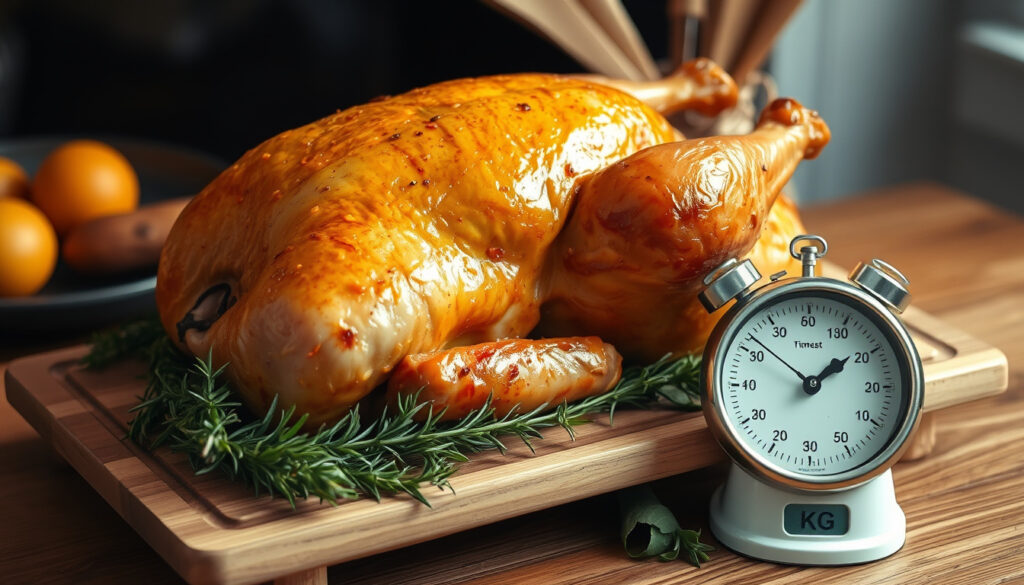
How to Cook a Turkey – Oven Guide With Timings Per Kg
How to Cook a Turkey: The Ultimate Oven Guide
Cooking a turkey to perfection requires understanding oven temperatures, timing calculations per kilogram, and preparation techniques specific to different cuts. This guide consolidates expert recommendations to help achieve a juicy, evenly cooked bird for Christmas or any special occasion.
Whether preparing a whole bird, crown, or breast, the principles remain consistent: accurate weight measurement, proper resting time, and precise internal temperature verification. British households increasingly favour higher-welfare turkeys, which require slightly different handling than standard supermarket birds.
Jamie Oliver’s tested approach provides a practical framework covering everything from initial preparation through to carving and gravy making. Understanding these fundamentals eliminates the guesswork that often leads to dry meat or undercooked portions.
How to Cook a Turkey in the Oven
The foundation of any successful roast turkey lies in oven temperature control and methodical preparation. Most recipes specify 180°C (350°F, gas mark 4) as the optimal setting for even cooking throughout the bird.
180°C / 350°F / Gas 4
25-40 minutes per kg depending on bird type
60-120 minutes covered in foil
70°C minimum, rising to 75°C during rest
Essential Preparation Steps
Proper preparation begins hours before the bird enters the oven. Removing the turkey from refrigeration 1-1½ hours before cooking allows the meat to reach room temperature, reducing shrinkage and promoting even cooking throughout.
- Remove turkey from fridge 60-90 minutes before cooking to temper the bird
- Preheat the oven for at least 20 minutes to ensure stable temperatures
- Arrange chopped vegetables as a trivet in a deep roasting tin to catch juices
- Stuff the neck cavity with homemade stuffing, rosemary sprigs, and clementine halves
- Rub the skin generously with oil and season well before loosely covering with foil
Always weigh the turkey after removing any packaging but before stuffing. Added stuffing affects total weight and consequently the cooking duration. For stuffed birds, add approximately 30 minutes to the calculated time.
Cooking Timeline Overview
| Turkey Weight | Total Cooking Time | Approximate Time Per Kg | Resting Time |
|---|---|---|---|
| 4-5 kg | 2¼ – 2½ hours | 35-40 min/kg | 60 minutes |
| 5-6 kg | 2½ – 3 hours | 35-40 min/kg | 60-90 minutes |
| 6-7 kg | 3 – 3½ hours | 35-40 min/kg | 90 minutes |
| 7-8 kg | 3½ – 4 hours | 35-40 min/kg | 90-120 minutes |
| 8-9 kg | 4 – 4¼ hours | 35-40 min/kg | 90-120 minutes |
| 9-10 kg | 4¼ – 4½ hours | 35-40 min/kg | 120 minutes |
How Long to Cook a Turkey Per Kg
Calculating cooking time requires understanding that not all turkeys cook identically. The rule of thumb varies significantly between standard supermarket birds and higher-welfare options, with stuffed birds requiring additional time on top.
Standard Timing Guidelines
Jamie Oliver recommends 35-40 minutes per kilogram for standard whole turkeys cooked at 180°C. This timing applies to unwarmed birds that have reached room temperature before roasting.
Higher-welfare birds, which typically have less retained water and denser muscle structure, cook faster at 25-30 minutes per kilogram. The difference amounts to significant time savings for larger birds.
When cooking a stuffed turkey, add approximately 30 minutes to the calculated total time. The stuffing requires additional heat penetration and should reach safe internal temperatures alongside the bird.
Alternative Timing Method
An alternative calculation gaining popularity uses the metric of 20 minutes per 500 grams (approximately 1.1 pounds) for stuffed birds specifically. This method proves particularly useful when following American recipes that use imperial measurements.
Browning and Monitoring
Remove the foil covering approximately one hour before the anticipated end of cooking to allow the skin to develop colour and crispness. Check the bird every 20 minutes once the initial calculated time has elapsed, adjusting positioning in the oven if hot spots exist.
How to Cook a Turkey Crown
A turkey crown consists of the boneless breast portion, offering a convenient alternative for households preferring white meat or lacking oven space for a whole bird. The absence of legs and thighs simplifies carving while focusing attention on the most prized portion.
Applying Standard Timings
Turkey crowns follow the same per-kilogram timing as whole birds, though the boneless nature means heat penetrates more uniformly. A 3kg crown typically requires 1½ to 2 hours at 180°C, making it considerably faster than equivalent whole birds.
Preparation Differences
Crown preparation mirrors whole bird methods for seasoning and trivet setup, but carving differs substantially. After resting covered in foil, slice along the breast bone to lift the meat cleanly from any remaining cartilage. This technique produces even portions without the complexity of jointing.
- Season beneath the skin by carefully loosening and rubbing with butter or oil
- Place on the vegetable trivet breast-side up for optimal heat circulation
- Cover loosely with foil for the first portion of cooking
- Monitor breast temperature with a meat thermometer positioned in the thickest part
- Rest for 30-60 minutes before slicing
For crowns and breasts, insert the meat thermometer horizontally into the centre of the thickest portion, avoiding contact with bone. The breast reaches safe doneness independently of the timing calculations used for whole birds.
How to Cook a Turkey Breast
Turkey breast presents unique challenges compared to whole bird roasting. Without the dark meat surrounding it, the breast dries more easily and requires careful attention to moisture retention and cooking duration.
Rolling Technique for Even Cooking
Boneless turkey breast rolls offer an alternative preparation method where the meat is tied into a cylindrical shape. This technique reduces surface area exposure and helps maintain juiciness throughout cooking.
Doneness Verification
The most reliable method for checking breast doneness involves using a meat thermometer. Standard supermarket turkeys require 70°C internal temperature at the centre, while higher-quality dry-aged birds achieve safe eating at 65°C, which rises to approximately 75°C during the resting period.
Visual confirmation through the knife test remains acceptable: pierce the thickest portion with a sharp knife and verify that juices run completely clear with no pink tinge remaining. The meat should pull apart easily when properly cooked.
Jamie Oliver’s Tips for Cooking a Turkey
British celebrity chef Jamie Oliver has refined his Christmas turkey approach over multiple seasons, emphasising welfare standards and practical timing that home cooks can replicate without professional equipment.
Welfare and Quality Considerations
Higher-welfare turkeys from trusted British farms often cost more but deliver superior texture and flavour. These birds typically have more developed muscle from outdoor access, resulting in denser meat that retains moisture better during the extended cooking time required for larger birds.
When sourcing a turkey specifically for roasting, consider the provenance alongside the price. Free-range and bronze birds develop deeper flavour profiles that justify the additional preparation investment.
Never attempt to reduce cooking time by increasing oven temperature significantly. Temperatures above 200°C cause the outer portions to cook too rapidly while leaving the centre underdone. The lower-and-slower approach at 180°C produces more predictable results across varying bird weights.
Gravy from Roasting Juices
The vegetable trivet beneath the turkey captures flavourful juices that form the basis of an excellent gravy. Once the bird rests, skim excess fat from the tray, add flour to create a roux with the remaining juices, and gradually incorporate stock while boiling to achieve the desired consistency.
Resting Protocol
Resting serves multiple purposes beyond simply cooling the meat to serving temperature. During this period, muscle fibres relax and redistribute internal juices throughout the structure. Cutting too early releases these fluids onto the carving board rather than into the meat.
Cover the resting turkey loosely with foil to retain warmth while allowing steam to escape. For larger birds exceeding 6kg, budget a full two hours for resting alongside side dish preparation. Smaller birds and crowns require at least one hour minimum.
From Prep to Plate: A Turkey Cooking Timeline
Understanding the sequential phases of turkey cooking helps allocate kitchen time effectively and ensures all components reach completion simultaneously. The following timeline assumes a 5kg unstuffed bird cooked at 180°C.
- Night before or morning: Remove turkey from fridge packaging, pat dry, and store on a rack in a cold environment
- 1-1½ hours before cooking: Bring turkey to room temperature by leaving on the work surface
- 20 minutes before cooking: Preheat oven and prepare roasting tray with vegetable trivet
- Cooking commencement: Place turkey on trivet, cover loosely with foil, and position in oven
- 1 hour before end: Remove foil to begin browning process
- Estimated end time: Check internal temperature and visual indicators
- Immediate post-cooking: Transfer to carving board, cover tightly with foil
- 60-120 minute rest period: Prepare gravy using tray juices while turkey rests
- Carving and serving: Slice and serve immediately while hot
Actual timing varies based on oven characteristics and individual bird differences. Ovens with fan assistance cook slightly faster than conventional models. Always prioritise internal temperature verification over clock-watching.
What We Know for Certain and What Remains Unclear
Turkey cooking guidance draws from extensive testing by professional cooks and recipe developers, yet some variables remain difficult to standardise across all kitchen conditions.
| Established Information | Variables Without Universal Answers |
|---|---|
| 180°C (350°F, gas 4) produces reliable results | Exact time variation between individual ovens |
| 35-40 min/kg for standard turkeys | Precise timing for specific breeds within welfare categories |
| 70°C internal temperature ensures food safety | Optimal rest duration for different sizes |
| Clear juices indicate doneness | Ideal browning level varies by preference |
| Resting improves meat texture | Effects of different seasoning approaches on flavour |
| Foil covering prevents excessive moisture loss | Oven humidity effects on skin crispness |
Why Turkey Deserves Its Christmas Position
The turkey’s emergence as the centrepiece of British Christmas dining reflects practical rather than traditional origins. Before intensive farming made turkeys affordable, poorer households typically served goose or other poultry. The turkey’s favourable meat-to-bone ratio and ability to feed large gatherings made it increasingly popular through the twentieth century.
Oven roasting remains the dominant preparation method in British households, differing from American traditions that more frequently incorporate deep-frying or smoking techniques. This distinction reflects oven availability and cultural preferences shaped by kitchen design across generations.
Modern British cooking emphasises higher-welfare sourcing and careful temperature management, moving beyond the “cook until suddenly done” approach that historically produced inconsistent results. Understanding the science behind moisture retention and protein coagulation transforms turkey roasting from intimidating challenge to achievable skill.
Expert Sources and Authority
“25 to 30 minutes per kilogram for higher-welfare birds, compared to 35 to 40 minutes for standard turkeys, reflects the denser muscle structure developed through better welfare conditions.”
Jamie Oliver, Tips and Timings for Perfect Turkey
“The resting period is non-negotiable. Cutting into a hot turkey releases all the accumulated juices onto your carving board. One hour minimum for smaller birds, two hours for anything over six kilograms.”
Jamie Oliver, Jamie’s Christmas Turkey Recipe
Government food safety guidance reinforces the 70°C minimum internal temperature as the standard for safe turkey consumption. This temperature applies regardless of bird size, cut type, or cooking method employed.
Putting It All Together
Success with roast turkey depends on applying consistent principles rather than memorizing rigid recipes. Weight your bird accurately, calculate timing based on welfare category, verify doneness with a thermometer, and respect the resting period that completes the cooking process.
For those seeking further guidance, exploring Jamie’s Christmas turkey recipe provides detailed visual instructions alongside the timing framework summarised here. Complementary resources covering tips and timings for perfect turkey preparation expand on specific techniques for different bird sizes and welfare standards.
Whether serving a small family gathering or feeding a crowd across multiple holiday meals, these principles scale appropriately. The investment in understanding proper technique rewards with consistently excellent results that make turkey worth the effort it requires.
Frequently Asked Questions
How long does a boneless turkey crown take to cook?
A boneless turkey crown follows the same per-kilogram timing as whole birds. A 3kg crown typically requires 1½ to 2 hours at 180°C. Always verify with a meat thermometer.
What temperature should turkey breast reach?
Turkey breast should reach 70°C internal temperature when checked with a meat thermometer at the thickest point. For higher-quality dry-aged birds, 65°C suffices as the temperature rises during resting.
Can I cook a stuffed turkey for the same duration as unstuffed?
Stuffed turkeys require approximately 30 minutes additional cooking time beyond the standard per-kilogram calculation. The stuffing must reach safe temperatures alongside the bird.
Why should turkey rest before carving?
Resting allows muscle fibres to relax and redistribute juices throughout the meat. Cutting immediately causes these juices to escape onto the carving board rather than remaining in the sliced portions.
How do I make gravy from the roasting tin?
After removing the turkey, skim excess fat from the tray juices. Add flour to create a roux, then gradually incorporate stock while boiling. Continue cooking until achieving the desired thickness.
Should I cover turkey with foil while roasting?
Cover the turkey loosely with foil for the initial cooking phase to prevent excessive browning. Remove the foil approximately one hour before the anticipated end of cooking to allow skin to colour and crisp.
How do I know when turkey is fully cooked?
The most reliable method involves checking internal temperature with a meat thermometer. Alternatively, pierce the thickest part of the thigh with a knife—the juices should run completely clear with no pink remaining.
How much turkey per person should I plan?
Plan approximately 500g of raw turkey weight per person for a generous portion including leftovers. Boneless cuts yield more edible meat per kilogram than bone-in portions.
More related posts
 Sergio Ramos: Current Club, Age, Net Worth & Career
 Half Up Half Down Hairstyles – Easy Guide for All Occasions
 Cheek Filler Before and After – Real Patient Results and Pictures
 Ginevra Weasley: Full Name, Canon Facts, and Biography
 What Is Plan B – Facts on Effectiveness, Side Effects and Use
 How Many Calories Should I Eat to Lose Weight? Guide & Calculator
 Anthony Bourdain: Cause of Death, Life, and Legacy
 What Continent Is Turkey In – Asia or Europe Explained
