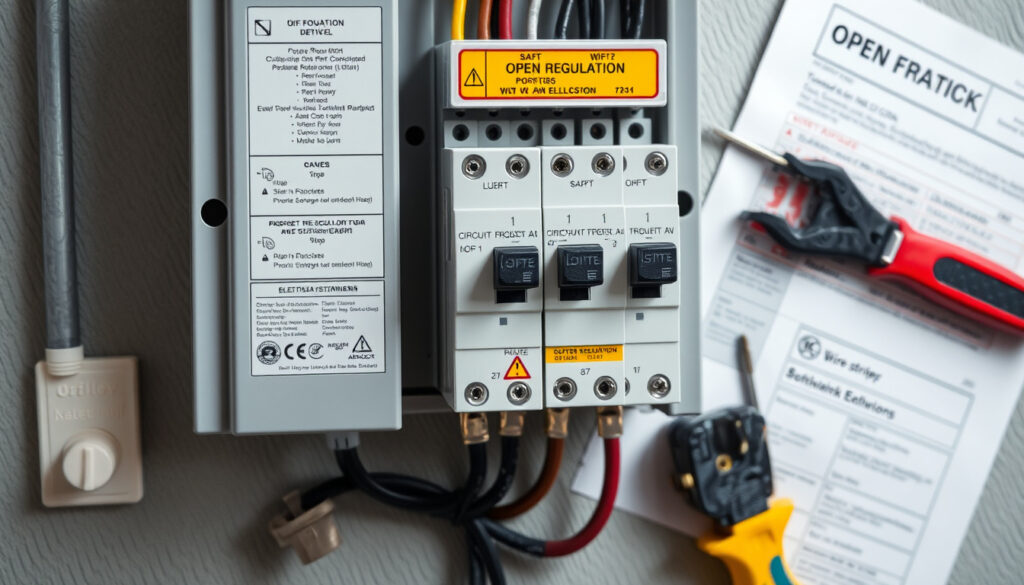
Consumer Unit Replacement: Cost, Regulations & DIY Legality UK
Anyone who’s stared at a flickering fuse box and wondered whether it’s time for an upgrade already knows the sinking feeling of not knowing what it’ll cost — or whether you’re even allowed to touch it. Replacing a consumer unit is notifiable work under Part P of the Building Regulations, and costs reportedly range from £500 to £800 — this guide covers the legal requirements, real costs, and practical steps so you know what to expect.
Average cost to replace a consumer unit: £400 – £800 (including parts and labour) · Typical installation time by a qualified electrician: 2 – 4 hours · Building regulations requirement: Part P of the Building Regulations (England & Wales) · Can it be done without a full rewire? Yes, if existing wiring is in good condition and meets current standards
Quick snapshot
- Typical range £400–£800 (Total Skills, electrical training provider)
- Depends on unit type and number of circuits (Total Skills, electrical training provider)
- Get multiple quotes from registered electricians (Total Skills, electrical training provider)
- Part P requires competent person to install (NICEIC, UK electrical registration body)
- DIY often invalidates home insurance (NICEIC, UK electrical registration body)
- Always hire a registered electrician (NICEIC, UK electrical registration body)
- Notifiable work under Part P (Electrical Safety First, electrical safety charity)
- Must be done by a registered competent person (Electrical Safety First, electrical safety charity)
- Non-compliance can affect selling the property (NICEIC)
- Old wiring (pre-1970s) likely needs full rewire (Electrical Safety First)
- Modern wiring in good condition can be kept (Electrical Safety First)
- Electrician must test all circuits before fitting new unit (Electrical Safety First)
A quick reference table summarises the key data points you need to know before booking a consumer unit replacement.
| Fact | Detail |
|---|---|
| Average cost (UK) | £400 – £800 (Total Skills) |
| Regulation required | Part P of Building Regulations (Electrical Safety First) |
| Who can install | Registered competent person (e.g., NICEIC, NAPIT) (NICEIC) |
| Can keep old wiring | Yes, if it passes inspection (Electrical Safety First) |
How much does it cost to fit a new consumer unit?
Costs vary by unit type, number of circuits, and property age. Below is what you can expect to pay, based on industry guides and electrician quotes.
Average cost breakdown by consumer unit type
- Dual-RCD consumer unit: £350–£550 installed and certified (Sparky, home-services platform)
- Full RCBO consumer unit: £450–£750 installed and certified (Sparky)
- Typical all-in cost including labour and materials: £500–£800 (Total Skills)
Labour costs for a qualified electrician
- Registered sparkies typically charge £50–£100 per hour.
- Installation takes 2–4 hours for a standard upgrade (MyJobQuote, quoting platform).
- Total labour: £150–£400 depending on region and job complexity.
How long does it take an electrician to replace a consumer unit?
A straightforward consumer unit swap takes 2–4 hours for a registered electrician, according to MyJobQuote. If the electrician discovers damaged wiring or needs to upgrade earthing and bonding, the job can stretch to a full day. Always ask for a time estimate in your quote so you can plan for the power-off period.
Additional costs: inspection, certificate, and unforeseen work
- Building control fees: £300–£500 if not self-certified (Elec Training, industry educator).
- An Electrical Installation Certificate must be issued after work (Electrical Safety First).
- If old wiring fails inspection, add costs for partial or full rewire (£500–£2,500+).
A homeowner replacing a dual-RCD unit in a 3-bed house can expect to pay around £500–£600 all in, but complex properties or older wiring can push that to £1,000 or more. Always get at least three itemised quotes from NICEIC-registered electricians.
The pattern: dual-RCD units cost less upfront but may not offer per-circuit protection. RCBO units cost more but isolate faults by individual circuit — a clear trade-off between price and future convenience.
Can I replace a consumer unit myself?
Short answer: in almost every case, no. UK law and safety regulations make DIY replacement risky, potentially illegal, and likely to void your insurance.
Legal restrictions under Part P of the Building Regulations
- Replacing a consumer unit in a dwelling is notifiable work (Voltimum UK, electrical trade media).
- Must be carried out by a person registered with a competent person scheme (NICEIC, NAPIT, etc.) or approved by local building control (NICEIC).
- DIY installation without notification is a breach of building regulations.
Safety risks and insurance implications
- Incorrect installation can cause electric shock, fire, or equipment damage (Electrical Safety First).
- Home insurance policies typically exclude claims from unapproved electrical work.
- If a fault leads to a fire, the insurer may refuse to pay out.
When a DIY replacement might still be allowed (very limited)
- Only minor work, such as replacing a fuse with an MCB (not a full unit swap), is exempt.
- Any work on the consumer unit itself — even adding a new circuit — is notifiable.
- “There is no legal DIY exemption for a consumer unit change” confirms the Electrical Safety First guidance.
A DIY consumer unit replacement may save you £200–£400 on labour, but it risks invalidating your insurance, failing a future home survey, and even legal enforcement from the local authority. The trade-off is rarely worth it.
What this means: even experienced DIYers should hire a registered electrician for a consumer unit swap. The cost of compliance is far lower than the cost of a denied claim or a fire.
Do you need building regs for a new consumer unit?
Yes — and the rules are clear. Part P of the Building Regulations applies to consumer unit replacement in England and Wales. Here’s what you need to know to stay legal.
What is Part P and when does it apply?
- Part P covers electrical safety in dwellings, including new circuits, consumer unit changes, and rewirings.
- Any notifiable work must be designed, installed, and verified to BS 7671 (Electrical Safety First).
- From 2016, consumer units must be made of non-combustible material (IET, institution of engineering and technology).
Notifying the local authority or using a registered electrician
- If you hire a competent person scheme registrant, they self-certify and notify the local authority on your behalf.
- If you do it yourself or use an unregistered electrician, you must apply for building control approval before work starts (fees £300–£500).
- After completion, you’ll receive a certificate — keep it for property records and future sales.
Penalties for not complying
- Local authorities can enforce remedial work or prosecution.
- Non-compliance can delay or collapse a house sale — solicitors ask for Part P certificates.
- “Failure to notify can lead to enforcement action and difficulty selling the property,” warns NICEIC.
The implication: getting the paperwork right is as important as the wiring itself. Without a certificate, you may face hidden costs later.
Can you have a new consumer unit without a rewire?
In many cases, yes — but only if the existing wiring is in good condition. An electrician will test all circuits before proceeding.
When existing wiring is safe to keep
- If cables are modern PVC/PVC (post-1970s) and pass insulation resistance tests, they can stay.
- Upgrading the consumer unit alone improves protection without touching walls or floors.
- Electrical Safety First states “a consumer unit upgrade does not automatically require a full rewire if wiring is sound.”
Signs that a rewire is necessary before upgrading the consumer unit
- Rubber- or lead-covered cables (common before 1970) are a fire risk and must be replaced.
- Frequent tripping or discoloured sockets indicate degraded insulation.
- A test revealing low insulation resistance means a rewire is unavoidable.
Cost implications of adding a consumer unit without rewiring
- If only the unit is swapped: £500–£800.
- If partial rewire is needed: add £800–£1,500.
- Full rewire of a 3-bed house: £2,500–£5,000.
For homeowners with late-70s wiring, the consumer unit upgrade alone may be perfectly safe and cost-effective — but only a qualified electrician’s test can confirm it. Skipping the test risks installing a new unit on dangerous old cables.
The trade-off: fitting a consumer unit without a rewire saves thousands, but you must invest in a thorough inspection first.
What is the consumer unit?
At its simplest, a consumer unit is the modern name for the fuse box. It distributes electricity to circuits in your home and provides protection against overloads and earth faults.
Key components: main switch, RCDs, MCBs, RCBOs
- Main switch: isolates the whole installation.
- RCD (Residual Current Device): protects against earth faults and shock; must trip at ≤30mA for socket circuits (Elec Training).
- MCB (Miniature Circuit Breaker): protects individual circuits from overcurrent.
- RCBO: combines RCD and MCB in one device, offering per-circuit protection.
Difference between an old fuse box and a modern consumer unit
- Old fuse boxes use rewirable fuses (tinned copper wire) — no protection against earth faults.
- Modern consumer units include RCD protection on all circuits (or RCBOs per circuit).
- Since 2016, the unit itself must be non-combustible (IET).
Why upgrading improves electrical safety
- RCDs prevent fatal electric shocks — old fuse boxes offer no such protection.
- RCBOs prevent a single fault from blacking out the whole house.
- “Replacing an old fuse box with a consumer unit reduces fire and shock risk,” advises Electrical Safety First.
The pattern: the upgrade from fuse box to consumer unit is one of the most cost-effective safety improvements a homeowner can make.
Pros and Cons of replacing a consumer unit
Upsides
- RCD protection dramatically reduces shock and fire risk.
- New units comply with current regulations, easing house sales.
- RCBO boards allow individual circuit isolation — no whole-house blackout.
- Non-combustible enclosures improve safety in case of internal fault.
- Can often be done without a full rewire, saving thousands.
Downsides
- Cost of £500–£800 is an upfront expense.
- Notifiable work requires registered electrician — no DIY legal option.
- If old wiring fails test, you may need a rewire (additional £1,500+).
- Building control fees apply if electrician is not registered.
- Installation takes 2–4 hours, but disruption to power is temporary.
The pattern: the safety and compliance gains are clear, but you must weigh the upfront cost and the risk of uncovering hidden wiring issues that demand more work.
Step-by-step: How to get a consumer unit replacement
- Check your current wiring condition.
- Look at the cable sheathing: rubber or fabric needs replacing; grey PVC is likely fine.
- Hire a registered electrician for a free/small-fee inspection.
- If wiring is pre-1970s, budget for a rewire alongside the consumer unit.
- Get at least three itemised quotes.
- Ask for quotes specifying unit type (dual-RCD vs RCBO), labour, and certificate fees.
- Ensure each electrician is registered with a competent person scheme (NICEIC, NAPIT, etc.).
- Compare total cost — the cheapest quote may not include certificate or aftercare.
- Choose the right consumer unit type.
- Dual-RCD: cheapest, but an earth fault on one circuit can knock out half the house.
- RCBO: more expensive, but each circuit is protected and isolated individually.
- High-integrity boards: combine RCBOs with RCDs for best protection — recommended by Electrical Safety First.
- Schedule installation and confirm certification.
- Typical job takes 2–4 hours. Ensure electrician issues an Electrical Installation Certificate (EIC).
- If using a competent person registrant, they will notify the local authority.
- Keep the certificate safe — you’ll need it when selling the property.
- Test your new consumer unit after installation.
- Check all RCDs trip correctly using the test button (quarterly recommended).
- Label circuits clearly on the unit door.
- If any circuit trips repeatedly, call the electrician back for investigation.
Following these steps ensures you don’t miss the certification, the right unit type, or hidden wiring problems that could blow your budget later.
What’s confirmed and what’s still unclear
Confirmed facts
- Replacing a consumer unit is notifiable work under Part P in England and Wales (Electrical Safety First).
- A DIY replacement without certification voids insurance and may be illegal (NICEIC).
- A consumer unit upgrade does not automatically require a full rewire if wiring is sound (Electrical Safety First).
- From 2016, consumer units in domestic premises must be non-combustible (IET).
What’s unclear
- Exact cost varies significantly by region and property complexity — the £400–£800 range is a national average, not a guarantee.
- Whether a 1970s house needs rewiring depends on cable condition, not just age — an inspection is the only definitive answer.
- Some homeowners may qualify for free rewiring only through specific government schemes (very limited availability, mostly for low-income households).
- Whether a consumer unit replacement requires upgrading earthing and bonding arrangements depends on the existing installation condition and the electrician’s assessment.
“Consumer units should be installed only by competent persons to ensure compliance with BS 7671.”
Institution of Engineering and Technology (IET)
“Electrical installation in dwellings must be designed and installed to protect persons from fire and electric shock.”
UK Government – Building Regulations Part P
“Any consumer unit replacement should be carried out by a registered electrician to avoid risk of injury or fire.”
Electrical Safety First
For UK homeowners weighing a consumer unit upgrade, the decision is clear: hire a registered electrician, ensure Part P compliance, and get the certificate. The upfront cost of £500–£800 buys safety, legal peace of mind, and a smoother property sale. Skimping on certification or attempting a DIY swap risks far greater expenses — a house fire, an invalid insurance claim, or a blocked sale. The trade-off is not between spending money and saving it; it’s between spending money now and risking thousands later.
electricalsafetyfirst.org.uk, electricalsafetyfirst.org.uk, elec-mate.com, voltimum.co.uk
Frequently asked questions
How often should a consumer unit be replaced?
Consumer units have no fixed replacement schedule, but upgrades are recommended every 20–30 years or when regulations change (e.g., the 2016 metal-enclosure rule). An electrician can advise during inspection.
What is the difference between an RCD and an RCBO in a consumer unit?
An RCD protects multiple circuits from earth faults but can cause widespread blackouts. An RCBO combines RCD and MCB protection per circuit, isolating only the faulty circuit. RCBOs are more expensive but offer better convenience.
Can a consumer unit be installed outdoors?
Yes, but it must be housed in an IP65-rated weatherproof enclosure. Installation should still be done by a registered electrician and comply with Part P.
Do I need to upgrade my consumer unit to sell my house?
Not legally required, but a modern consumer unit with RCD protection can speed up sales and avoid queries from solicitors. Many buyers now expect an up-to-date electrical safety certificate.
How do I test my consumer unit after installation?
Press the ‘Test’ button on each RCD monthly. They should trip within 200ms. If they don’t trip or trip randomly, call your electrician. Label the consumer unit clearly.
What does a consumer unit look like and where is it usually located?
It’s a rectangular grey or white metal/plastic box with switches (MCBs) and a main switch. It’s typically in a utility room, garage, under the stairs, or in a hallway cupboard.
More related posts
 David Walliams: Biography, Books, and Controversies
 Ken Miles: The Real Story of Ford’s Unsung Le Mans Hero
 Darren Grimes: Biography, Politics, and AI Controversy
 Cast of The Wire: Full List of Main Actors and Deaths
 Daniel Radcliffe: Health, Family, Wealth, Life After Harry Potter
 Claudia Schiffer: Net Worth, Children, Husband, Life Now
 Bedtime Stories for Kids – Free Online Classics Audio PDFs
 Karl Urban Net Worth, Relationships, and Career Biography
