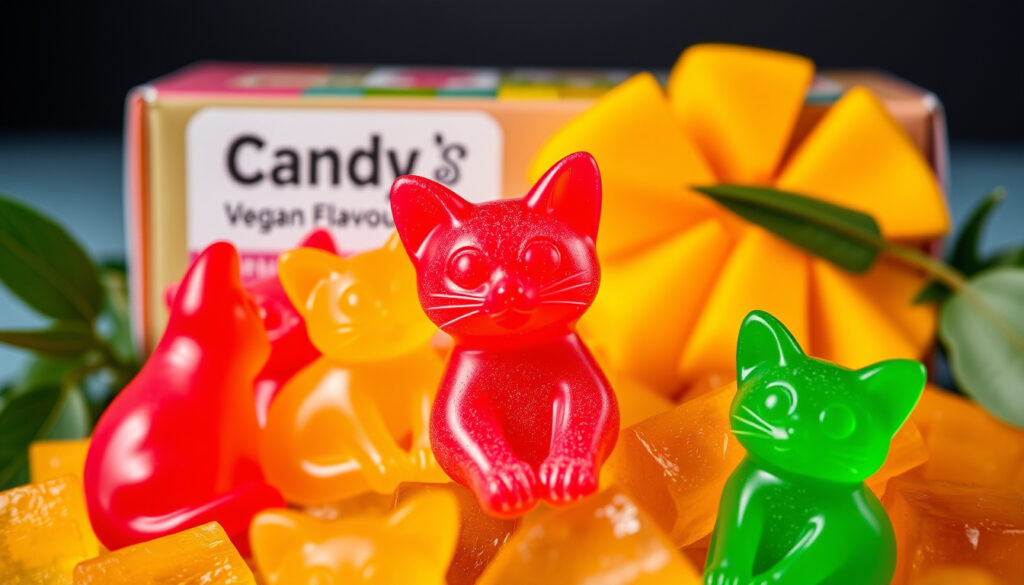
Candy Kittens: Who Owns It, Ingredients, Flavours & Where to Buy
Jamie Laing, the Made in Chelsea star turned entrepreneur, might not be the first person you’d expect to shake up the confectionery aisle. But since 2012, his brand Candy Kittens has been quietly rewriting the rules of what a sweet can be – ditching gelatine and palm oil for fruit juice and plant-based ingredients.
Founded: 2012 ·
Founder: Jamie Laing ·
Headquarters: London, UK ·
Key claim: 100% vegan, no gelatine, no palm oil ·
Certification: B Corp (via Treets)
Quick snapshot
- Founded 2012 by Jamie Laing and Ed Williams (Companies House (UK corporate registry))
- 100% vegan, no gelatine, no palm oil (Candy Kittens official website (brand homepage))
- First UK sugar confectionery brand to gain B Corp certification in 2022 (The Grocer (industry trade publication))
- Day-to-day CEO beyond Jamie Laing is not publicly emphasised
- Exact launch date of each flavour variant
- 2012 – brand launched
- 2021/2022 – B Corp certification achieved
- 2024 – still founder-led, expanding retail presence
- Continued growth in UK grocery and potential international expansion
- New flavour innovations expected
| Founded | 2012 |
| Founder | Jamie Laing |
| Headquarters | London, England |
| Key product claim | 100% vegan, no gelatine, no palm oil, no artificial flavours |
| Certification | B Corp (via Treets) |
| Retail partners | Tesco, Dunnes Stores, candyland.ie, online store |
The pattern: a vegan confectionery brand built on a founder-driven story and credible certifications, not just influencer hype.
Does Jamie Laing still own Candy Kittens?
Current ownership structure of Candy Kittens
- Jamie Laing remains the majority owner and the public face of Candy Kittens. Companies House (UK corporate registry) lists him as a director of Candy Kittens Limited, with his birth month and year as November 1988.
- Candy Kittens was co-founded with Ed Williams, who helped build the brand from its early days. Loughborough University (alumni records) notes that Williams was initially asked to create the website and help shape the brand identity.
The implication: Laing is still firmly in control, with operational oversight through his directorship. The brand has not been sold or handed to outside investors, at least as far as public filings show.
Jamie Laing’s role in 2024
In 2024, Laing continues to champion Candy Kittens across media and retail. His personal brand – forged on reality TV and business – remains tightly coupled to the sweets. No public announcements indicate he has stepped away from day-to-day leadership. However, the exact CEO title is not consistently disclosed in public sources, suggesting a lean, founder-driven operation.
Did Jamie Laing invent Candy Kittens?
Origin story of the brand
Laing conceived the idea for a vegan-friendly sweet after struggling to find plant-based options during his own vegan journey. He partnered with Ed Williams, who brought technical and branding expertise. Laing’s LinkedIn profile (professional network for founders) confirms the 2012 launch. The product was developed with a confectionery manufacturer to be vegan from the start.
How the product was developed
Instead of using gelatine (the standard setting agent in many jelly sweets), Candy Kittens uses plant-derived texturizers such as modified starch and hydrolysed pea protein. According to the Candy Kittens official website (brand homepage), the goal was “big flavour and honest ingredients” with “absolutely no nasties.”
For the estimated 3 million vegans in the UK (The Vegan Society (advocacy charity)), Candy Kittens filled a gap: a gourmet sweet that doesn’t compromise on taste or texture.
Why did Jamie Laing make Candy Kittens?
Motivation behind the launch
Laing has said he wanted a non-gelatine, plant-based candy after witnessing demand from his own vegan diet. The brand’s official website (brand homepage) frames the product as a direct response to the lack of gourmet vegan sweets on the market. The implication: he created a product he personally wanted to eat.
Market gap for vegan sweets
In 2012, mainstream confectionery shelves offered few vegan-friendly options. Vkind (vegan trade publication) reported that the brand addressed this gap by reformulating Eton Mess to remove beeswax, completing the all-vegan range. The pattern: Candy Kittens moved from filling a personal need to capturing a growing market.
What is special about Candy Kittens?
Vegan and clean-label credentials
Candy Kittens positions itself as “gourmet vegan sweets” – 100% free from gelatine, palm oil, and artificial colours/flavours. The brand uses fruit juice concentrates (strawberry, watermelon, cherry) to provide natural colour and flavour. The official website (brand homepage) states that the sweets are made with “no nasties” and are suitable for vegans and vegetarians. In 2022, Vkind (vegan trade publication) reported that the brand removed beeswax from its Eton Mess flavour, making the entire range completely vegan.
Flavour range and unique taste
The brand offers over 13 flavours. Retail listings show key varieties:
- Eton Mess – strawberries-and-cream reimagined as vegan sweets (Candy Kittens product page (official brand store))
- Wild Strawberry – contains strawberry juice from concentrate, coconut water from concentrate (Worldwide Chocolate (speciality retailer))
- Sour Watermelon – watermelon juice, spirulina concentrate for colour (Sweetish Candy (UK online confectionery retailer))
- Very Cherry – cherry juice concentrate, malic, citric, lactic acids (British Food Supplies (food service wholesaler))
B Corp certification
In 2022, The Grocer (industry trade publication) reported that Candy Kittens became the first UK sugar confectionery brand to receive B Corp certification. The certification applies under the Treets brand umbrella. ClimatePartner (climate action platform) lists Candy Kittens as committed to ethical and sustainably sourced treats.
The pattern: Clean ingredients, creative flavours, and a credible sustainability badge give Candy Kittens a clear edge over traditional confectionery.
While the sweets are dairy- and nut-free by recipe, they may be packed in a facility that handles peanuts, nuts, sesame, and milk – a detail flagged by Etsy sellers (third-party retail platform). Buyers with severe allergies should check packaging.
Who is the CEO of Candy Kittens?
Jamie Laing is the founder and public lead of Candy Kittens, but the day-to-day CEO is not publicly emphasised in available sources. The latest available filings list Jamie Laing as director of Candy Kittens Limited (Companies House (UK corporate registry)). The implication: the company operates with a lean, founder-driven leadership structure.
Timeline: Key milestones for Candy Kittens
| Date | Event |
|---|---|
| 2012 | Jamie Laing launches Candy Kittens with Ed Williams |
| 2021/2022 | Candy Kittens introduces Treets brand; receives B Corp certification |
| 2024 | Brand remains founder-led, available in multiple major retailers |
The implication: consistent founder presence and a distinct B Corp milestone mark the brand’s trajectory.
Clarity: What we know vs. what remains uncertain
Confirmed facts
- Jamie Laing is the founder and director of Candy Kittens Ltd
- Candy Kittens sweets are vegan, with no gelatine and no palm oil
- B Corp certified (first UK sugar confectionery brand)
What’s unclear
- Current CEO beyond Jamie Laing in day-to-day leadership
- Exact launch date of each flavour variant
Quotes from the founders
“We make sweets the New Fashioned way – plants, not gelatine.”
Jamie Laing, founder, as stated on the Candy Kittens official website (brand homepage)
“We wanted to challenge the confectionery industry and prove that great taste doesn’t need animal ingredients.”
Ed Williams, co-founder, in a 2025 interview with Amber Graafland (lifestyle and business journalist)
For UK consumers looking for a genuinely vegan, no-nasties sweet that doesn’t compromise on flavour, Candy Kittens delivers on its promise. With B Corp certification, a growing flavour lineup, and founder-driven credibility, it stands apart from conventional confectionery. The trade-off for shoppers is clear: a slightly premium price point for a product that aligns with ethical and dietary values.
For a more in-depth look at the brand’s journey and product range, check out this comprehensive Candy Kittens brand guide that covers everything from flavours to where to find them.
Frequently asked questions
Are Candy Kittens suitable for vegetarians/vegans?
Yes, the entire range is 100% vegan – no gelatine, no milk, no beeswax. The official website (brand homepage) states all sweets are suitable for vegans.
Where are Candy Kittens manufactured?
The sweets are made in the UK. Specific manufacturing locations are not publicly detailed, but the brand is London-based (Seismic Change (brand agency partner)).
Do Candy Kittens contain sugar?
Yes, sugar is listed as the first ingredient in retail listings (e.g., Wild Strawberry ingredients: sugar, glucose syrup, etc.).
Are Candy Kittens gluten free?
The official website (brand homepage) does not explicitly claim gluten-free status. Some flavours may contain modified starch which is typically gluten-free, but consumers with celiac disease should verify on packaging.
What is the most popular Candy Kittens flavour?
Eton Mess and Sour Watermelon are frequently featured across retailers and social media. The brand itself highlights Eton Mess as a signature product.
How many calories in Candy Kittens?
Calories vary by flavour. For example, Eton Mess contains approximately 160 calories per 40g serving (based on retail labels). Exact numbers appear on individual product pages.
More related posts
 West Brom vs Birmingham – Preview, Prediction, TV Guide
 Anna Nicole Smith: Death, Estate, Daughter’s Inheritance
 Mounjaro Side Effects UK: Common, Serious & How to Manage
 What’s On Tomorrow Near Me – Richmond Events Guide
 Jannik Sinner Parents Nationality – Italian Citizens from South Tyrol
 Francis Ford Coppola: Net Worth, Films and Comeback
 Best Waterproof Jacket Buying Guide for Ireland 2025
 Sarina Wiegman: Biography, Salary & Personal Life
